

'Embodied the American dream': Sandra Day O'Connor remembered at Supreme Court
#Sandra Day O'Connor #Supreme Court #American dream #first female justice #trailblazer #legal history #remembrance
📌 Key Takeaways
- Sandra Day O'Connor was honored at the Supreme Court for her legacy as the first female justice.
- She was celebrated as a symbol of the American dream and a trailblazer for women in law.
- The remembrance highlighted her pivotal role in shaping key Supreme Court decisions.
- Her life and career were praised for breaking barriers and inspiring future generations.
📖 Full Retelling
🏷️ Themes
Legal Legacy, Gender Equality
📚 Related People & Topics
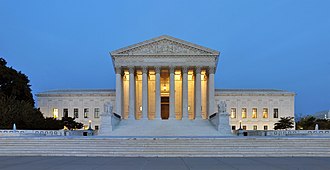
Supreme court
Highest court in a jurisdiction
In most legal jurisdictions, a supreme court, also known as a court of last resort, apex court, high (or final) court of appeal, and court of final appeal, is the highest court within the hierarchy of courts. Broadly speaking, the decisions of a supreme court are binding on all other courts in a nat...

American Dream
National ethos of the United States
The "American Dream" is a phrase referring to a purported national ethos of the United States: that every person has the freedom and opportunity to succeed and attain a better life. The phrase was popularized by James Truslow Adams during the Great Depression in 1931; Adams defined it as that dream...

Sandra Day O'Connor
American lawyer, politician and judge (1930–2023)
Sandra Day O'Connor (March 26, 1930 – December 1, 2023) was an American attorney, politician, and jurist who served as an associate justice of the Supreme Court of the United States from 1981 to 2006. Nominated by President Ronald Reagan, O'Connor was the first woman to serve as a U.S. Supreme Court...
Entity Intersection Graph
Connections for Supreme court:
Mentioned Entities
Deep Analysis
Why It Matters
Sandra Day O'Connor's legacy matters because she broke the gender barrier on the Supreme Court, serving as the first female justice and paving the way for women in law and government. Her centrist approach shaped key decisions on abortion, affirmative action, and religious freedom during her 24-year tenure. This remembrance honors her impact on American jurisprudence and serves as inspiration for future generations seeking equal representation in leadership positions.
Context & Background
- Sandra Day O'Connor was appointed by President Ronald Reagan in 1981 as the first woman Supreme Court justice
- She served from 1981 to 2006, becoming known as a crucial swing vote on the closely divided court
- O'Connor authored influential opinions including Planned Parenthood v. Casey (1992) which upheld abortion rights while allowing some restrictions
- Before her Supreme Court appointment, she served as an Arizona state senator and state court judge
- She retired in 2006 to care for her husband who had Alzheimer's disease, and passed away in December 2023 at age 93
What Happens Next
The Supreme Court will continue to reference O'Connor's jurisprudence in future cases, particularly on issues where she established precedent. Memorial events and tributes will likely continue through 2024, including potential congressional recognition. Her papers and legacy will be preserved at institutions like the Library of Congress and Sandra Day O'Connor College of Law.
Frequently Asked Questions
O'Connor was considered a swing vote because she often occupied the ideological center of the Court, frequently casting the deciding vote in closely divided 5-4 decisions. Her pragmatic approach meant she didn't consistently align with either conservative or liberal blocs, making her position crucial in landmark cases.
Her most significant contribution was establishing the 'undue burden' standard in abortion jurisprudence through Planned Parenthood v. Casey. This standard allowed states to regulate abortion as long as regulations didn't create substantial obstacles to access, shaping abortion law for decades until the Dobbs decision overturned it.
Her experience as a state legislator and state court judge gave her practical understanding of how laws affect people's daily lives. This background contributed to her pragmatic, case-by-case approach rather than rigid ideological positions, and informed her respect for state authority in the federal system.
She faced significant gender discrimination throughout her career, including being offered only secretarial positions after graduating near the top of her Stanford Law class. On the Court, she dealt with institutional sexism, including initially being excluded from certain conferences and having to prove her capabilities to skeptical colleagues.
Her retirement marked the end of an era where moderate justices frequently held the balance of power. Her replacement by the more conservative Justice Samuel Alito shifted the Court's ideological balance, contributing to the more polarized judicial landscape seen in recent years.