

Ending Birthright Citizenship Would Disproportionately Affect Asian Legal Immigrants
#Birthright citizenship #Asian immigrants #Supreme Court #Trump executive order #14th Amendment #Undocumented children #Mixed-status families #Legal immigrants
📌 Key Takeaways
- Ending birthright citizenship would create 6.4 million U.S.-born children without legal status by 2050
- Asian immigrants would experience the highest relative impact with 41 children born without citizenship per 1,000
- The policy would disproportionately affect Asian immigrants on temporary visas, creating mixed-status families
- Many affected Asian immigrants are on student or work visas and paying taxes in the U.S.
📖 Full Retelling
🏷️ Themes
Immigration policy, Citizenship rights, Demographic impact
📚 Related People & Topics
Asian immigration to the United States
Asian immigration to the United States refers to immigration to the United States from part of the continent of Asia, which includes Central Asia, East Asia, South Asia, and Southeast Asia. Asian-origin populations have historically been in the territory that would eventually become the United State...
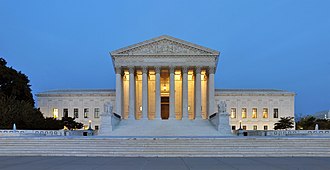
Supreme court
Highest court in a jurisdiction
In most legal jurisdictions, a supreme court, also known as a court of last resort, apex court, high (or final) court of appeal, and court of final appeal, is the highest court within the hierarchy of courts. Broadly speaking, the decisions of a supreme court are binding on all other courts in a nat...
Entity Intersection Graph
No entity connections available yet for this article.
Mentioned Entities
Deep Analysis
Why It Matters
This news matters because it addresses a fundamental change to American citizenship laws that would create a large population of U.S.-born children without citizenship rights. The disproportionate impact on Asian legal immigrants highlights how seemingly neutral policies can have racially disparate effects. This could create a permanent underclass of children and fundamentally alter the concept of birthright citizenship in the United States, affecting millions of families and potentially reshaping the American immigration landscape for generations.
Context & Background
- Birthright citizenship in the U.S. is based on the 14th Amendment, ratified in 1868, which states that 'all persons born or naturalized in the United States, and subject to the jurisdiction thereof, are citizens of the United States and of the State wherein they reside.'
- In 1898, the Supreme Court case United States v. Wong Kim Ark affirmed birthright citizenship for children of legal immigrants.
- Previous attempts to limit birthright citizenship, such as the proposed Birthright Citizenship Act of 2015, have not succeeded.
- Asian immigration to the U.S. has evolved significantly since the Chinese Exclusion Act of 1882, with dramatic increases following the Immigration and Nationality Act of 1965.
- The U.S. currently has approximately 1.2 million Asian immigrants on temporary visas, many of whom are in the process of seeking permanent residency.
- Mixed-status families already exist in the U.S., but this policy would dramatically increase their numbers and create new legal challenges.
What Happens Next
The Supreme Court is currently reviewing Trump's executive order on birthright citizenship, with a decision expected by June 2026. If the order is upheld, implementation would likely begin immediately, affecting children born after the effective date. This would trigger legal challenges from civil rights organizations and potentially lead to congressional action to either codify or reverse the policy. The 6.4 million projected undocumented U.S.-born children by 2050 would likely face significant barriers to education, healthcare, and future employment opportunities, potentially creating a multi-generational challenge to social services and economic mobility.
Frequently Asked Questions
Birthright citizenship is the legal principle that grants citizenship to individuals born within the territory of a state. In the U.S., this is established by the 14th Amendment and has been the law since 1868.
Asian immigrants on temporary visas (student and work visas) who are waiting for permanent residency would have children born without citizenship rights, creating a higher rate of affected children per 1,000 Asian immigrants compared to other groups.
Mixed-status families are households where some members have legal immigration status while others do not. This policy would create families where parents are legally present in the U.S. but their children are considered undocumented.
Children born to legal immigrants on temporary visas would not automatically receive U.S. citizenship, potentially limiting their access to education, healthcare, and future employment opportunities.
The policy would likely face challenges based on the 14th Amendment's Equal Protection Clause, as well as potential violations of international human rights treaties that the U.S. has ratified.