

Explainer-How the State of the Union became a stage for political confrontation
#State of the Union #Political confrontation #Donald Trump #Supreme Court #Tariffs #Polarization #Presidential address #Partisan divide
📌 Key Takeaways
- State of the Union has evolved from brief report to highly politicized event
- Speeches have grown longer and more confrontational over time
- This year's address comes after Supreme Court struck down Trump's tariffs
- Recent addresses have featured notable confrontations between parties
📖 Full Retelling
🏷️ Themes
Political polarization, Presidential communication, Historical evolution, Policy announcements
📚 Related People & Topics

State of the Union
Annual report by the president of the United States
The State of the Union address (sometimes abbreviated to SOTU) is an annual message delivered by the president of the United States to a joint session of the United States Congress near the beginning of most calendar years on the current condition of the nation. The speech generally includes reports...
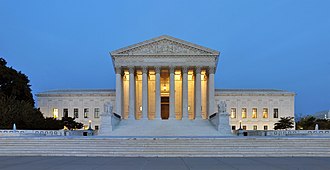
Supreme court
Highest court in a jurisdiction
In most legal jurisdictions, a supreme court, also known as a court of last resort, apex court, high (or final) court of appeal, and court of final appeal, is the highest court within the hierarchy of courts. Broadly speaking, the decisions of a supreme court are binding on all other courts in a nat...

Tariff
Goods import or export tax
A tariff or import tax is a duty imposed by a national government, customs territory, or supranational union on imports of goods and is paid by the importer. Exceptionally, an export tax may be levied on exports of goods or raw materials and is paid by the exporter. Besides being a source of revenue...

Donald Trump
President of the United States (2017–2021; since 2025)
Donald John Trump (born June 14, 1946) is an American politician, media personality, and businessman who is the 47th president of the United States. A member of the Republican Party, he served as the 45th president from 2017 to 2021. Born into a wealthy New York City family, Trump graduated from the...
Entity Intersection Graph
Connections for State of the Union:
Mentioned Entities
Deep Analysis
Why It Matters
The State of the Union has evolved from a concise report to a highly politicized spectacle, reflecting deep partisan divides and influencing public perception of presidential leadership. Its current confrontational tone underscores how policy debates are now played out on national television, shaping political narratives and voter sentiment.
Context & Background
- First addressed by George Washington in 1790
- Televised since Harry Truman in 1947
- Prime‑time broadcasts began with Lyndon Johnson in 1965
- Speeches have grown longer, e.g., Trump 2025 lasted 1h39m
- Recent addresses feature public clashes and viral moments
What Happens Next
Future State of the Union speeches are likely to continue as arenas for partisan confrontation, with the next address expected to include televised responses from opposition leaders. The tradition of televised rebuttals and public rallies may intensify as both parties seek to control the narrative.
Frequently Asked Questions
Increasing partisan polarization and the desire to shape national narratives have turned the address into a platform for direct political challenges.
They provide a structured counterpoint from the opposition, allowing them to address the audience directly and frame their policy positions.
While past presidents have extended the duration, future speeches may balance length with audience engagement to maintain viewership.
Rallies held by opposition parties can distract from the address, amplify criticism, and influence public perception of the president's message.