
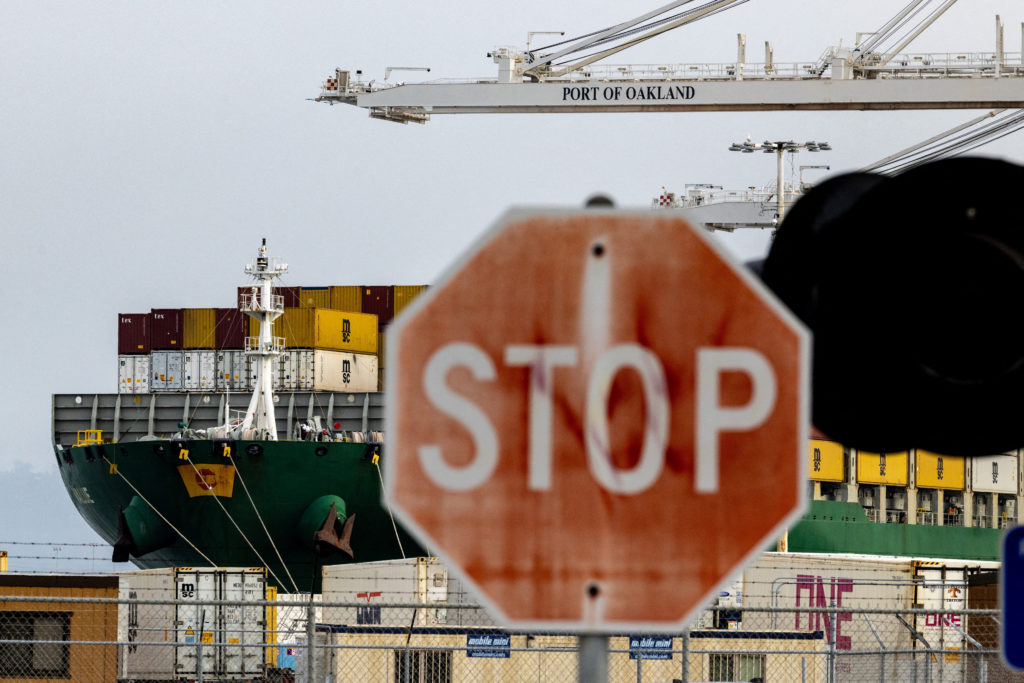
Federal court hears new case against Trump's latest global tariffs
#U.S. Court of International Trade #Trump tariffs #trade lawsuit #Supreme Court #import duties #executive authority #global trade
📌 Key Takeaways
- A federal court is hearing a challenge to President Trump's temporary global tariffs.
- The case follows a Supreme Court decision in February that struck down a broader tariff plan.
- Business groups argue the tariffs exceed presidential authority and lack proper procedure.
- The ruling will impact U.S. trade policy and the cost of imported goods.
📖 Full Retelling
🏷️ Themes
Trade Policy, Legal Challenge, Executive Power
📚 Related People & Topics
Supreme court
Highest court in a jurisdiction
In most legal jurisdictions, a supreme court, also known as a court of last resort, apex court, high (or final) court of appeal, and court of final appeal, is the highest court within the hierarchy of courts. Broadly speaking, the decisions of a supreme court are binding on all other courts in a nat...
Tariffs in the Trump administration
Topics referred to by the same term
Tariffs in the Trump administration could refer to:
Entity Intersection Graph
Connections for Supreme court:
Mentioned Entities
Deep Analysis
Why It Matters
This legal battle is critical for defining the separation of powers between the executive branch and Congress regarding international trade. A ruling against the administration could lower costs for consumers and businesses by immediately removing tariffs on vast amounts of imports. Conversely, a victory for the government would significantly strengthen the President's ability to unilaterally alter economic policy without legislative input. The decision will have lasting effects on U.S. trade relationships and global economic stability.
Context & Background
- The U.S. Constitution grants Congress the power to regulate foreign commerce, though presidents have historically utilized specific statutory authorities to adjust tariffs.
- In February, the U.S. Supreme Court invalidated the Trump administration's initial, more expansive tariff plan, prompting the creation of this alternative set of duties.
- The U.S. Court of International Trade, located in New York, has jurisdiction over civil actions arising out of laws and regulations governing customs and international trade.
- Trade policy and the use of tariffs have been central to the Trump administration's economic strategy, leading to frequent legal disputes over the scope of presidential authority.
- This case represents a continuation of the tension between legislative trade powers and executive flexibility in addressing perceived trade imbalances.
What Happens Next
The U.S. Court of International Trade will issue a ruling following the oral arguments, a process that may take weeks or months. Given the high stakes and constitutional questions, the losing party is almost certain to appeal the decision, likely sending the case back to the Supreme Court. In the interim, the temporary tariffs remain in effect, maintaining the current status quo for importers and global markets.
Frequently Asked Questions
A coalition of importers and trade associations filed the lawsuit to challenge the legality of the temporary global tariffs.
The case is being heard because the Supreme Court struck down the administration's original tariff plan in February, leading to the implementation of these replacement duties which are now being challenged.
The plaintiffs argue that the President exceeded his authority by implementing the tariffs without proper congressional approval or adherence to required administrative procedures.
If the government loses, tariffs on hundreds of billions of dollars of goods could be rolled back, affecting pricing and supply chains across manufacturing and retail industries.