
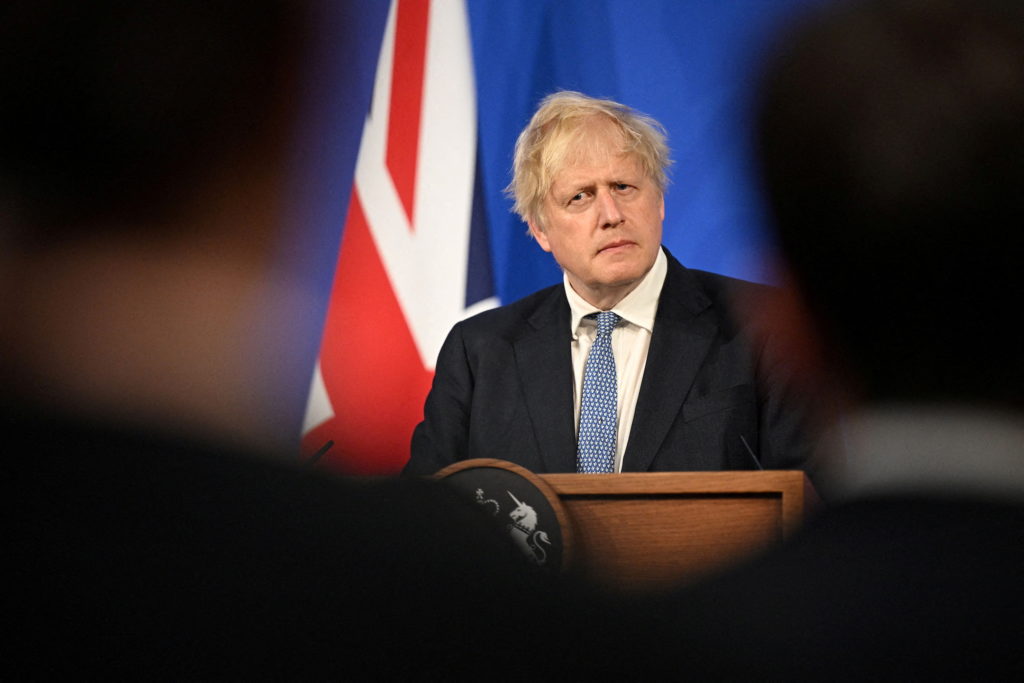
Former UK Prime Minister Boris Johnson calls on allies to send noncombat troops to Ukraine
#Boris Johnson #Ukraine #Noncombat troops #Vladimir Putin #Western allies #UK policy #Russia-Ukraine conflict #Peacekeeping
📌 Key Takeaways
- Boris Johnson advocates immediate deployment of noncombat troops to Ukraine
- Proposal represents major policy shift for Western allies
- Current plans only involve troops after ceasefire agreement
- Johnson attributes Putin's aggression to previous Western failures
📖 Full Retelling
🏷️ Themes
International relations, Military strategy, Western support for Ukraine
📚 Related People & Topics

Boris Johnson
Prime Minister of the United Kingdom from 2019 to 2022
Alexander Boris de Pfeffel Johnson (born 19 June 1964) is a British politician and writer who served as Prime Minister of the United Kingdom and Leader of the Conservative Party from 2019 to 2022. He was previously Foreign Secretary from 2016 to 2018 and the second mayor of London from 2008 to 2016....

Ukraine
Country in Eastern Europe
# Ukraine **Ukraine** is a country located in Eastern Europe. It is the second-largest country in Europe by area, after Russia. Known for its extensive fertile plains, the nation serves as a critical global exporter of grain and is considered a middle power in international affairs. ## Geography a...
Western Allies
Group of Allied countries in World War II
Western Allies was a political and geographic grouping among the Allied Powers of World War II.

Vladimir Putin
President of Russia (2000–2008; since 2012)
Vladimir Vladimirovich Putin (born 7 October 1952) is a Russian politician and former intelligence officer who has served as President of Russia since 2012, having previously served from 2000 to 2008. Putin also served as Prime Minister of Russia from 1999 to 2000 and again from 2008 to 2012. He has...
Entity Intersection Graph
Connections for Boris Johnson:
View full profileMentioned Entities
Deep Analysis
Why It Matters
Former UK Prime Minister Boris Johnson urges allies to send noncombat troops to Ukraine, signalling a potential shift in Western support and a new approach to the conflict. This move could strengthen Ukraine's security and demonstrate resolve, while also testing the limits of ceasefire agreements.
Context & Background
- Russia invaded Ukraine in 2022, sparking international sanctions and aid.
- Western countries have supplied military and economic support but avoided direct troop deployment.
- Boris Johnson, former UK PM, has been a vocal supporter of Ukraine during his tenure.
- The proposal calls for noncombat troops to police a ceasefire, a first for the coalition.
What Happens Next
If the proposal is adopted, the UK and allies would coordinate through the coalition of the willing to deploy peacekeeping forces after a negotiated ceasefire. The deployment would aim to stabilize liberated areas and signal sustained Western commitment.
Frequently Asked Questions
They would focus on peacekeeping, monitoring ceasefires, and supporting humanitarian efforts, reducing the risk of escalation.
A formal ceasefire agreement and approval from the coalition of the willing and host nations would be required.
Previous support has been financial, arms, and training; this would involve a physical presence on Ukrainian soil.
Russia has warned that foreign troops would be legitimate targets, so any deployment would carry significant risk.