
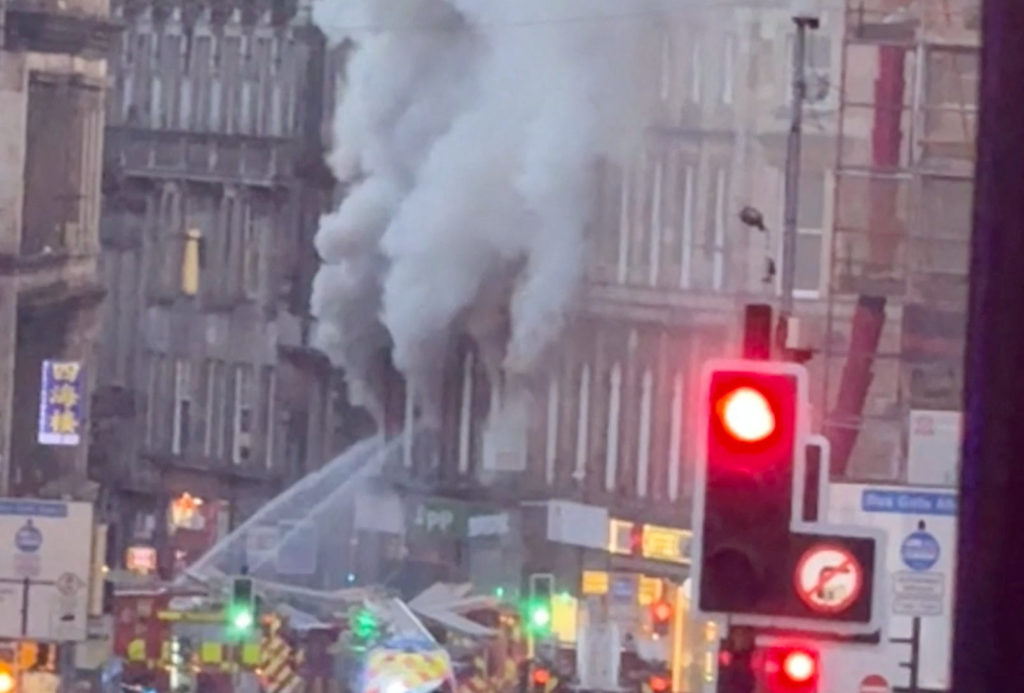
Glasgow fire closes Scotland's busiest train station and disrupts rail services
#Glasgow #fire #train station #rail disruption #Glasgow Central #Scotland #commuter travel #emergency services
📌 Key Takeaways
- A fire has forced the closure of Glasgow Central, Scotland's busiest train station.
- Rail services across the network are experiencing significant disruptions.
- The incident is impacting commuter travel and regional connections.
- Emergency services are responding to the scene to manage the situation.
🏷️ Themes
Transport Disruption, Emergency Incident
Entity Intersection Graph
No entity connections available yet for this article.
Deep Analysis
Why It Matters
This incident is significant because Glasgow Central Station is Scotland's busiest railway hub, handling over 32 million passengers annually. The closure disrupts essential transportation for commuters, businesses, and travelers across Scotland and northern England. It affects regional connectivity, potentially impacting economic activity, healthcare access, and daily life for thousands. Emergency services and rail operators face immediate operational challenges while ensuring public safety.
Context & Background
- Glasgow Central Station opened in 1879 and is a major interchange for Scotland's rail network, serving routes to Edinburgh, London, and regional destinations.
- The station has undergone several modernizations, including a major refurbishment completed in 2020 to improve capacity and accessibility.
- Previous incidents like the 2019 Edinburgh Waverley station fire and the 2022 signaling failures at London's Euston have shown how critical rail hubs' closures cause widespread disruption.
- Scotland's rail network, operated by ScotRail and Network Rail, has faced recent challenges including strikes, budget constraints, and aging infrastructure.
What Happens Next
Immediate priorities include fire investigation, structural safety assessments, and gradual restoration of services, likely over days. Network Rail will coordinate alternative transport (buses, diversions) and communicate service updates. Long-term, this may accelerate planned maintenance or safety upgrades at Glasgow Central and other key stations.
Frequently Asked Questions
The duration depends on fire damage and safety checks; similar past incidents have led to closures ranging from hours to several days. Passengers should check real-time updates from ScotRail and Network Rail for reopening estimates.
Rail services are being diverted or replaced with buses, while other Glasgow stations (Queen Street, Partick) may handle additional traffic. Travelers are advised to plan ahead and allow extra time for journeys.
Initial reports focus on station evacuation and service disruption; any injuries or casualties would be confirmed by emergency services or official statements as investigations proceed.
Yes, disruptions may impact travel to events, hotels, and attractions, especially if closures persist. Organizers and visitors should monitor transport advisories and consider flexible arrangements.