
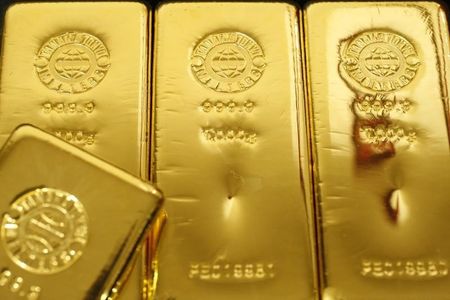
Gold prices steady, head for deep weekly loss as Iran war dents rate cut bets
#gold prices #interest rates #Iran war #weekly loss #Federal Reserve #safe-haven #market sentiment
📌 Key Takeaways
- Gold prices stabilized after a significant weekly decline.
- The weekly loss was driven by reduced expectations for U.S. interest rate cuts.
- Geopolitical tensions from the Iran-Israel conflict influenced market sentiment.
- Investors shifted focus from safe-haven demand to Federal Reserve policy outlook.
🏷️ Themes
Market Volatility, Geopolitical Impact
📚 Related People & Topics

Federal Reserve
Central banking system of the US
The Federal Reserve System (often shortened to the Federal Reserve, or simply the Fed) is the central banking system of the United States. It was created on December 23, 1913, with the enactment of the Federal Reserve Act, after a series of financial panics (particularly the panic of 1907) led to th...
List of wars involving Iran
This is a list of wars involving the Islamic Republic of Iran and its predecessor states. It is an unfinished historical overview.
Entity Intersection Graph
Connections for Federal Reserve:
Mentioned Entities
Deep Analysis
Why It Matters
This news matters because gold prices are a key indicator of global economic sentiment and safe-haven demand. The decline suggests investors are reassessing inflation and interest rate expectations due to geopolitical tensions, which affects central bank policies worldwide. This impacts everyone from individual investors and retirement funds to central banks and mining companies, as shifting gold prices influence portfolio allocations and economic forecasts.
Context & Background
- Gold traditionally serves as a safe-haven asset during geopolitical crises and economic uncertainty
- The Federal Reserve and other central banks have been signaling potential interest rate cuts to combat slowing economic growth
- Higher interest rates typically reduce gold's appeal since it doesn't yield interest, making bonds more attractive
- Iran-Israel tensions have created conflicting market forces - boosting safe-haven demand while also increasing inflation fears that could delay rate cuts
What Happens Next
Markets will closely monitor Federal Reserve communications and economic data releases for clues about interest rate timing. If Middle East tensions escalate further, gold could see renewed safe-haven buying despite rate concerns. Upcoming inflation reports and Fed meetings in the coming weeks will be critical for determining gold's next directional move.
Frequently Asked Questions
While geopolitical crises typically boost gold as a safe haven, the Iran-Israel conflict is increasing inflation fears that could force central banks to maintain higher interest rates longer. Since gold doesn't pay interest, higher rates make it less attractive compared to bonds and other yield-bearing assets.
Central banks pursuing monetary tightening policies benefit as lower gold prices support their anti-inflation efforts. Manufacturers using gold in electronics and jewelry see reduced input costs, while investors shifting to higher-yielding assets may achieve better returns in rising rate environments.
Investors with gold exposure in portfolios or retirement funds may see losses, while those considering new positions face difficult timing decisions. The situation highlights how geopolitical events can have complex, sometimes counterintuitive effects on traditional safe-haven assets.
Monitor Federal Reserve statements, inflation data (especially CPI reports), and developments in Middle East diplomacy. Also watch bond yields and the US dollar, as these typically move inversely to gold prices and reflect changing interest rate expectations.