
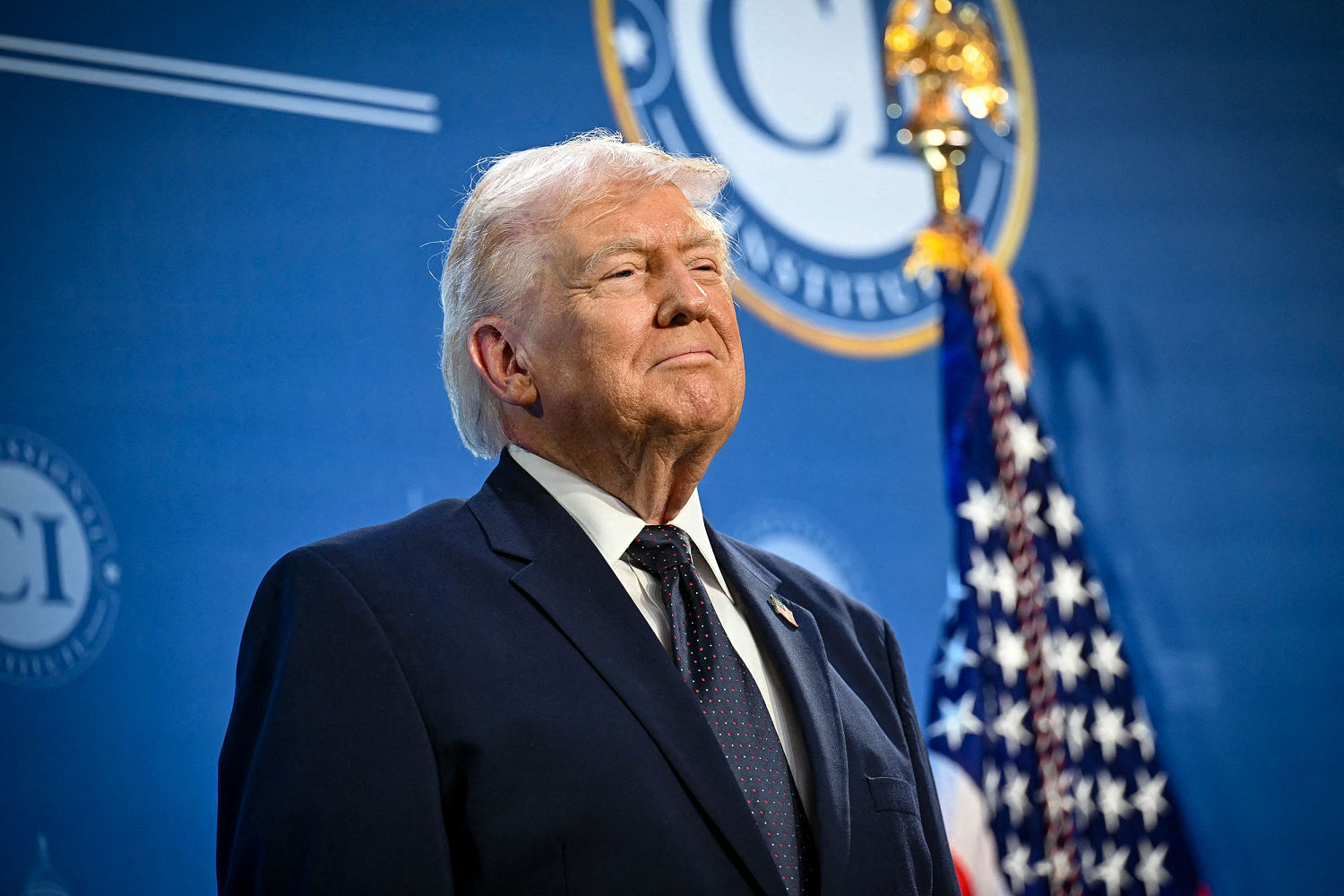
Here's what's actually in Trump's voting bill
#Trump #voting bill #voter ID #mail-in voting #early voting #election integrity #voter registration
📌 Key Takeaways
- The bill aims to implement stricter voter ID requirements for federal elections.
- It proposes changes to mail-in voting procedures, including earlier deadlines for ballot requests.
- The legislation seeks to standardize early voting periods across all states.
- It includes provisions for purging inactive voters from registration rolls more frequently.
📖 Full Retelling
🏷️ Themes
Election Reform, Voting Rights
📚 Related People & Topics

Donald Trump
President of the United States (2017–2021; since 2025)
Donald John Trump (born June 14, 1946) is an American politician, media personality, and businessman who is the 47th president of the United States. A member of the Republican Party, he served as the 45th president from 2017 to 2021. Born into a wealthy New York City family, Trump graduated from the...
Entity Intersection Graph
Connections for Donald Trump:
Mentioned Entities
Deep Analysis
Why It Matters
This legislation represents a significant attempt to reshape federal election administration and could fundamentally alter how Americans vote in presidential elections. It directly affects state election officials, political parties, and ultimately every eligible voter by potentially changing voting procedures and ballot access rules. The bill's provisions could shift power dynamics between state legislatures and election administrators, creating potential conflicts in how elections are certified and contested. If enacted, it would likely face immediate legal challenges regarding constitutionality and voting rights protections.
Context & Background
- The U.S. Constitution grants states primary authority over election administration, with Congress having limited power to regulate federal elections under Article I, Section 4.
- Former President Trump has repeatedly claimed without evidence that the 2020 presidential election was 'stolen' through widespread fraud, despite numerous court rulings and audits confirming its integrity.
- Several states have passed voting law changes since 2020, with Republican-led states generally tightening rules and Democratic-led states expanding access.
- The Help America Vote Act of 2002 was the last major federal election overhaul, passed after the disputed 2000 presidential election.
- Federal election legislation has faced partisan division, with Democratic voting rights bills like the Freedom to Vote Act and John Lewis Act failing to overcome Senate filibusters.
What Happens Next
The bill will likely be introduced in the House of Representatives, where it may pass along party lines given Republican control. It faces significant hurdles in the Democratic-controlled Senate, where it would need 60 votes to overcome a filibuster. If it somehow passes both chambers, President Biden would almost certainly veto it. Even if not enacted, the bill's provisions may influence state-level voting legislation and become campaign issues in the 2024 elections. Legal scholars will analyze its constitutionality, particularly regarding federalism principles.
Frequently Asked Questions
While the specific text isn't provided in the prompt, such bills typically include provisions requiring voter ID, limiting mail-in voting, changing early voting rules, and altering how states certify election results. They often seek to give state legislatures more control over election administration rather than election officials.
If enacted, it could make voting more restrictive in some states by tightening identification requirements and reducing voting methods. It might also create more opportunities for election challenges and potentially delay certification of results in close contests.
No, it faces almost certain defeat in the Democratic-controlled Senate and would be vetoed by President Biden if it reached his desk. Its introduction is primarily symbolic and intended to shape political debate rather than immediately change election law.
This federal bill would override conflicting state laws if enacted, creating uniform national standards for federal elections. Currently, states have diverse voting rules, with some expanding access (like automatic voter registration) while others restrict it (like limiting ballot drop boxes).
Legal experts question whether Congress has authority under the Elections Clause to impose such sweeping changes on state election administration. Some provisions might violate the Constitution's federalism principles or conflict with existing voting rights protections.