
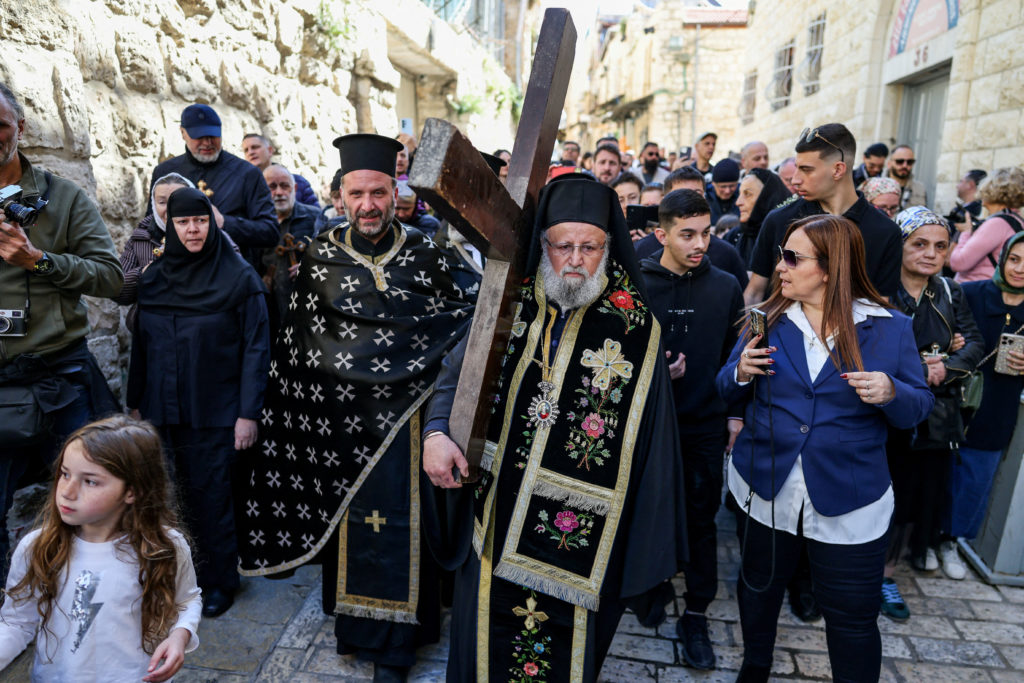
How Palestinian Christians marked Easter against the backdrop of war
#Palestinian Christians #Easter Jerusalem #holy sites closure #Iran conflict #religious freedom #Church of the Holy Sepulchre #Middle East tensions
📌 Key Takeaways
- Jerusalem's holy sites reopened after 40-day closure during regional conflict
- Palestinian Christians celebrated Easter with restricted access to sacred locations
- Journalists documented the community's adapted traditions and emotional impact
- The situation highlights fragile religious freedom amid geopolitical tensions
📖 Full Retelling
🏷️ Themes
Religion, Conflict, Cultural Resilience
📚 Related People & Topics

Palestinian Christians
Religious minority of the Palestinian people
Palestinian Christians (Arabic: مَسِيحِيُّون فِلَسْطِينِيُّون, romanized: Masīḥiyyūn Filasṭīniyyūn) are a religious community of the Palestinian people consisting of those who identify as Christians, including those who are cultural Christians in addition to those who actively adhere to Christianity...

Church of the Holy Sepulchre
Church in Jerusalem
The Church of the Holy Sepulchre, also known as the Church of the Resurrection, is a fourth-century church in the Christian Quarter of the Old City of Jerusalem. The church is simultaneously the seat of the Armenian Patriarchate of Jerusalem, Greek Orthodox Patriarchate of Jerusalem, and the Cathol...
List of wars involving Iran
This is a list of wars involving the Islamic Republic of Iran and its predecessor states. It is an unfinished historical overview.
Entity Intersection Graph
Connections for Palestinian Christians:
View full profileMentioned Entities
Deep Analysis
Why It Matters
This news highlights the profound intersection of geopolitical conflict and religious freedom, demonstrating how regional wars directly disrupt the spiritual lives of local minority communities. It affects Palestinian Christians specifically by restricting access to their most sacred spaces during the most critical period of the liturgical calendar. Furthermore, the situation underscores the volatility of Jerusalem's status, where security concerns frequently override religious access, potentially setting a precedent for future disruptions to cultural and spiritual heritage.
Context & Background
- Jerusalem is home to the Church of the Holy Sepulchre, venerated by many Christians as the site of Jesus's crucifixion and resurrection, making it the focal point of Easter pilgrimages.
- The administration of Jerusalem's holy sites is governed by a complex 'Status Quo' agreement involving multiple Christian denominations and overseen by Israeli security forces.
- The regional conflict mentioned involves heightened tensions between Israel and Iran, which escalated significantly in early 2024, leading to strict security measures.
- Palestinian Christians constitute a small minority within the broader Palestinian population and have faced demographic decline due to emigration and economic challenges.
- Access restrictions in the Old City of Jerusalem are not uncommon, but a continuous 40-day closure during Lent is historically severe and unusual.
What Happens Next
As long as regional tensions between Israel and Iran persist, security measures around Jerusalem's holy sites will likely remain tight, potentially leading to intermittent access restrictions. Religious leaders and international diplomats may increase pressure on authorities to guarantee freedom of worship for upcoming religious festivals. The Palestinian Christian community may continue to face challenges in preserving their traditions and presence in the city if instability continues.
Frequently Asked Questions
The sites were closed due to wartime security restrictions imposed during a regional conflict involving Iran, which heightened safety concerns in Jerusalem.
It is located in the Christian Quarter of the Old City of Jerusalem and is believed to be the site of Jesus's crucifixion, burial, and resurrection.
It prevented them from accessing sacred locations during Lent and Holy Week, forcing them to adapt their traditions and causing significant emotional and spiritual distress.
Journalists Karl Bostic and Nick Schifrin reported on the ground, documenting the personal stories and experiences of the worshippers.