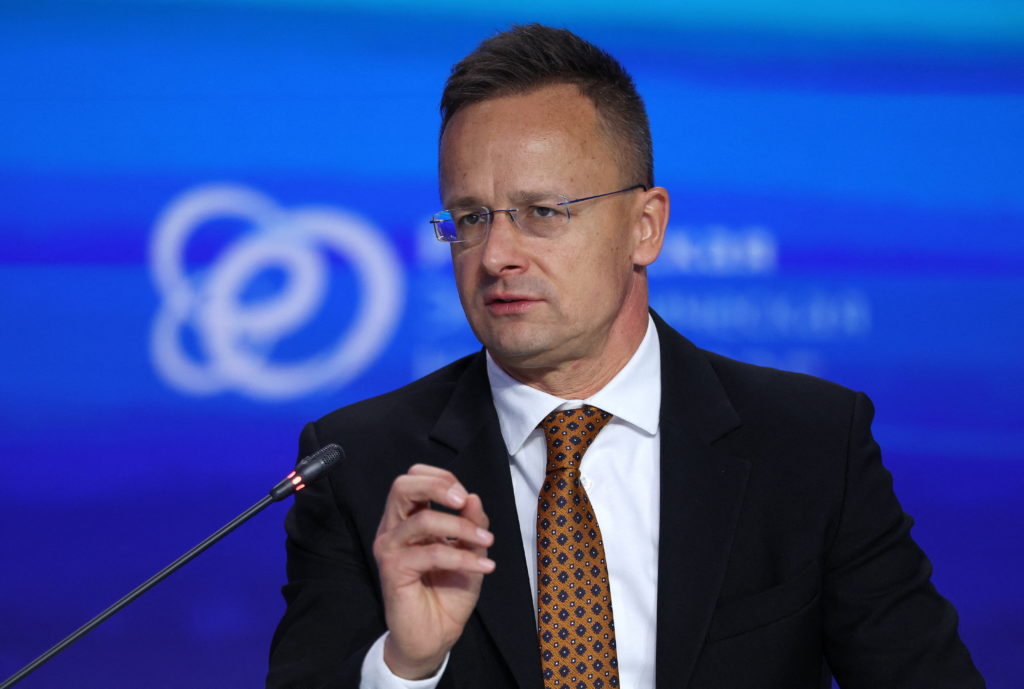
Hungary will block 90-billion-euro EU loan to Ukraine until Russian oil shipments resume
Oil shipments disrupted after pipeline damage, with Hungary accusing Ukraine of deliberate disruption
Hungary and Slovakia have suspended diesel shipments to Ukraine in response
Slovakia threatens to stop emergency electricity supplies if oil doesn't resume by Monday
Orbán's government maintains strong ties with Russia and opposes EU sanctions
📖 Full Retelling
Hungarian Foreign Minister Péter Szijjártó announced in Budapest on February 21, 2026, that his country will block a planned 90-billion-euro European Union loan to Ukraine until Russian oil shipments through the Druzhba pipeline resume, which have been disrupted since January 27 following what Hungarian officials claim was a deliberate action by Ukraine. The interruption occurred after Ukrainian officials reported a Russian drone attack damaged the Druzhba pipeline, which carries Russian crude across Ukrainian territory to Central European countries including Hungary and Slovakia. Both nations, which have received temporary exemptions from EU sanctions on Russian oil imports, have accused Ukraine without providing evidence of deliberately holding up supplies, leading to reciprocal measures where both countries recently ceased shipping diesel to Ukraine.
In a video posted on social media, Szijjártó accused Ukraine of "blackmailing" Hungary by failing to restart oil shipments, stating his government would not support Ukraine's war efforts or pay for them. He explicitly linked the resumption of oil flows to Hungary's approval of the EU loan, which was designed to help Ukraine meet its military and economic needs for the next two years. Hungary's decision came shortly after it suspended diesel shipments to Ukraine and just before the fourth anniversary of Russia's full-scale invasion, highlighting the deepening tensions between EU members over energy security and support for Ukraine.
The move underscores Hungary's continued reliance on Russian energy under Prime Minister Viktor Orbán, who has long argued that Russian fossil fuels are indispensable for Hungary's economy and that switching to alternative sources would cause economic collapse. Orbán, widely seen as the Kremlin's biggest advocate in the EU, has consistently opposed bloc sanctions against Russia over its invasion and has frequently threatened to veto EU efforts to assist Ukraine. Slovakia's Prime Minister Robert Fico joined the pressure, threatening to stop emergency electricity supplies to Ukraine if oil doesn't resume flowing through the Druzhba by Monday. While the 90-billion-euro loan package was previously opposed by Hungary, Slovakia, and the Czech Republic, a compromise was reached where these countries didn't block the loan but were promised protection from financial fallout.
🏷️ Themes
EU-Ukraine relations, Energy politics, Geopolitical tensions
The Druzhba pipeline (Russian: нефтепровод «Дружба», Czech: Ropovod Družba), also referred to as the Friendship Pipeline and the Comecon Pipeline, is one of the world's longest oil pipelines and one of the largest oil pipeline networks in the world. It began operation in 1964 and remains in operatio...
The petroleum or oil industry in Russia is one of the largest in the world. Russia has the largest reserves and was the largest exporter of natural gas. It has the sixth largest oil reserves, and is one of the largest producers of oil.
# Ukraine
**Ukraine** is a country located in Eastern Europe. It is the second-largest country in Europe by area, after Russia. Known for its extensive fertile plains, the nation serves as a critical global exporter of grain and is considered a middle power in international affairs.
## Geography a...
Hungary is a landlocked country in Central Europe. Spanning much of the Carpathian Basin, it is bordered by Slovakia to the north, Ukraine to the northeast, Romania to the east and southeast, Serbia to the south, Croatia and Slovenia to the southwest, and Austria to the west. Hungary lies within the...
Hungary's threat to block a 90‑billion‑euro EU loan to Ukraine over stalled Russian oil shipments shows how energy disputes can be used as leverage in geopolitical conflicts. The move risks undermining EU solidarity and could pressure other member states to reconsider their support for Ukraine.
Context & Background
Hungary and Slovakia have continued to import Russian oil despite EU sanctions
The Druzhba pipeline was damaged by a drone attack, halting oil flows to Hungary and Slovakia
Hungary's foreign minister accused Ukraine of 'blackmailing' over the oil dispute
The EU approved a 90‑billion‑euro interest‑free loan to Ukraine in December
Hungary and Slovakia opposed the loan but were later promised protection from financial fallout
What Happens Next
The EU may need to negotiate new terms to secure the loan while addressing Hungary's objections, potentially involving diplomatic pressure or alternative funding mechanisms. Ukraine will likely seek other sources of energy and financial aid to maintain its war effort and may appeal to EU institutions for support.
Frequently Asked Questions
Why is Hungary blocking the loan?
Hungary says Ukraine is blackmailing over the resumption of Russian oil shipments, and it does not want to finance Ukraine's war.
What is the Druzhba pipeline?
The Druzhba pipeline carries Russian crude across Ukrainian territory into Central Europe and was damaged by a drone attack.
How will this affect EU-Ukraine relations?
It could strain EU unity, as Hungary threatens to block EU decisions favorable to Ukraine if oil supplies do not resume.
Original Source
By — Justin Spike, Associated Press Justin Spike, Associated Press Leave your feedback Share Copy URL Email Facebook Twitter LinkedIn Pinterest Tumblr Share on Facebook Share on Twitter Hungary's foreign minister says country will block key EU loan to Ukraine until Russian oil shipments resume World Feb 21, 2026 2:28 PM EST BUDAPEST, Hungary — Hungary will block a planned 90-billion-euro ($106-billion) European Union loan to Ukraine until the flow of Russian oil through the Druzhba pipeline resumes, Hungary's foreign minister said. Russian oil shipments to Hungary and Slovakia have been interrupted since Jan. 27 after what Ukrainian officials said was a Russian drone attack damaged the Druzhba pipeline, which carries Russian crude across Ukrainian territory and into Central Europe. Hungary and Slovakia, which have both received a temporary exemption from an EU policy prohibiting imports of Russian oil, have accused Ukraine — without providing evidence — of deliberately holding up supplies. Both countries ceased shipping diesel to Ukraine this week over the interruption in oil flows. WATCH: Rubio bolsters Hungary's far-right leader days after push to mend U.S. ties in Europe In a video posted on social media Friday evening, Foreign Minister Péter Szijjártó accused Ukraine of "blackmailing" Hungary by failing to restart shipments. He said his government would block a massive interest-free loan the EU approved in December to help Kyiv to meet its military and economic needs for the next two years. "We will not give in to this blackmail. We do not support Ukraine's war, we will not pay for it," Szijjártó said. "As long as Ukraine blocks the resumption of oil supplies to Hungary, Hungary will block European Union decisions that are important and favorable for Ukraine." Hungary's decision to block the key funding came two days after it suspended diesel shipments to its embattled neighbor and only days before the fourth anniversary of Russia's full-scale invasion. Nearly e...