
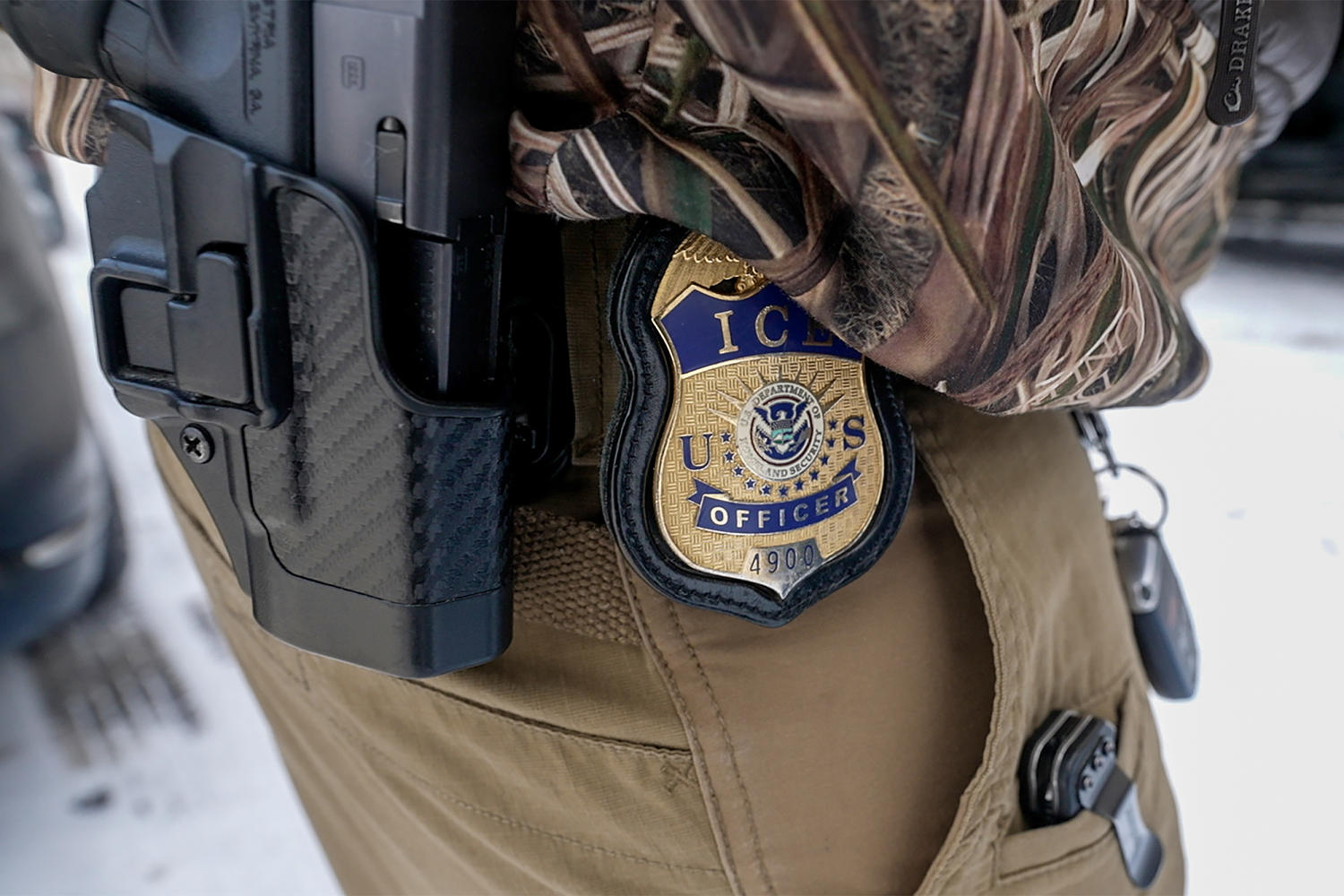
Immigration arrests of people without criminal convictions have increased eightfold under Trump, report says
#immigration arrests #Trump administration #ICE #UC Berkeley #criminal convictions #street arrests #immigration policy #enforcement priorities
📌 Key Takeaways
- Immigration arrests of people without criminal convictions increased eightfold under the Trump administration.
- The rise is directly linked to a steep increase in immigration-related street arrests by ICE.
- UC Berkeley's analysis of ICE data revealed this significant shift in enforcement priorities.
- This trend reflects a policy change to target all undocumented immigrants, not just those with criminal records.
- The report highlights broader implications for community trust and immigration enforcement strategies.
📖 Full Retelling
🏷️ Themes
Immigration Enforcement, Trump Administration Policies, Data Analysis, ICE Operations
📚 Related People & Topics

University of California, Berkeley
Public university in Berkeley, California
The University of California, Berkeley (UC Berkeley, Berkeley, Cal, or California) is a public land-grant research university in the Southside and Northside neighborhoods of Berkeley, California, United States. Founded in 1868 and named after the Anglo-Irish philosopher George Berkeley, it is the st...
Presidency of Donald Trump
Index of articles associated with the same name
Presidency of Donald Trump may refer to:

United States Immigration and Customs Enforcement
US federal law enforcement agency
The United States Immigration and Customs Enforcement (ICE) is a federal law enforcement agency under the United States Department of Homeland Security. Its stated mission is to conduct criminal investigations, enforce immigration laws, preserve national security, and protect public safety. ICE was ...
Entity Intersection Graph
No entity connections available yet for this article.
Mentioned Entities
Deep Analysis
Why It Matters
This data provides empirical evidence of a fundamental shift in U.S. immigration enforcement strategy, moving away from a focus on public safety threats to broad-based removal. It highlights the human impact of policy changes, affecting millions of law-abiding undocumented residents and their families. The findings serve as a critical benchmark for evaluating the effectiveness and morality of different immigration enforcement approaches, influencing future policy debates and legal challenges.
Context & Background
- Prior to the Trump administration, ICE enforcement generally prioritized individuals convicted of serious crimes, recent border crossers, and those deemed threats to national security.
- Executive Order 13768, signed in January 2017, significantly expanded the definition of enforcement priorities to include virtually any undocumented immigrant removable under the law.
- The creation of the 287(g) program and similar agreements historically allowed local law enforcement to enforce federal immigration laws, though cooperation levels varied by jurisdiction.
- Deportation numbers fluctuated under the Obama administration, which also faced criticism for high removal numbers, though the prioritization of criminals remained a distinct feature compared to the Trump era's broader scope.
What Happens Next
Advocacy groups and legal scholars are likely to use this report to challenge current ICE tactics and push for legislative reforms limiting enforcement discretion. Future administrations may utilize this data to justify reversing course and reinstating prioritization guidelines that focus on convicted criminals. Congressional budget debates regarding ICE funding will likely reference these statistics as arguments for increasing oversight or restricting resources for interior enforcement.
Frequently Asked Questions
The report defines 'non-criminal' as individuals lacking serious or violent criminal convictions, though they may have minor infractions or no criminal record at all.
The increase was driven by 'street arrests,' where ICE agents apprehended individuals in neighborhoods, workplaces, and public spaces rather than at jails or the border.
Supporters of the policy argued that enforcing immigration laws against all undocumented immigrants was necessary to uphold the rule of law and maintain border security.
Critics argue that targeting non-criminals diverts resources from public safety threats, undermines trust in law enforcement, and causes undue harm to families and communities.