
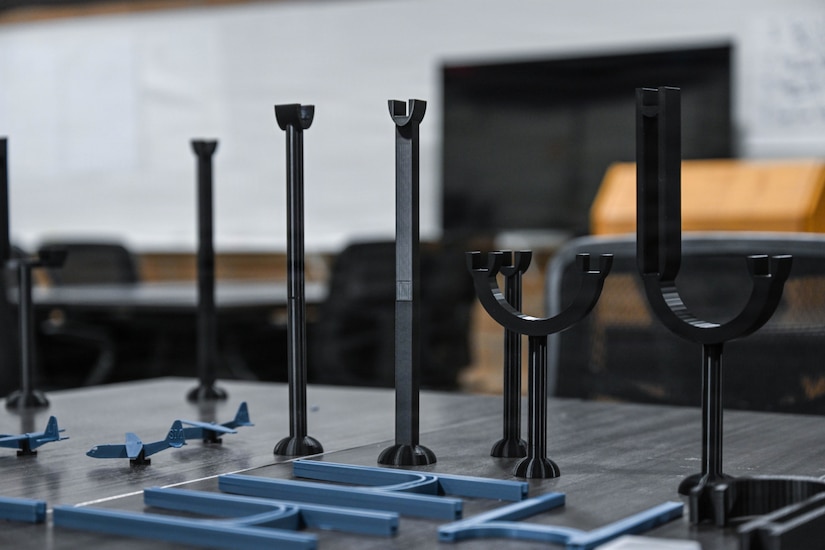
Innovation in Action: Airman-Built 3D Model Strengthens Air Traffic Controller Training
#3D model #air traffic controller #training #military innovation #simulation #airman #aviation
📌 Key Takeaways
- An airman developed a 3D model to enhance air traffic controller training.
- The model provides a realistic simulation of air traffic control scenarios.
- It aims to improve training efficiency and controller readiness.
- This innovation demonstrates grassroots problem-solving within the military.
📖 Full Retelling
🏷️ Themes
Military Innovation, Training Enhancement
Entity Intersection Graph
No entity connections available yet for this article.
Deep Analysis
Why It Matters
This development matters because it directly enhances aviation safety by improving air traffic controller training through more realistic simulation tools. It affects military aviation operations, training programs, and potentially civilian air traffic control systems that may adopt similar innovations. The initiative demonstrates how grassroots innovation within military ranks can lead to practical solutions that improve critical infrastructure and operational readiness.
Context & Background
- Traditional air traffic controller training has relied heavily on 2D radar displays and classroom instruction, which can create a gap between training scenarios and real-world operations
- The U.S. military has been investing in advanced simulation technologies across various training domains, including flight simulators for pilots and virtual reality systems for maintenance crews
- 3D printing technology has become increasingly accessible in recent years, allowing for rapid prototyping and custom tool creation at relatively low cost compared to commercial training systems
What Happens Next
The 3D model will likely undergo further refinement and testing within the specific military unit where it was developed. If proven effective, it may be adopted more widely across other Air Force training facilities. Within 6-12 months, we might see formal evaluation reports and potentially integration with existing training curriculum. The technology could also inspire similar innovations in other military training domains or be adapted for civilian air traffic control training programs.
Frequently Asked Questions
A 3D model provides spatial awareness and depth perception that 2D displays cannot, allowing trainees to better visualize aircraft positions, altitudes, and movement patterns in three-dimensional space. This creates more realistic training scenarios that better prepare controllers for actual operational environments.
This demonstrates that frontline personnel understand training gaps better than external developers and can create targeted solutions. It shows innovation can emerge organically within organizations when personnel are empowered to solve problems they encounter daily.
Yes, the principles and technology could absolutely transfer to civilian applications. Many civilian air traffic control training programs face similar challenges with 2D simulation limitations, and this type of affordable 3D modeling could enhance training at airports and FAA facilities worldwide.
The model may have limited scalability compared to digital simulations and might not easily integrate with existing electronic training systems. Additionally, physical models cannot dynamically change scenarios as quickly as computer simulations can during training exercises.
This aligns with the Department of Defense's emphasis on rapid innovation and leveraging emerging technologies. It represents the 'bottom-up' innovation approach where practical solutions emerge from operational personnel rather than top-down development programs.