
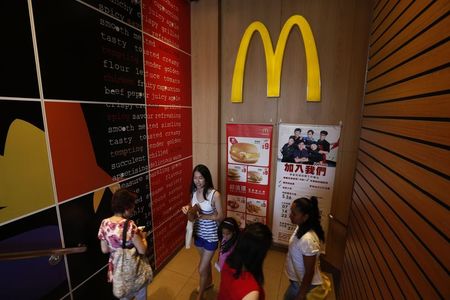
Iran war is having negative effects on both restaurant demand and supply, analyst
#Iran war #Restaurant industry #Supply chain disruption #Energy costs #Consumer spending #McDonald's #Restaurant Brands International #Franchisee margins
📌 Key Takeaways
- Iran war is negatively impacting global restaurant demand and supply chains
- Rising energy costs disproportionately affecting low-income consumers' food spending
- McDonald's implemented hedging programs but faces potential margin pressure if energy prices remain high
- Supply chain disruptions are particularly severe in Asian markets
📖 Full Retelling
🏷️ Themes
Geopolitical Impact, Economic Pressure, Consumer Behavior, Supply Chain Disruption
📚 Related People & Topics

Consumer spending
Total spending by a set of households
Consumer spending is the total money spent on final goods and services by individuals and households. There are two components of consumer spending: induced consumption (which is affected by the level of income) and autonomous consumption (which is not).
Energy price
Topics referred to by the same term
The following articles relate to the price of energy:
List of wars involving Iran
This is a list of wars involving the Islamic Republic of Iran and its predecessor states. It is an unfinished historical overview.
Entity Intersection Graph
Connections for Consumer spending:
Mentioned Entities
Deep Analysis
Why It Matters
The Iran war's impact on restaurant chains like McDonald's and Restaurant Brands International represents a significant economic ripple effect affecting global food service industries. The rising energy costs and gas price surges are particularly harming low-income consumers who spend a disproportionate amount of their income on fuel, directly reducing their discretionary spending on dining out. This situation threatens franchisee profitability, potentially slowing expansion plans and affecting thousands of jobs across the restaurant industry while also signaling broader inflationary pressures in the global economy.
Context & Background
- The Iran conflict has been ongoing since at least 2024, creating geopolitical tensions in the Middle East
- Energy markets have been volatile since the conflict began, with oil and gas prices experiencing significant fluctuations
- Fast-food industry has faced multiple challenges since the COVID-19 pandemic, including supply chain disruptions and changing consumer behaviors
- McDonald's and Restaurant Brands International have implemented robust hedging strategies in recent years to manage commodity price volatility
- Low-income demographics have been particularly vulnerable to economic shocks since the 2008 financial crisis
- The restaurant industry has been experiencing inflationary pressures since 2021, with food and labor costs rising significantly
- Geopolitical conflicts in the Middle East have historically impacted global energy markets and economic stability
What Happens Next
If energy prices remain elevated through the second half of 2026, McDonald's hedging programs will roll over at higher market rates, potentially squeezing franchisee margins. This could lead to reduced expansion plans, menu price increases, or cost-cutting measures across the restaurant chain. Additionally, continued pressure on low-income consumer spending may force restaurant chains to develop value-oriented menu options or promotional strategies to maintain customer traffic. The broader economic impact could include slower GDP growth in consumer-driven economies and potential monetary policy responses from central banks.
Frequently Asked Questions
The Iran war is causing rising energy costs and gas price surges that reduce consumer spending power, particularly among low-income demographics who spend a higher percentage of their income on fuel. This directly impacts discretionary spending on dining out while also increasing operational costs for restaurant chains.
Currently, direct U.S. supply chain impacts remain limited for these fast-food giants. However, the broader macroeconomic fallout is increasingly visible with rising energy and commodity costs expected to tighten franchisee margins over time.
McDonald's has leveraged robust hedging programs for both energy and commodities to shield corporate-owned stores and franchisees from immediate volatility. These financial instruments help lock in prices and protect against short-term market fluctuations.
Low-income consumers are being disproportionately affected as they spend a higher percentage of their income on fuel. The recent surge in gas prices effectively acts as a direct tax on their discretionary food-away-from-home spending.
If energy prices stay high through the second half of 2026, McDonald's hedges would eventually roll over at higher market rates, potentially burdening franchisee profitability and slowing down expansion plans. This could lead to reduced growth in the restaurant sector and potentially higher menu prices for consumers.
Rising energy costs can trigger broader inflationary pressures, potentially leading to slower economic growth, reduced consumer spending across multiple sectors, and possible monetary policy responses from central banks to combat inflation.