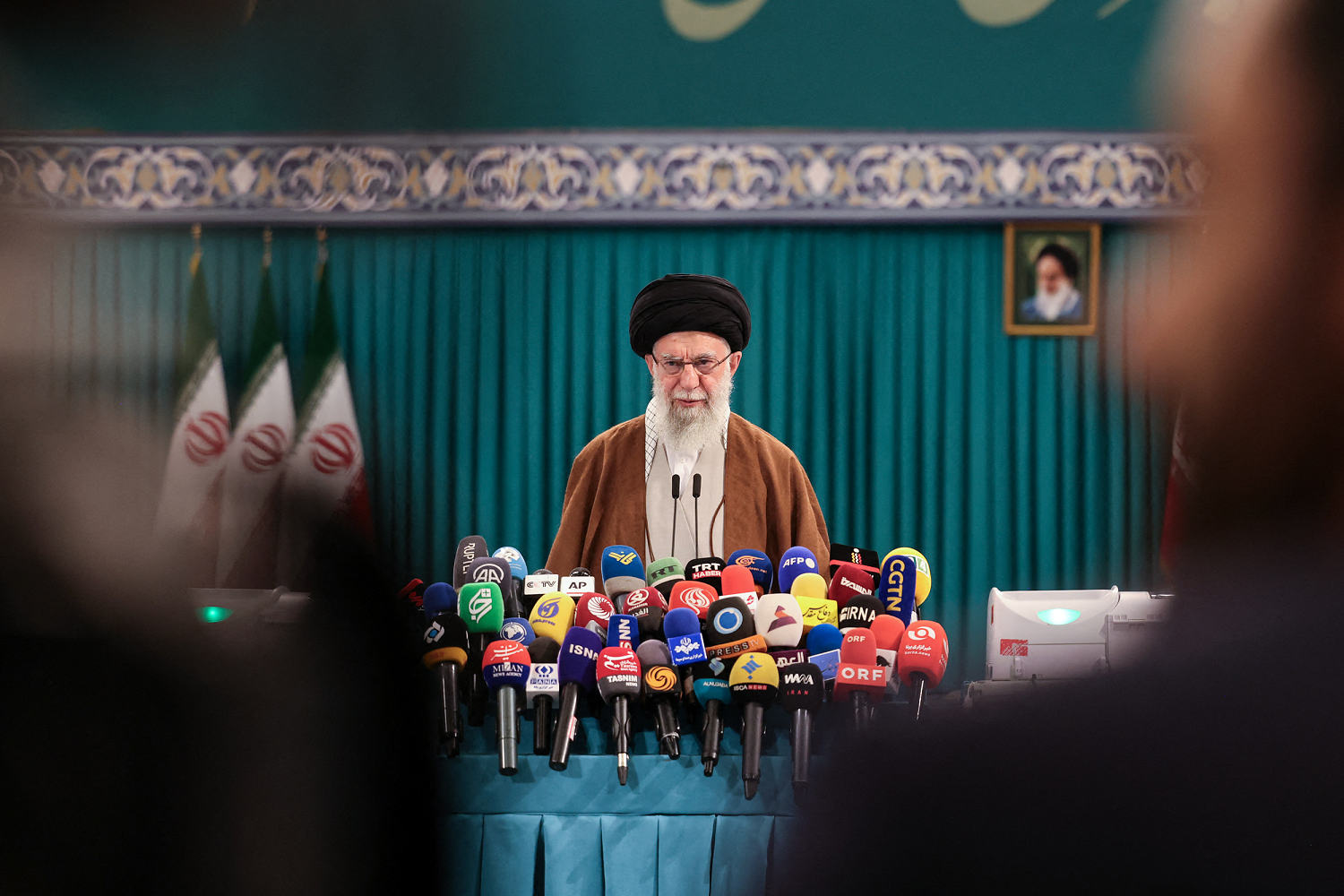
Iran's hard-line supreme leader is dead after major military strikes, Trump says
#Iran#Ayatollah Ali Khamenei#Trump#U.S.#Israel#Military Strike#Islamic Revolution#Supreme Leader#Regional Conflict#Nuclear Program#导弹#Middle East
📌 Key Takeaways
Ayatollah Ali Khamenei, Iran's supreme leader for 36 years, is reported dead after a U.S.-Israeli military strike.
The strike targeted multiple Iranian facilities including those of the Islamic Revolutionary Guard Corps.
The Iranian government has not confirmed Khamenei's death, but rejected Trump’s claim.
The U.S. stated the operation aimed to eliminate imminent threats from Iran’s ballistic missile and nuclear programs.
Iran has vowed a 'crushing response,' launching missiles at Israel and U.S. bases in the region.
The UN Security Council held an emergency meeting, warning of potential wider regional instability.
Trump urged Iranian civilians to seize control of their government following the strikes.
The US administration planned to brief lawmakers on the military attack.
📖 Full Retelling
President Donald Trump has announced that Iran’s supreme leader, Ayatollah Ali Khamenei, was killed on Saturday following a U.S. and Israeli military assault. Khamenei ruled the Islamic Republic for 36 years. The strike targeted multiple facilities across Iran, including those of the Islamic Revolutionary Guard Corps and air defense capabilities. The Iranian government has not confirmed his death, but Iranian state media rejected Trump’s claim. This event marks a significant shift for Iran, which has been under a theocratic regime since the 1979 Islamic Revolution, potentially creating a leadership vacuum and increasing regional instability. The U.S. stated its objective was to eliminate imminent threats from Iran's ballistic missile and nuclear programs.
🏷️ Themes
International Relations, Middle East Conflict, Political Leadership, Military Action, Regional Instability, Theocracy, Geopolitics
Entity Intersection Graph
No entity connections available yet for this article.
Deep Analysis
Why It Matters
The death of Iran's Supreme Leader Ayatollah Ali Khamenei marks a significant geopolitical shift, potentially destabilizing the Middle East and creating a leadership vacuum in Iran. This event has implications for regional security, nuclear negotiations, and the future of the Islamic Republic.
Context & Background
Ayatollah Khamenei ruled Iran for 36 years.
Recent months saw widespread protests in Iran due to economic discontent and social restrictions.
Tensions between Iran and the U.S. and Israel have been high for years, particularly regarding Iran's nuclear program.
What Happens Next
The Iranian government has not confirmed Khamenei's death, leading to uncertainty and potential internal power struggles. Iran's response to the attacks and the broader regional implications will be closely monitored by international powers. The U.S. and Israel are expected to continue monitoring the situation and potentially conducting further operations.
Frequently Asked Questions
Who announced Khamenei's death?
President Donald Trump announced Khamenei's death on Truth Social.
What was the stated objective of the U.S. and Israeli strikes?
The U.S. and Israel stated their objective was to eliminate imminent threats from the Iranian regime and defend American interests.
What has been Iran's response to the attacks?
Iran has vowed a 'crushing response' and launched missile barrages at Israel and U.S. bases in the region.
What is the potential impact on regional stability?
The attacks carry the risk of igniting a chain of events that could destabilize the already volatile Middle East, drawing in more countries.
}
Original Source
Iran's hard-line supreme leader is dead after major military strikes, Trump says Ayatollah Ali Khamenei ruled the Islamic Republic with an iron grip for 36 years. Add NBC News to Google Trump says Iran's supreme leader was killed in attack by U.S. and Israel 03:29 Get more news on Share Add NBC News to Google Feb. 28, 2026, 7:03 PM EST / Updated Feb. 28, 2026, 7:06 PM EST By Corky Siemaszko and Daniel Arkin Listen to this article with a free account 00:00 00:00 President Donald Trump announced that Iran’s supreme leader, Ayatollah Ali Khamenei, was killed on Saturday after the U.S. and Israel launched a predawn assault on the country he had ruled with an iron grip for 36 years. “This is not only Justice for the people of Iran, but for all Great Americans, and those people from many Countries throughout the World, that have been killed or mutilated by Khamenei and his gang of bloodthirsty THUGS,” Trump posted on Truth Social. Trump told NBC News in an earlier interview that “most” of Iran’s senior leadership is “gone.” The Iranian government has not confirmed whether Khamenei is alive or dead, and Iranian state media outlet Fars rejected what it characterized as Trump’s “baseless claim,” without providing specifics. Khamenei’s reported killing came amid a major military combat campaign dubbed “Operation Epic Fury,” following months of heated rhetoric and repeated warnings from Trump about military intervention in Iran. Read live updates here. The supreme leader’s death heralds a seismic shift for a nation that has been controlled by a theocratic regime since the Islamic Revolution of 1979. It also creates a leadership vacuum in Tehran as heads of state worldwide grapple with the prospect of wider regional instability. In a video message posted online, Trump urged Iranian civilians to seize control of their government after the strikes concluded. “When we are finished, take over your government,” he said. “It will be yours to take.” U.S. and partner Israeli forces str...