
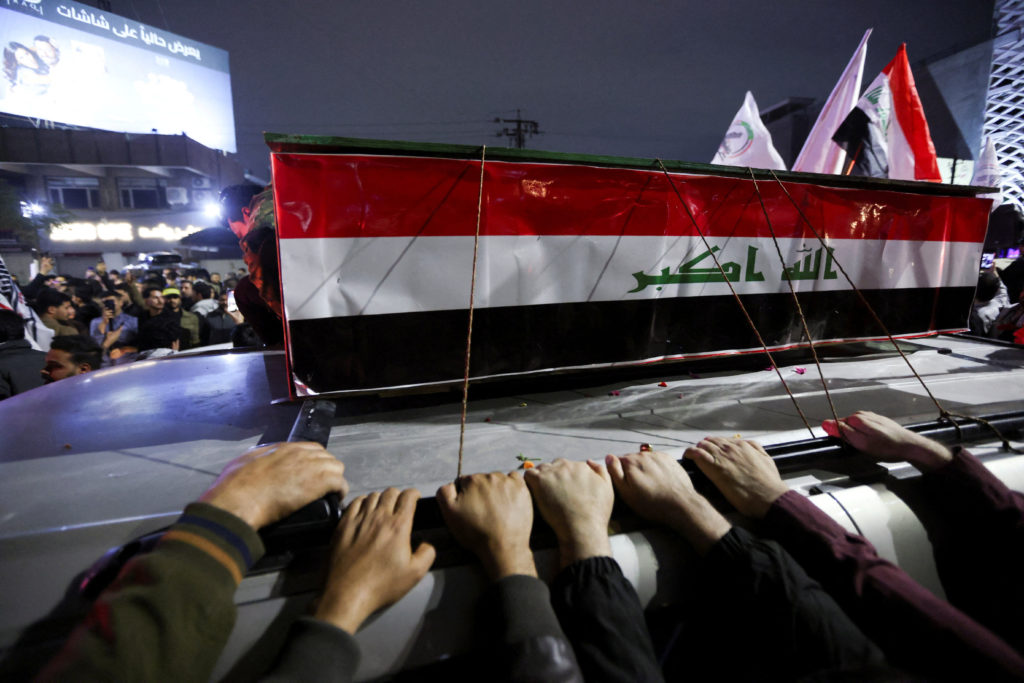
Iraq is caught in the crossfire of the Iran war, with attacks by both sides on its soil
#Iraq #Iran #crossfire #attacks #sovereignty #regional conflict #destabilization
📌 Key Takeaways
- Iraq faces military attacks from both Iran and opposing forces on its territory.
- The country's sovereignty is compromised due to external conflicts spilling over its borders.
- These incidents highlight Iraq's vulnerable position in regional geopolitical tensions.
- The situation risks further destabilizing Iraq's internal security and political stability.
🏷️ Themes
Regional Conflict, Sovereignty
📚 Related People & Topics

Iraq
Country in West Asia
Iraq, officially the Republic of Iraq, is a country in West Asia. Located within the geo-political region of the Middle East, it is bordered by Saudi Arabia to the south, Turkey to the north, Iran to the east, the Persian Gulf and Kuwait to the southeast, Jordan to the southwest, and Syria to the we...

Iran
Country in West Asia
# Iran **Iran**, officially the **Islamic Republic of Iran** and historically known as **Persia**, is a sovereign country situated in West Asia. It is a major regional power, ranking as the 17th-largest country in the world by both land area and population. Combining a rich historical legacy with a...
Entity Intersection Graph
Connections for Iraq:
Mentioned Entities
Deep Analysis
Why It Matters
This situation matters because Iraq's sovereignty is being violated by both Iranian and opposing forces, turning its territory into a battleground for regional conflicts. It affects Iraqi civilians who face security threats and displacement, while the Iraqi government struggles to maintain control and neutrality. The instability could spill over into broader regional conflict, impacting Middle Eastern stability and international energy markets.
Context & Background
- Iraq has been a strategic battleground between Iran and its regional rivals (including Israel, Saudi Arabia, and the US) for decades, particularly since the 2003 US invasion.
- Iran maintains significant influence in Iraq through political allies and proxy militias like the Popular Mobilization Forces (PMF), which emerged to fight ISIS but now answer partly to Tehran.
- Iraq's central government has historically struggled to control its own territory, with semi-autonomous regions like Kurdistan and areas dominated by Iran-backed militias.
- The broader context includes the ongoing shadow war between Iran and Israel, with Iraq previously used as a transit route for Iranian weapons to Syria and Lebanon.
What Happens Next
Expect increased diplomatic pressure on Iraq to rein in militias and prevent its territory from being used for attacks. The Iraqi government may attempt crackdowns on foreign-backed armed groups but faces resistance. Further retaliatory strikes are likely if cross-border attacks continue, potentially drawing Iraq deeper into regional conflict. International mediation efforts may emerge to de-escalate tensions.
Frequently Asked Questions
Iraq's security forces are fragmented and outgunned by powerful Iran-backed militias integrated into official structures. The government fears triggering internal conflict if it confronts these groups directly, and lacks full control over border regions and airspace.
Civilians face collateral damage from strikes, disrupted livelihoods, and psychological trauma from renewed violence. Infrastructure damage and investment flight worsen economic conditions in a country still recovering from war with ISIS.
Iran aims to maintain Iraq as a buffer zone and corridor to Syria, preventing hostile powers from establishing presence near its borders. It uses influence to counter US and Israeli regional interests while securing economic ties.
While full-scale war is unlikely currently, escalating tit-for-tat strikes could draw Iraq into wider conflict. The greater risk is prolonged low-intensity warfare that further destabilizes the country and region.
The US maintains military presence in Iraq at the government's invitation, primarily focused on countering ISIS remnants. It conducts limited strikes against Iran-backed groups when attacked, but aims to avoid being drawn into broader conflict while supporting Iraqi sovereignty.