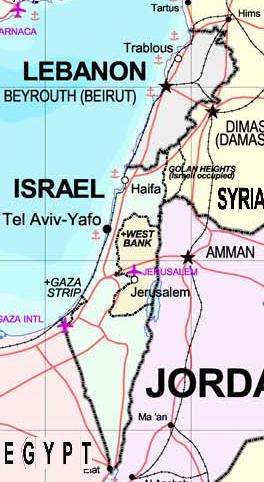
Israel's war in Lebanon has become a flashpoint for the Iran ceasefire
#Israel Lebanon conflict#Iran ceasefire#Hezbollah#US Israel diplomacy#regional proxy war#ceasefire interpretation#Middle East tensions
📌 Key Takeaways
The U.S. and Israel dispute Iran and Pakistan's claim that the Iran-Israel ceasefire includes the Lebanon-Israel front.
The disagreement stems from conflicting interpretations of the ceasefire's geographical and operational scope regarding Iranian proxies.
Iran argues the ceasefire covers all its allied forces, while Israel and the U.S. see the Lebanon conflict as a separate theater.
The dispute risks undermining the ceasefire and complicates efforts to prevent a wider regional war in Lebanon.
📖 Full Retelling
The United States and Israel have publicly stated their disagreement with Iran and Pakistan regarding whether the ongoing conflict between Israel and Hezbollah in Lebanon falls under the terms of a broader ceasefire agreement with Iran, creating a significant diplomatic flashpoint in the region. This dispute centers on the interpretation of the ceasefire's geographical scope and its implications for regional stability.
The core of the disagreement lies in the ambiguous language of the ceasefire, which was primarily negotiated to de-escalate tensions between Israel and Iran following a period of direct hostilities. Iran and its ally, Pakistan, argue that the ceasefire's spirit encompasses all Iranian-backed proxy forces, including Hezbollah in Lebanon, and should therefore mandate a cessation of hostilities there. Conversely, the U.S. and Israel maintain that the agreement was explicitly designed to halt direct Iranian attacks on Israel and does not automatically extend to separate conflict theaters involving Iranian proxies, which they view as distinct military fronts.
This public divergence threatens to undermine the fragile ceasefire itself and complicates international mediation efforts. The situation in southern Lebanon has seen near-daily exchanges of fire between the Israeli military and Hezbollah, raising fears of a full-scale war. The U.S. position, attempting to balance support for Israel with a desire to prevent regional conflagration, is now tested by this interpretative clash. The stalemate highlights the enduring challenge of managing Iran's network of regional alliances and the limitations of bilateral agreements in multifaceted proxy conflicts.
Islamist movement and militant group based in Lebanon
Hezbollah is a Shia Islamist Lebanese political party and paramilitary group. Hezbollah's paramilitary wing is the Jihad Council, and its political wing is the Loyalty to the Resistance Bloc party in the Lebanese Parliament. Its armed strength was assessed to be equivalent to that of a medium-sized ...
Conflict involving Israel and Lebanon-based paramilitary groups
The Israeli–Lebanese conflict, or the South Lebanon conflict, is a long-running conflict involving Israel, Lebanon-based paramilitary groups, and sometimes Syria. The conflict peaked during the Lebanese Civil War. In response to Palestinian attacks from Lebanon, Israel invaded the country in 1978 an...