
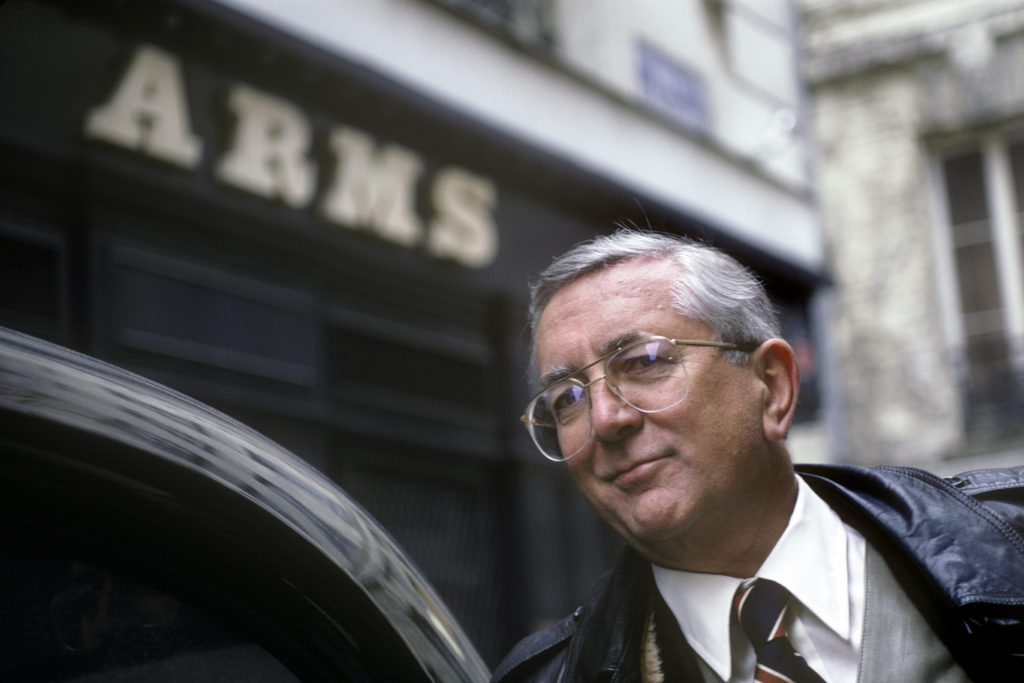
Len Deighton, British author of bestselling spy thrillers, dies at 97
#Len Deighton #spy thrillers #British author #The Ipcress File #Cold War #obituary #bestselling novels
📌 Key Takeaways
- Len Deighton, acclaimed British spy thriller author, has died at age 97.
- He was best known for his bestselling novels that defined the Cold War espionage genre.
- His works, including 'The Ipcress File', were adapted into successful films and TV series.
- Deighton's writing influenced both literature and popular culture, blending realism with intricate plots.
📖 Full Retelling
🏷️ Themes
Literature, Espionage
📚 Related People & Topics

Cold War
1947–1991 geopolitical rivalry between US and USSR
The Cold War was a period of international geopolitical rivalry between the United States (US) and the Soviet Union (USSR) and their respective allies, the capitalist Western Bloc and communist Eastern Bloc, which began in the aftermath of the Second World War and ended with the dissolution of the S...

Len Deighton
British author (1929–2026)
Leonard Cyril Deighton ( DAY-tən; 18 February 1929 – 15 March 2026) was a British author. His publications included cookery books and works on history, but he was best known for his spy novels. After completing his national service in the Royal Air Force, Deighton attended the Saint Martin's School ...
Entity Intersection Graph
Connections for Cold War:
Mentioned Entities
Deep Analysis
Why It Matters
Len Deighton's death marks the end of an era in spy fiction, as he was one of the last surviving authors who defined the Cold War espionage genre alongside contemporaries like John le Carré. His work influenced generations of writers and filmmakers, with his gritty, realistic approach contrasting sharply with the glamorous James Bond archetype. This matters to literature enthusiasts, historians studying Cold War cultural representations, and the publishing industry that benefited from his long and successful career spanning over five decades.
Context & Background
- Len Deighton published his first novel 'The Ipcress File' in 1962, introducing his unnamed working-class protagonist (later called Harry Palmer in film adaptations) who became an anti-establishment alternative to James Bond.
- Deighton's 1978 novel 'SS-GB' presented an alternate history where Nazi Germany successfully invaded Britain, pioneering a subgenre that remains popular today.
- He was part of the 'kitchen sink realism' movement in British spy fiction that emerged in the 1960s, emphasizing bureaucratic drudgery and moral ambiguity over glamorous adventure.
- Deighton also wrote acclaimed historical works including 'Fighter: The True Story of the Battle of Britain' (1977) and 'Blood, Tears and Folly' (1993), demonstrating his expertise in military history.
- His 1983 novel 'Berlin Game' began the 'Game, Set and Match' trilogy that was adapted into a successful television series starring Ian Holm.
What Happens Next
Expect renewed interest in Deighton's backlist with potential reissues and special editions from publishers capitalizing on his legacy. Film and television adaptations may be revisited or newly developed, similar to how le Carré's works saw renewed adaptation interest after his death. Literary scholars will likely publish retrospective analyses of his contribution to the spy genre and Cold War literature, with academic conferences possibly dedicating panels to his work in the coming year.
Frequently Asked Questions
Deighton's novels featured working-class, bureaucratic protagonists navigating moral ambiguity and institutional incompetence, contrasting sharply with Fleming's glamorous, upper-class super-spy. His plots emphasized realistic tradecraft, political complexity, and the psychological toll of espionage rather than exotic adventures. This 'kitchen sink realism' approach made his Cold War Britain feel authentically grimy and morally compromised.
His first three novels became Michael Caine films in the 1960s: 'The Ipcress File' (1965), 'Funeral in Berlin' (1966), and 'Billion Dollar Brain' (1967). The 'Game, Set and Match' trilogy was adapted into a 1988 television series starring Ian Holm. More recently, the BBC produced a television adaptation of 'SS-GB' in 2017, demonstrating his work's enduring appeal across decades.
Deighton wrote acclaimed military history books including 'Fighter: The True Story of the Battle of Britain,' praised for its meticulous research. He was also an accomplished illustrator who designed book covers for his own works and created the animated titles for the film 'The Ipcress File.' Additionally, he wrote cookery columns and books, showcasing his diverse talents beyond the espionage genre.
Deighton maintained a professional friendship with John le Carré, with each acknowledging the other's contributions to elevating spy fiction into serious literature. However, their approaches differed significantly—le Carré focused on institutional betrayal while Deighton emphasized class tensions and bureaucratic absurdity. Both authors rejected the fantasy elements of earlier spy fiction, creating what critics called the 'anti-Bond' movement in British espionage writing.
The unnamed narrator (later called Harry Palmer in films) reflected Deighton's desire to create an 'everyman' character who represented ordinary people caught in extraordinary circumstances. This anonymity emphasized the bureaucratic nature of espionage work where individuals were replaceable cogs in a machine. The device also allowed readers to project themselves into the protagonist's experiences more easily than with a fully-defined character like James Bond.