

Lionel Jospin, France’s Former Prime Minister, Dies at 88
#Lionel Jospin #France #Prime Minister #Socialist Party #Jacques Chirac #death #politics
📌 Key Takeaways
- Lionel Jospin, former Prime Minister of France, has passed away at age 88.
- He served as Prime Minister from 1997 to 2002 under President Jacques Chirac.
- Jospin was a key figure in French politics, leading the Socialist Party and advocating for social reforms.
- His death marks the loss of a prominent statesman in modern French history.
📖 Full Retelling
🏷️ Themes
Politics, Obituary
📚 Related People & Topics
Socialist Party
Index of articles associated with the same name
Socialist Party is the name of many different political parties around the world. This list only includes parties that use the exact name "Socialist Party" for themselves, sometimes alongside the name of the country in which they operate. The list does not include political parties that use the word...
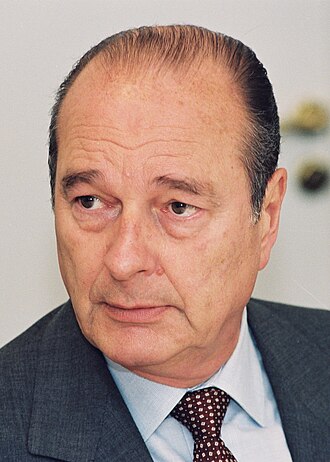
Jacques Chirac
President of France from 1995 to 2007
Jacques René Chirac (UK: , US: ; French: [ʒak ʁəne ʃiʁak] ; 29 November 1932 – 26 September 2019) was a French politician who served as President of France from 1995 to 2007. He was previously Prime Minister of France from 1974 to 1976 and 1986 to 1988, as well as Mayor of Paris from 1977 to 1995. ...

Lionel Jospin
Prime Minister of France from 1997 to 2002
Lionel Robert Jospin (French: [ljɔnɛl ʁɔbɛʁ ʒɔspɛ̃]; 12 July 1937 – 22 March 2026) was a French politician who served as Prime Minister of France from 1997 to 2002. Jospin was First Secretary of the Socialist Party from 1995 to 1997 and the party's candidate for President of France in the 1995 and 2...

Prime minister
Top minister of cabinet and government
A prime minister, also known as a chief of cabinet, chief minister, first minister, minister-president or premier, is the head of the cabinet and the leader of the ministers in the executive branch of government, often in a parliamentary or semi-presidential system. A prime minister is not the head ...

France
Country primarily in Western Europe
France, officially the French Republic, is a country primarily located in Western Europe. Its overseas regions and territories include French Guiana in South America, Saint Pierre and Miquelon in the North Atlantic, the French West Indies, and many islands in Oceania and the Indian Ocean. Metropolit...
Entity Intersection Graph
Connections for Socialist Party:
Mentioned Entities
Deep Analysis
Why It Matters
Lionel Jospin's death marks the passing of a major figure in modern French politics who shaped the country's left-wing politics for decades. As prime minister from 1997-2002, he implemented significant social reforms including the 35-hour work week and civil unions for same-sex couples. His political career, which included a surprising presidential defeat in 2002, influenced generations of French socialists and European center-left politics. This news matters to French citizens, European political observers, and historians studying the evolution of socialist governance in late 20th century Europe.
Context & Background
- Lionel Jospin served as Prime Minister of France from 1997 to 2002 under President Jacques Chirac in a period of 'cohabitation' where the president and prime minister were from opposing parties
- He was the Socialist Party candidate in the 1995 and 2002 presidential elections, famously losing in 2002's first round to far-right candidate Jean-Marie Le Pen in a shocking upset
- Jospin implemented the 35-hour work week, one of France's most significant labor reforms, and introduced the PACS (civil solidarity pact) for same-sex couples
- Before politics, he was a diplomat and professor, and served as First Secretary of the Socialist Party from 1981-1988 and 1995-1997
- His government oversaw France's adoption of the euro currency in 1999 and the transition to the European single currency
What Happens Next
France will likely hold official commemorations including a national tribute ceremony at the Hôtel des Invalides in Paris. Political figures across the spectrum will issue statements honoring his legacy, particularly within the Socialist Party where he remained influential. Historians and political analysts will reassess his legacy, especially his controversial 2002 presidential defeat and his 'plural left' coalition government. Memorial services will be organized in Toulouse, where he spent much of his later life away from frontline politics.
Frequently Asked Questions
Jospin's government implemented the landmark 35-hour work week that remains central to French labor law today. He introduced the PACS civil union system, granting legal recognition to same-sex couples years before marriage equality. His administration also oversaw France's transition to the euro currency and implemented youth employment programs that created hundreds of thousands of jobs.
Jospin finished third in the first round behind Jacques Chirac and far-right candidate Jean-Marie Le Pen, eliminating him from the runoff. This was unprecedented for a sitting prime minister and mainstream left candidate, causing a political earthquake in France. The defeat led to massive protests against Le Pen and ultimately Chirac's landslide re-election with 82% of the vote.
After his 2002 defeat, Jospin largely withdrew from frontline politics but remained an influential voice through writings and occasional interventions. He criticized what he saw as the Socialist Party's drift toward centrism under later leaders. His concept of a 'plural left' coalition government influenced subsequent socialist strategies, though his critique of modern politics made him somewhat isolated within the party.
Jospin had a complex relationship with François Mitterrand, serving as his education minister but later criticizing some of his policies. His 'cohabitation' with conservative President Jacques Chirac was notably productive despite their ideological differences. Within the Socialist Party, he represented the traditional left wing, often clashing with more centrist figures like Dominique Strauss-Kahn and later François Hollande.