
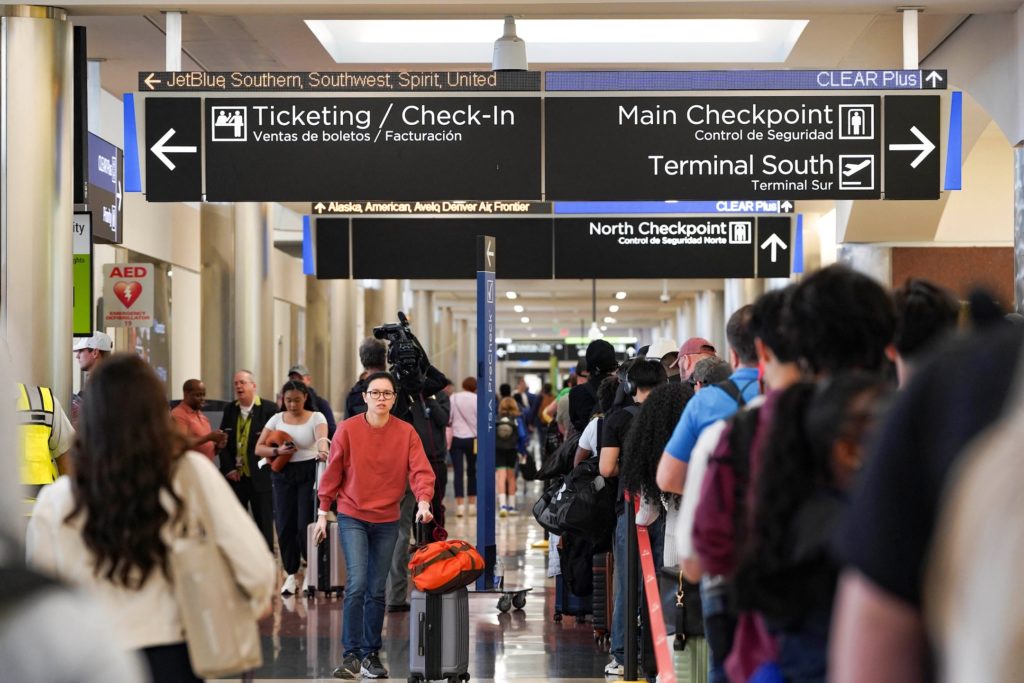
Long lines, frustrations grow at airports as DHS shutdown strains TSA staffing
#TSA #DHS shutdown #airport lines #staffing shortages #travel frustrations #security checkpoints #airport wait times
📌 Key Takeaways
- TSA staffing shortages due to DHS shutdown cause increased airport wait times
- Travelers report growing frustrations with extended security lines
- DHS shutdown impacts TSA operations and personnel availability
- Airport efficiency declines as security checkpoints face understaffing
📖 Full Retelling
🏷️ Themes
Government Shutdown, Travel Disruptions
📚 Related People & Topics

Transportation Security Administration
United States federal government agency
The Transportation Security Administration (TSA) is an agency of the United States Department of Homeland Security (DHS) that has authority over the security of transportation systems within and connecting to the United States. It was created as a response to the September 11 attacks to improve airp...
Entity Intersection Graph
Connections for Transportation Security Administration:
View full profileMentioned Entities
Deep Analysis
Why It Matters
This news matters because it directly impacts millions of travelers who face increased wait times and potential missed flights, creating economic and personal disruptions. It affects TSA employees who are working without pay during the shutdown, potentially impacting morale and staffing levels. The situation also raises national security concerns if understaffing compromises screening effectiveness, and it highlights broader consequences of government shutdowns on essential services.
Context & Background
- The Department of Homeland Security (DHS) oversees TSA, which was created after 9/11 to federalize airport security
- Government shutdowns occur when Congress fails to pass appropriations bills, forcing non-essential federal employees to furlough
- TSA officers are considered essential personnel and must work during shutdowns but may not receive timely pay
- Previous shutdowns have led to increased TSA absentee rates as financial pressures mount on unpaid workers
- Air travel has rebounded to pre-pandemic levels, putting additional strain on security checkpoints
What Happens Next
Travelers should expect worsening conditions if the shutdown continues, with potential for more TSA call-outs and longer delays. Congress will face increasing pressure to resolve the funding impasse as public frustration grows. Airports may implement contingency plans like consolidating checkpoints or advising extra arrival time. If prolonged, some TSA officers may seek other employment, creating longer-term staffing challenges.
Frequently Asked Questions
TSA employees are designated as essential personnel who must continue working to maintain national security, but their pay is delayed until funding is restored. They typically receive back pay once the shutdown ends, but face immediate financial hardship.
Travelers should arrive at least 3 hours before domestic flights and 4 hours for international flights. Check airport websites for real-time wait information and consider enrolling in TSA PreCheck or CLEAR to use expedited lanes.
Airports may consolidate security checkpoints, leading to longer lines at fewer open lanes. In extreme cases, airports could temporarily close checkpoints or terminals, though this is a last resort given security requirements.
The DHS shutdown also impacts Customs and Border Protection, potentially causing longer immigration lines. Airport concessions and airlines may see reduced spending as passengers spend more time in security lines rather than shopping or dining.
Yes, fatigue and financial stress among unpaid workers could potentially impact screening vigilance. However, TSA maintains that security standards won't be compromised, though wait times may increase as they manage reduced staffing.