

LPL Research: 8 reasons why the SCOTUS tariff win isn’t a total victory
#Supreme Court #Trump tariffs #IEEPA #Trade policy #Market reaction #Reciprocal tariffs #Trade war #Legal challenge
📌 Key Takeaways
- Supreme Court invalidated Trump-era tariffs under IEEPA
- Decision removes nearly half of current U.S. tariffs including those on Canada, Mexico, and China
- Market reacted with complex movements across equities and bonds
- Ruling is not a complete victory for free trade advocates due to limited scope and alternative legal frameworks
- Tariff removals will benefit some sectors while creating uncertainty for others
📖 Full Retelling
🏷️ Themes
Trade Policy, Legal Ruling, Market Impact, International Relations
📚 Related People & Topics
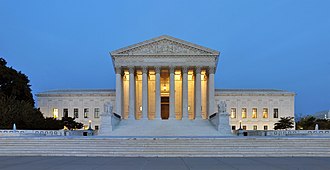
Supreme court
Highest court in a jurisdiction
In most legal jurisdictions, a supreme court, also known as a court of last resort, apex court, high (or final) court of appeal, and court of final appeal, is the highest court within the hierarchy of courts. Broadly speaking, the decisions of a supreme court are binding on all other courts in a nat...

Commercial policy
Government's policy governing international trade
A commercial policy (also referred to as a trade policy or international trade policy) is a government's policy governing international trade. Commercial policy is an all encompassing term that is used to cover topics which involve international trade. Trade policy is often described in terms of a ...

International Emergency Economic Powers Act
United States federal law
The International Emergency Economic Powers Act (IEEPA), Title II of Pub. L. 95–223, 91 Stat. 1626, enacted December 28, 1977, is a United States federal law authorizing the president to regulate international commerce after declaring a national emergency in response to any unusual and extraordinary...
Tariffs in the Trump administration
Topics referred to by the same term
Tariffs in the Trump administration could refer to:
Entity Intersection Graph
Connections for Supreme court:
Deep Analysis
Why It Matters
The Supreme Court ruling invalidates half of the U.S. tariff regime, reshaping trade policy and market expectations, potentially easing tensions with key partners while raising uncertainty about future tariffs
Context & Background
- Supreme Court decision struck down IEEPA-backed tariffs
- Tariffs on Canada, Mexico, China were largely eliminated
- Market reaction included volatility in equities and bonds
What Happens Next
The U.S. government will likely negotiate new trade agreements or adjust tariffs, while businesses adjust supply chains; markets will monitor policy shifts and potential retaliatory measures
Frequently Asked Questions
Reciprocal levies on Canada, Mexico, and China were largely eliminated.
Equity and bond markets experienced volatility following the decision.
The administration may negotiate new agreements or adjust remaining tariffs to align with legal requirements.