
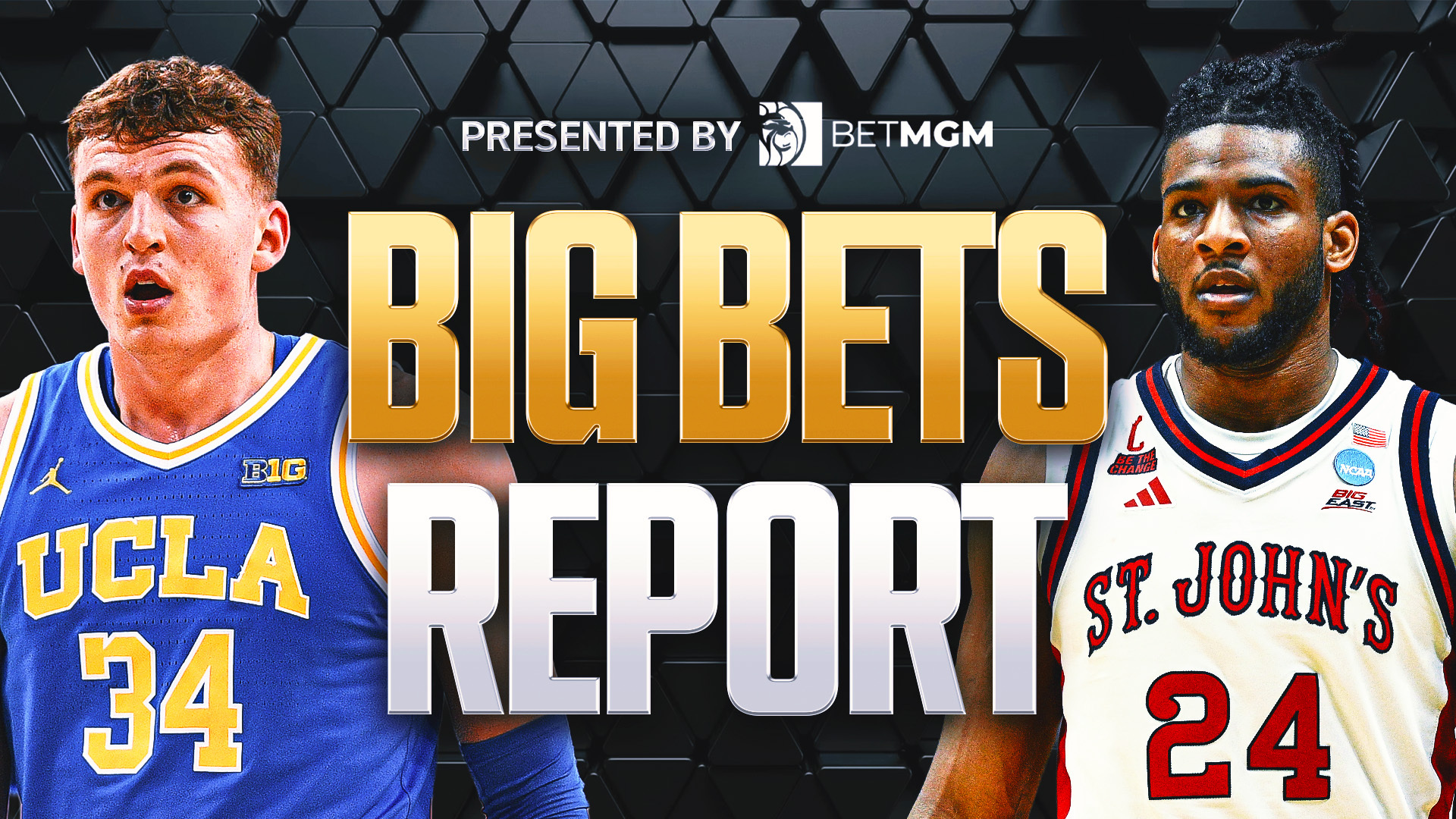
March Madness Big Bets Report: $5k, 5-leg Parlay Cashes for $330k
#parlay #Fanatics Sportsbook #buzzer beater #NCAA Tournament #profit boost #moneyline #spread #DraftKings
📌 Key Takeaways
- A bettor won over $327,000 on a $5,000 five-leg parlay using a profit boost at Fanatics Sportsbook.
- The parlay included five first-round March Madness games, combining moneyline and spread bets.
- Key games involved dramatic comebacks and close finishes, such as VCU's overtime win and TCU's last-second layup.
- Another notable win was a $500 bet on a buzzer-beater prop at DraftKings, which hit when St. John's scored as time expired.
📖 Full Retelling
🏷️ Themes
Sports Betting, March Madness
📚 Related People & Topics
NCAA tournament
Topics referred to by the same term
NCAA tournament may refer to a number of tournaments organized by the National Collegiate Athletic Association:
DraftKings
Daily fantasy sports content provider
DraftKings Inc. is an American gambling company based in Boston, Massachusetts. It offers sportsbook and daily fantasy sports (DFS) services.
Entity Intersection Graph
Connections for NCAA tournament:
Mentioned Entities
Deep Analysis
Why It Matters
This news matters because it highlights the growing financial scale and mainstream acceptance of sports betting in the U.S., particularly around major events like March Madness. It affects casual bettors who may be influenced by stories of massive wins, sportsbook operators who use these stories for marketing, and regulatory bodies monitoring gambling's societal impact. The story also illustrates how promotional tools like profit boosts can dramatically alter payout structures, which is important for consumer awareness in the rapidly evolving legal sports betting market.
Context & Background
- March Madness is the NCAA Division I men's basketball tournament, one of the most popular sporting events in the U.S. for betting, with billions wagered annually.
- The 2018 Supreme Court decision in Murphy v. NCAA allowed states to legalize sports betting, leading to rapid expansion; over 30 states now have legal sports betting.
- Parlay bets combine multiple individual wagers into one ticket; all selections must win for the bet to pay out, offering high-risk, high-reward odds compared to single bets.
- Sportsbooks often use 'profit boosts' or odds boosts as promotional tools to attract customers, temporarily increasing potential payouts on specific bets.
- The integration of sports betting into mainstream media coverage, like FOX Sports, reflects the normalization of gambling in American sports culture post-legalization.
What Happens Next
Expect increased marketing from sportsbooks using this story to promote March Madness betting for future tournaments, potentially leading to more high-stakes parlay attempts. Regulatory scrutiny may intensify on profit boost promotions and their impact on consumer behavior. The trend of media outlets partnering with sportsbooks for affiliate revenue will likely continue, with more betting content integrated into sports coverage.
Frequently Asked Questions
A parlay bet combines multiple individual wagers into one ticket. All selections must win for the bet to pay out, offering higher potential payouts due to multiplied odds, but with increased risk compared to single bets.
The bettor placed a 5-leg parlay on March Madness games, combining moneyline and spread bets at +3421 odds. By using a profit boost promotion, the odds effectively doubled to +6546, resulting in a massive payout when all five picks won.
Profit boosts are promotional tools offered by sportsbooks that temporarily increase the odds or potential payout on specific bets. They are used to attract customers and encourage betting activity, often on parlays or featured events.
March Madness is popular for betting due to its single-elimination format, which creates unpredictability and excitement, along with a high volume of games in a short period. This leads to diverse betting opportunities, from moneyline bets to complex props and parlays.
No, sports betting is not legal in all U.S. states. Since the 2018 Supreme Court decision, over 30 states have legalized it, but regulations vary by state, with some prohibiting it entirely or allowing it only in specific venues like casinos.
Source Scoring
Detailed Metrics
Key Claims Verified
Confirmed within the article, which serves as the primary report from a reputable betting analyst. External independent verification of specific customer betting records is not feasible.
Confirmed within the article. External independent verification of specific customer betting records is not feasible.
Confirmed within the article. External independent verification of specific customer betting records is not feasible.
Confirmed within the article. External independent verification of specific customer betting records is not feasible.
Confirmed within the article. External independent verification of specific customer betting records is not feasible.
Confirmed within the article. External independent verification of specific customer betting records is not feasible.
Confirmed within the article. External independent verification of specific customer betting records is not feasible.
Confirmed within the article. External independent verification of specific customer betting records is not feasible.
Confirmed within the article from DraftKings data. External independent verification of specific statistical aggregates is not feasible without access to raw data.
Confirmed within the article. External independent verification of specific customer betting records is not feasible.
Confirmed within the article. External independent verification of specific customer betting records is not feasible.
Confirmed within the article. External independent verification of specific customer betting records is not feasible.
Supporting Evidence
- Primary FOX Sports [Link]
Caveats / Notes
- The specific claims involve individual customer betting activities and proprietary sportsbook data, which are inherently difficult to independently corroborate externally.
- The 'published_at' date (Mar. 23, 2026) is in the future relative to the current evaluation date. However, the content describes past events of '2026 March Madness,' implying evaluation from a future perspective where these events have already occurred.