
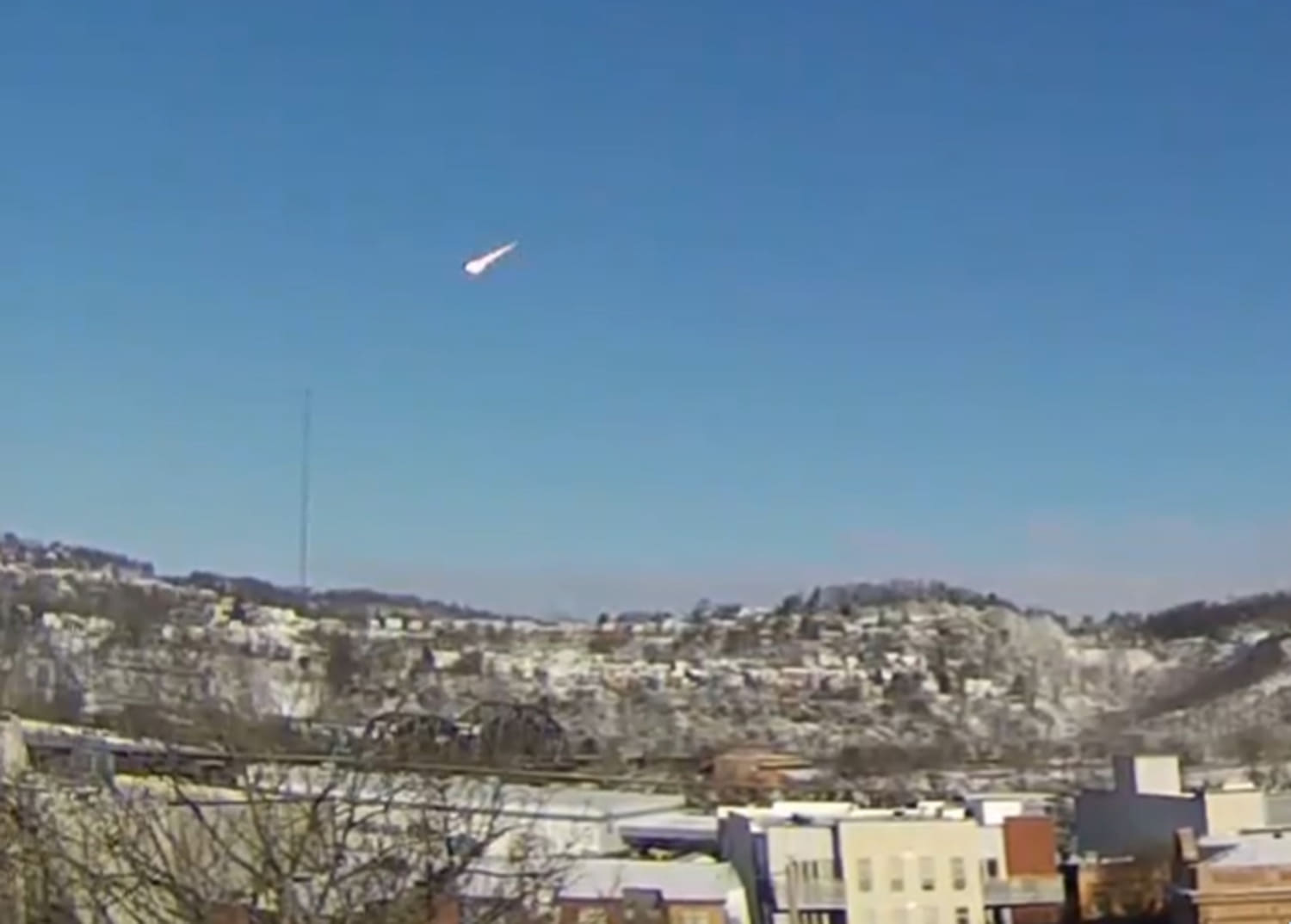
Meteor causes thunderous boom over Ohio and Pennsylvania
#meteor #Ohio #Pennsylvania #boom #fireball #atmosphere #thunderous
📌 Key Takeaways
- A meteor entered Earth's atmosphere over Ohio and Pennsylvania.
- The event produced a loud, thunderous boom heard by residents.
- No reports of damage or injuries have been confirmed.
- The meteor's entry was likely a fireball visible in the sky.
📖 Full Retelling
🏷️ Themes
Astronomy, Natural Events
📚 Related People & Topics

Ohio
U.S. state
Ohio ( oh-HY-oh) is a state in the Midwestern region of the United States. It borders the Canadian province of Ontario to the north (through Lake Erie), Pennsylvania to the east, West Virginia to the southeast, Kentucky to the southwest, Indiana to the west, and Michigan to the northwest. Of the 50...

Pennsylvania
U.S. state
Pennsylvania, officially the Commonwealth of Pennsylvania, is a state located in the Mid-Atlantic, Northeastern, Appalachian, and Great Lakes regions of the United States. It borders Delaware to its southeast, Maryland to its south, forming the Mason-Dixon Line, West Virginia to its southwest, Ohio ...
Entity Intersection Graph
Connections for Ohio:
Mentioned Entities
Deep Analysis
Why It Matters
This event matters because it demonstrates how even small space objects can create significant atmospheric effects visible to large populations, highlighting planetary defense concerns. It affects residents across Ohio and Pennsylvania who experienced the sonic boom and potential property vibrations, as well as astronomers and emergency services who monitor such events. The incident serves as a reminder of Earth's constant interaction with space debris and the importance of tracking near-Earth objects.
Context & Background
- Meteors entering Earth's atmosphere typically burn up at altitudes of 50-70 miles, with larger ones creating sonic booms when traveling faster than sound
- The Ohio-Pennsylvania region has experienced similar meteor events before, including a notable fireball in 2019 that was captured by numerous doorbell cameras
- NASA estimates approximately 48.5 tons of meteoritic material falls on Earth daily, though most particles are dust-sized
- Sonic booms from meteors occur when they descend below about 30 miles altitude where air density is sufficient to transmit shockwaves
- The American Meteor Society maintains a public reporting system where citizens can document fireball sightings
What Happens Next
Scientists will analyze radar data and eyewitness reports to estimate the meteor's trajectory and potential meteorite fall zone. Local authorities may receive additional reports of possible debris finds in coming days. Astronomical organizations will likely issue updated statistics on fireball frequency in the region, and NASA's Planetary Defense Coordination Office may reference this event in public education materials about near-Earth objects.
Frequently Asked Questions
Most meteors that create audible booms don't reach the ground intact, but occasionally fragments survive as meteorites. Any damage would typically be limited to minor property effects like rattled windows rather than significant destruction, unless it was an exceptionally large object.
Audible meteor booms occur several times yearly across North America, though they're infrequent over any specific region. The Ohio Valley sees such events approximately once every 2-3 years based on historical records from meteor tracking organizations.
Yes, residents should report suspected meteorites to local universities or museums rather than touching them directly, as they have scientific value. The American Meteor Society also collects sighting reports to help reconstruct the object's path through the atmosphere.
Initial reports suggest this was likely a sporadic meteor not associated with major showers like the Perseids or Geminids, which would make it part of the background flux of random space debris entering Earth's atmosphere daily.
Typical meteors enter Earth's atmosphere at speeds between 25,000-160,000 mph, with sonic booms occurring when they slow below supersonic speeds around Mach 1 (767 mph) at lower altitudes.