

‘Murky Waters’ for Global Businesses After Trump’s Tariff Loss
#Trump tariffs #Supreme Court #Trade negotiations #Global business #Trade policy #International trade #Tariff uncertainty
📌 Key Takeaways
- Supreme Court invalidated many of Trump's tariffs
- Global businesses expect tariffs to continue in some form
- Trading partners unlikely to seek renegotiation
- Chances of securing better deals are slim
- Trump's admission of pique-based decisions complicates negotiations
📖 Full Retelling
🏷️ Themes
Trade Policy, International Relations, Business Uncertainty, Presidential Decision Making
📚 Related People & Topics
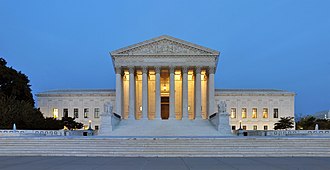
Supreme court
Highest court in a jurisdiction
In most legal jurisdictions, a supreme court, also known as a court of last resort, apex court, high (or final) court of appeal, and court of final appeal, is the highest court within the hierarchy of courts. Broadly speaking, the decisions of a supreme court are binding on all other courts in a nat...

Commercial policy
Government's policy governing international trade
A commercial policy (also referred to as a trade policy or international trade policy) is a government's policy governing international trade. Commercial policy is an all encompassing term that is used to cover topics which involve international trade. Trade policy is often described in terms of a ...
Big business
Large-scale corporate organization
Big business involves large-scale corporate-controlled financial or business activities. As a term, it describes activities that run from "huge transactions" to the more general "doing big things". In corporate jargon, the concept is commonly known as enterprise, or activities involving enterprise c...
Tariffs in the Trump administration
Topics referred to by the same term
Tariffs in the Trump administration could refer to:
Entity Intersection Graph
Connections for Supreme court:
Mentioned Entities
Deep Analysis
Why It Matters
The recent loss of tariffs by President Trump signals uncertainty for global businesses that relied on predictable trade policies. Companies must now navigate a shifting landscape where renegotiation is unlikely and diplomatic tensions could rise.
Context & Background
- Trump had previously imposed tariffs on key trading partners
- Global businesses had adjusted strategies around those tariffs
- The new tariff loss creates ambiguity in trade negotiations
What Happens Next
Businesses will need to reassess supply chains and cost structures as the likelihood of a better deal remains low. Trade partners may seek alternative agreements, but the political climate suggests limited progress.
Frequently Asked Questions
Because the president has indicated that policy changes are often reactionary and may be resisted.
Companies may face higher costs and uncertainty, prompting diversification of sourcing.
They might, but no clear pattern has emerged yet.