
SP
BravenNow
NASA report paints damning picture of Boeing mishap that stranded two astronauts in space
| USA | general | ✓ Verified - nbcnews.com

NASA report paints damning picture of Boeing mishap that stranded two astronauts in space

#NASA #Boeing #Starliner #International Space Station #Astronauts #Space Safety #Mishap Investigation

📌 Key Takeaways

  • NASA classified the Boeing mishap as a 'Type A mishap,' the agency's most severe designation
  • The report revealed rampant mistrust, inadequate testing, and leadership failings at both NASA and Boeing
  • Astronauts Butch Wilmore and Suni Williams were stranded at the ISS for over nine months due to propulsion system issues
  • NASA Administrator Jared Isaacman acknowledged the agency's failures and vowed not to fly another crew on Starliner until technical issues are resolved

📖 Full Retelling

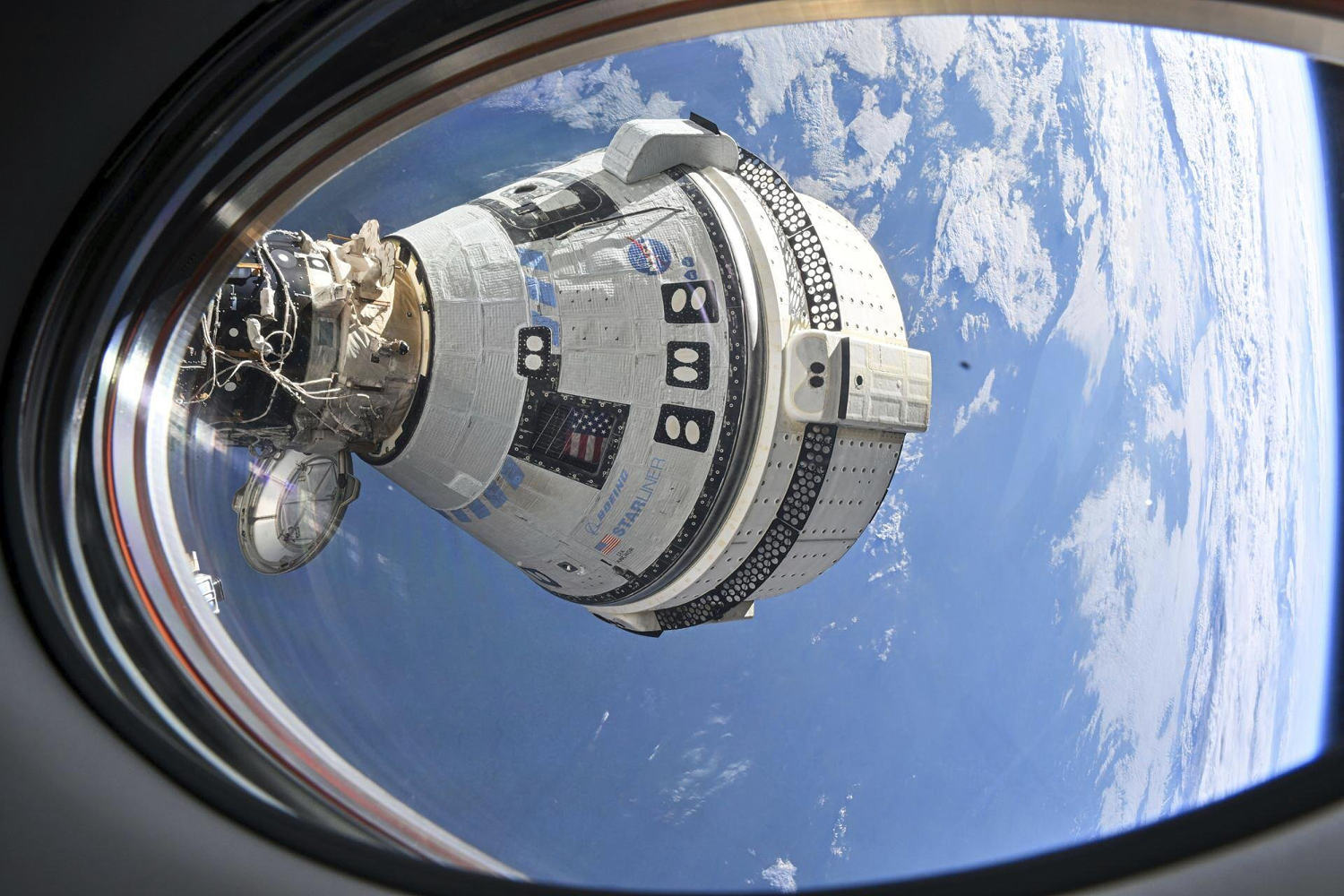
NASA on Thursday released a damning report on Boeing's bungled 2024 flight to the International Space Station, which resulted in two astronauts being stranded in orbit for months due to technical failures and organizational shortcomings on both NASA and Boeing's parts. The report classified the events as a 'Type A mishap' — NASA's most severe designation, typically reserved for incidents that result in significant financial loss or serious risk to crew safety, including possible death. This same classification was given to the 2003 Columbia space shuttle disaster that killed all seven crew members. NASA Administrator Jared Isaacman, who was not leading the agency when the mishap occurred but was sworn in December 2025, acknowledged that while the astronauts were returned safely, 'the path we took did not reflect NASA at our best' and created a 'culture of mistrust.' The Starliner mission, intended as an eight-day test flight to demonstrate Boeing's readiness to shuttle NASA astronauts to and from the ISS, launched in June 2024 with astronauts Butch Wilmore and Suni Williams aboard. Shortly after launch, mission managers detected helium leaks in the capsule's propulsion system, followed by malfunctions in several thrusters during docking attempts. After weeks of testing, NASA opted to fly the Starliner back to Earth without anyone onboard, leaving the astronauts stranded at the ISS for over nine months until they could return on a SpaceX Dragon capsule in March 2025. Both astronauts have since retired from NASA.

🏷️ Themes

Space Safety, Corporate Accountability, Government Oversight

📚 Related People & Topics

NASA

NASA

American space and aeronautics agency

The National Aeronautics and Space Administration (NASA ) is an independent agency of the U.S. federal government responsible for the United States' civil space program and for research in aeronautics and space exploration. Headquartered in Washington, D.C., NASA operates ten field centers across th...

View Profile → Wikipedia ↗
Astronaut

Astronaut

Spacecraft crew member

An astronaut (from the Ancient Greek ἄστρον (astron), meaning 'star', and ναύτης (nautes), meaning 'sailor') is a person trained, equipped, and deployed by a human spaceflight program to serve as a commander or crew member of a spacecraft. Although generally reserved for professional space travelers...

View Profile → Wikipedia ↗
Boeing

Boeing

American aerospace and defense corporation

The Boeing Company ( BO-ing) is an American multinational corporation that designs, manufactures, and sells airplanes, rotorcraft, rockets, satellites, and missiles worldwide. The company also provides leasing and product support services. Boeing is among the largest global aerospace manufacturers; ...

View Profile → Wikipedia ↗
International Space Station

International Space Station

Inhabited space station in low-Earth orbit

The International Space Station (ISS) is a large space station that was assembled and is maintained in low Earth orbit by a collaboration of five space agencies and their contractors: NASA (United States), Roscosmos (Russia), ESA (Europe), JAXA (Japan), and CSA (Canada). As the largest space station...

View Profile → Wikipedia ↗

Starliner

Topics referred to by the same term

Starliner may refer to:

View Profile → Wikipedia ↗

Entity Intersection Graph

Connections for NASA:

🌐 Artemis II 11 shared
👤 Kennedy Space Center 7 shared
🏢 Boeing 6 shared
🌐 Starliner 6 shared
👤 Space Launch System 6 shared
View full profile

Deep Analysis

Why It Matters

The NASA report labels the Boeing Starliner mishap as a Type A mishap, the agency's most severe classification, highlighting serious safety and management failures that stranded two astronauts for months and eroded trust between NASA and its commercial partners.

Context & Background

  • Boeing's Starliner was intended to resume crew transport to the ISS after the shuttle program ended
  • The 2024 flight suffered helium leaks and thruster failures that prevented docking
  • NASA and Boeing faced criticism for inadequate testing and communication breakdowns
  • The incident is the latest setback for Boeing following the 737 Max 9 panel blowout

What Happens Next

NASA will halt crew flights on the Starliner until technical issues are fully resolved and corrective actions are verified. Boeing is working with NASA to modify the thrusters and address software glitches, while the agency will continue to rely on SpaceX for crew transport to the ISS.

Frequently Asked Questions

Why was the incident classified as a Type A mishap?

Type A is reserved for incidents with significant financial loss or serious risk to crew, including potential death, and the Starliner mishap met those criteria due to the prolonged astronaut confinement and safety concerns.

What steps are NASA and Boeing taking to prevent future incidents?

NASA has ordered a halt to crewed Starliner flights, is conducting a thorough review, and will only resume after technical causes are understood; Boeing is implementing corrective actions, making thruster modifications, and improving testing and safety culture.

How were the stranded astronauts eventually returned to Earth?

NASA arranged for SpaceX Dragon capsules to ferry the astronauts back in March, after the ISS crew completed their mission.

What impact does this incident have on the Commercial Crew Program?

It underscores the need for rigorous oversight, better risk assessment, and stronger collaboration between NASA and commercial partners to ensure crew safety.

Original Source
NASA report paints damning picture of Boeing mishap that stranded two astronauts in space The report classified the events as a “Type A mishap” — the agency's most severe designation. Add NBC News to Google NASA chief slams agency, Boeing, over space mission that stranded astronauts 03:16 Get more news on Share Add NBC News to Google Feb. 19, 2026, 6:15 PM EST By Denise Chow Listen to this article with a free account 00:00 00:00 NASA on Thursday released the results of its investigation into Boeing’s bungled 2024 flight to the International Space Station, which stranded two astronauts there for months. The findings were damning for both Boeing and NASA, describing inadequate testing, breakdowns in communication and leadership failings on both sides. The report classified the events as a “ Type A mishap ” — NASA’s most severe designation, reserved for incidents that result in significant financial loss or serious risk to the crew, including possible death. The loss of the space shuttle Columbia and its seven-person crew in 2003 got the same designation. “We returned the crew safely, but the path we took did not reflect NASA at our best,” NASA Administrator Jared Isaacman said Thursday at a news briefing, adding that the incident created a “culture of mistrust.” Isaacman, who was sworn in in December, did not lead the agency when the mishap occurred. The Starliner mission was meant to last roughly eight days and demonstrate that Boeing’s Starliner spacecraft was ready to begin shuttling NASA astronauts to and from the International Space Station. On what was considered a test flight, it launched in June 2024 carrying two NASA astronauts — Butch Wilmore and Suni Williams . Shortly after the launch, however, mission managers detected helium leaks in the capsule’s propulsion system, and then several thrusters malfunctioned as the spacecraft tried to dock with the space station. Weeks of tests followed; in the end, NASA opted to fly the Starliner capsule back to Earth wit...
Read full article at source

Source

nbcnews.com

More from USA

News from Other Countries

🇬🇧 United Kingdom

🇺🇦 Ukraine