
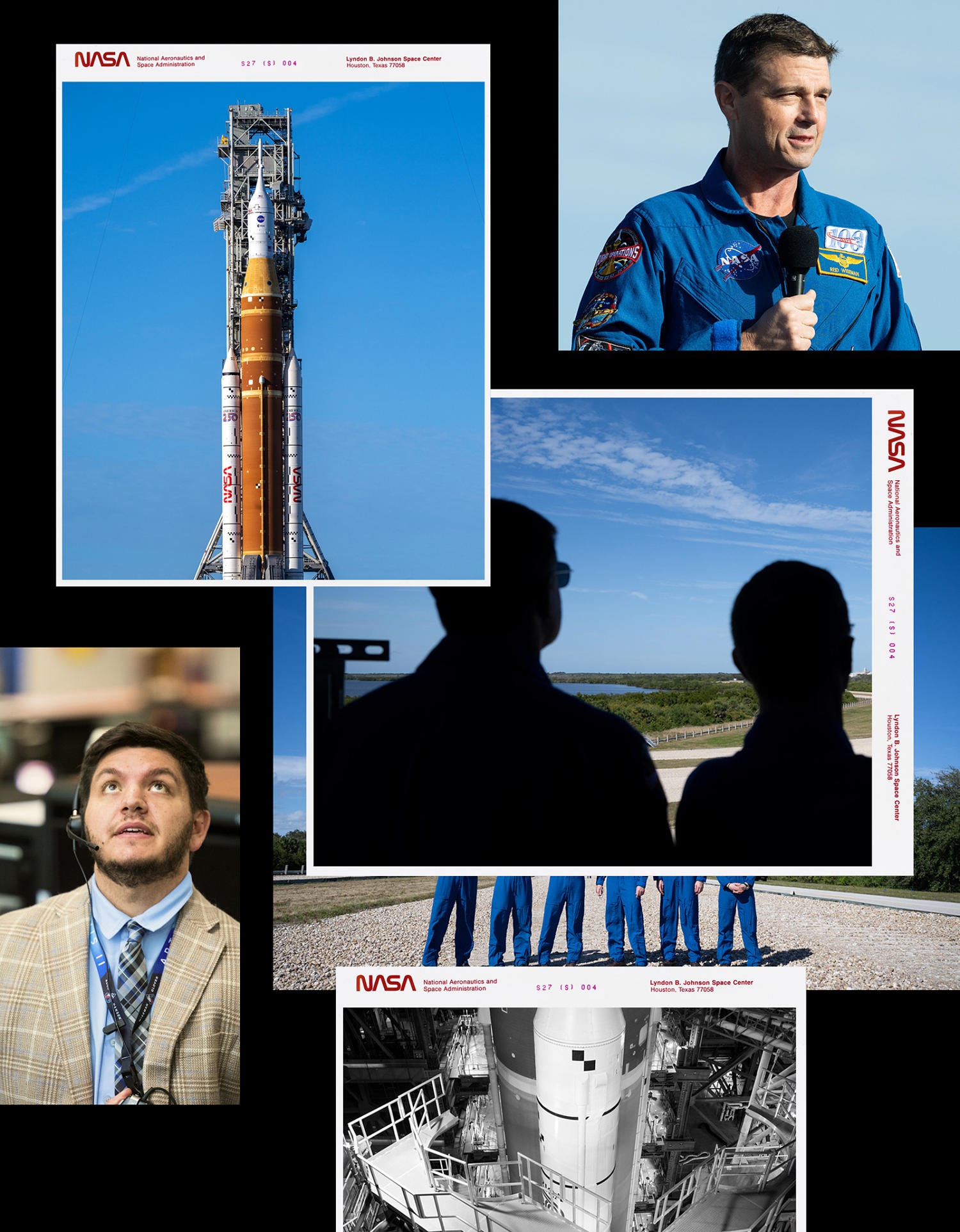
NASA's giant moon rocket, in photos
#NASA #moon rocket #Artemis program #astronauts #lunar mission #spacecraft #space exploration
📌 Key Takeaways
- NASA has revealed photos of its giant moon rocket and spacecraft
- This is part of the Artemis program to return humans to the moon
- It's the first time in over 50 years that NASA is preparing to send astronauts to the moon
- The rocket represents the most powerful launch vehicle ever built by NASA
📖 Full Retelling
🏷️ Themes
Space exploration, NASA missions, Lunar program
📚 Related People & Topics

NASA
American space and aeronautics agency
The National Aeronautics and Space Administration (NASA ) is an independent agency of the U.S. federal government responsible for the United States' civil space program and for research in aeronautics and space exploration. Headquartered in Washington, D.C., NASA operates ten field centers across th...

Artemis program
NASA-led lunar exploration program
The Artemis program is a Moon exploration program led by the United States' National Aeronautics and Space Administration (NASA), formally established in 2017 through Space Policy Directive-1. The program intends to reestablish a human presence on the Moon for the first time since the Apollo 17 miss...
Entity Intersection Graph
Connections for NASA:
Mentioned Entities
Deep Analysis
Why It Matters
This news matters as it marks a significant milestone in humanity's return to the Moon after a 50-year hiatus, representing tangible progress toward NASA's ambitious Artemis program. The unveiling of these detailed photos captures public imagination and demonstrates the scale of engineering required for deep space exploration. This development affects space enthusiasts, the aerospace industry, international space partners, and future generations who may one day work or live in space.
Context & Background
- NASA's Apollo program successfully landed 12 astronauts on the Moon between 1969 and 1972, with the final mission (Apollo 17) marking the last human presence on the lunar surface
- The Space Launch System (SLS) has been in development since 2011 as part of NASA's efforts to replace the Space Shuttle program and enable deep space exploration
- The Artemis program was officially announced in 2017 with the goal of returning humans to the Moon by 2024 (though this timeline has since been adjusted)
- The Orion spacecraft, designed to carry astronauts beyond Earth's orbit, has undergone multiple test flights since its first uncrewed mission in 2014
- International partnerships, particularly with ESA (European Space Agency) and JAXA (Japan Aerospace Exploration Agency), play a crucial role in the Artemis program
- The Artemis Accords, established in 2020, outline principles for cooperation in space exploration and have been signed by multiple nations
What Happens Next
Following this visual milestone, NASA will continue preparations for the Artemis I mission, an uncrewed test flight of the SLS and Orion spacecraft around the Moon. The next major step is the Artemis II mission, currently planned for 2025, which will carry astronauts on a lunar flyby but without landing. The Artemis III mission, now targeting 2026 or later, will mark the first crewed lunar landing since 1972, with the first woman and person of color set to walk on the Moon.
Frequently Asked Questions
The SLS is NASA's most powerful rocket ever built, capable of lifting 130 metric tons to low Earth orbit, nearly matching the capability of the Saturn V rocket used during the Apollo program which could lift 140 metric tons.
NASA's current timeline has the Artemis III crewed lunar landing mission targeting 2026 or later, following the uncrewed Artemis I test flight and the crewed Artemis II lunar flyby mission.
While Apollo focused on short-term lunar visits, Artemis aims for sustainable lunar presence with long-term exploration. Artemis will also include more international partnerships, utilize advanced technologies, and aim to include the first woman and person of color on the lunar surface.
The Artemis program has received significant funding from the U.S. government, with NASA requesting over $7.5 billion for Artemis-related activities in its 2023 budget. The program represents a multi-year investment with total costs expected to exceed tens of billions of dollars.
Artemis missions will conduct lunar science research, test new technologies for deep space exploration, search for water ice at the Moon's south pole, and establish infrastructure for sustainable exploration that will support future Mars missions.