
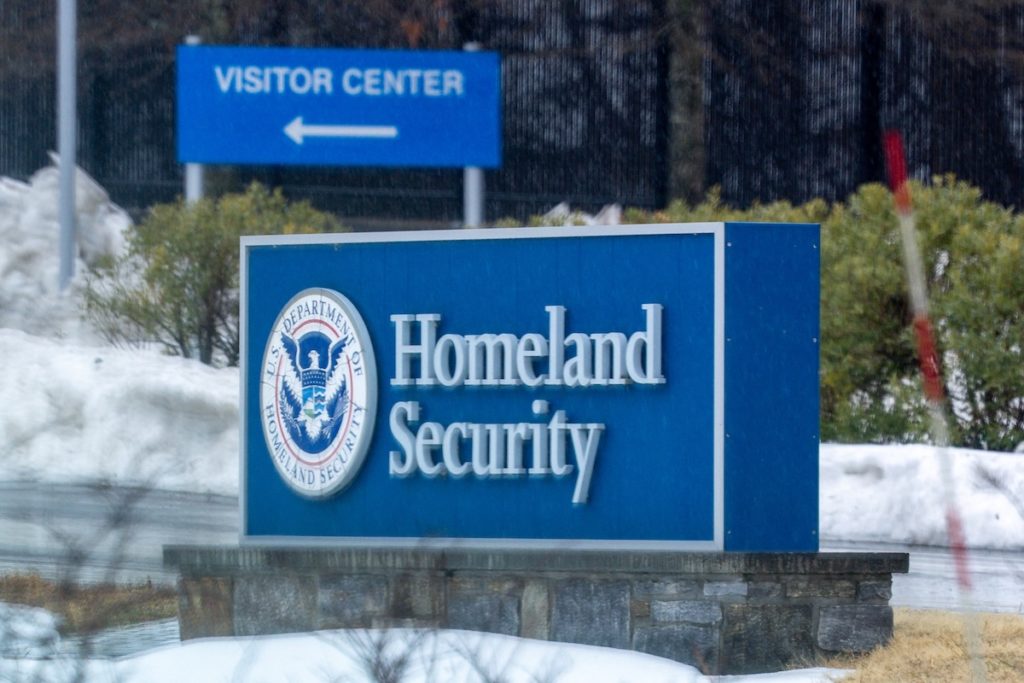
News Wrap: Senate votes down measure to reopen Department of Homeland Security
#Senate #Department of Homeland Security #government shutdown #vote #funding #legislation #political disagreement
📌 Key Takeaways
- The Senate rejected a measure to reopen the Department of Homeland Security.
- The vote reflects ongoing political disagreements over government funding.
- The failure to pass the measure may impact DHS operations and services.
- This is part of broader legislative gridlock affecting federal agencies.
📖 Full Retelling
🏷️ Themes
Government Shutdown, Political Gridlock
📚 Related People & Topics

United States Department of Homeland Security
United States federal executive department
The United States Department of Homeland Security (DHS) is the U.S. federal executive department responsible for public security, roughly comparable to the interior, home, or public security ministries in other countries. Its missions involve anti-terrorism, civil defense, immigration and customs, b...
Homeland security
United States notion of safety from terrorism
An American national security policy, homeland security is "the national effort to ensure a homeland that is safe, secure, and resilient against terrorism and other hazards where American interests, aspirations, and ways of life can thrive" to the "national effort to prevent terrorist attacks within...

Senate
Upper house of a bicameral legislature
A senate is a deliberative assembly, often the upper house or chamber of a bicameral legislature. The name comes from the ancient Roman Senate (Latin: Senatus), so-called as an assembly of the senior (Latin: senex meaning "the elder" or "old man") and therefore considered wiser and more experienced ...
Entity Intersection Graph
Connections for United States Department of Homeland Security:
Mentioned Entities
Deep Analysis
Why It Matters
This vote matters because it prolongs the partial shutdown of the Department of Homeland Security, which affects national security operations, border security, and the pay of thousands of federal employees. The failure to reopen DHS indicates ongoing political gridlock in Congress over immigration and border funding issues. This impacts not only government workers facing financial uncertainty but also the public relying on DHS functions like airport security, emergency response coordination, and immigration processing.
Context & Background
- The Department of Homeland Security was created in 2002 following the 9/11 attacks to consolidate national security functions
- DHS employs approximately 240,000 people across agencies including TSA, FEMA, CBP, and ICE
- Government shutdowns occur when Congress fails to pass appropriations bills or continuing resolutions to fund federal agencies
- This specific shutdown likely stems from disagreements over border security funding and immigration policies
What Happens Next
Congress will likely continue negotiations on a funding package that addresses border security concerns while attempting to reopen DHS. If no agreement is reached, the partial shutdown will continue, potentially affecting more DHS functions as reserve funds are depleted. Key dates to watch include upcoming congressional sessions and potential emergency funding votes, with pressure mounting as missed paychecks accumulate for federal employees.
Frequently Asked Questions
Non-essential DHS functions are suspended, though critical services like border patrol, TSA screening, and Coast Guard operations continue with employees working without pay. Immigration court hearings, some disaster preparedness activities, and various administrative functions face delays or cancellations.
The vote likely failed due to disagreements between political parties over border security funding and immigration policy provisions. Senators may be using the funding bill as leverage to advance their positions on issues like border wall construction or asylum processing changes.
DHS can maintain essential functions temporarily using carryover funds and by requiring 'excepted' employees to work without pay. However, as the shutdown continues, more functions may be affected as funds are depleted and employee morale and retention issues emerge.
Essential employees must continue working without pay, while non-essential employees are furloughed. Both groups face financial uncertainty until funding is restored, at which point they typically receive back pay for the shutdown period.
Border patrol and immigration enforcement continue but may face operational challenges due to reduced support staff, delayed equipment maintenance, and employee financial stress. Some immigration processing functions experience significant backlogs during shutdowns.