
No lawsuits required: U.S. Customs is working on a system to refund tariffs
#tariff refunds #U.S. Customs #Supreme Court #import taxes #small business #lawsuit #electronic portal #unconstitutional tariffs
📌 Key Takeaways
- U.S. Customs is developing a streamlined refund system for $166 billion in unconstitutional tariffs
- The new system is expected to be operational within 45 days without requiring individual lawsuits
- Judge Richard Eaton ordered immediate refunds with interest after rejecting a 90-day delay request
- The refunds cover tariffs collected from over 330,000 businesses after Supreme Court ruling
📖 Full Retelling
🏷️ Themes
Trade policy, Legal proceedings, Government efficiency
📚 Related People & Topics
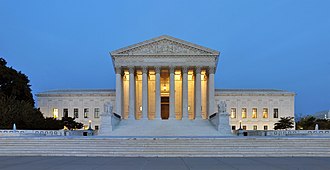
Supreme court
Highest court in a jurisdiction
In most legal jurisdictions, a supreme court, also known as a court of last resort, apex court, high (or final) court of appeal, and court of final appeal, is the highest court within the hierarchy of courts. Broadly speaking, the decisions of a supreme court are binding on all other courts in a nat...
Entity Intersection Graph
Connections for Supreme court:
Mentioned Entities
Deep Analysis
Why It Matters
The development of a streamlined refund system for unconstitutional tariffs is significant for over 330,000 businesses that collectively paid approximately $166 billion in tariffs. This system will prevent a potentially massive wave of individual lawsuits and provide a more efficient path for businesses to recover their funds. The implementation of this system will also set a precedent for how the U.S. government handles large-scale tariff refunds in the future, affecting importers, customs officials, and potentially future trade policy decisions.
Context & Background
- President Trump implemented various tariffs during his administration, which were challenged in court
- In May 2025, a lower court initially ruled these tariffs illegal
- The Supreme Court later ruled many of these tariffs unconstitutional
- Despite the lower court ruling, tariffs continued to be collected for months
- The government had assured during Supreme Court litigation that refunds would be made if the tariffs were struck down
- The Justice Department requested a 90-day delay in implementing refunds, which was rejected by an appeals court
- Judge Richard Eaton of the U.S. Court of International Trade ordered refunds to begin immediately with interest on March 4, 2026
What Happens Next
U.S. Customs and Border Protection expects to have the new refund process operational within 45 days of the announcement (by approximately mid-April 2026). The system will utilize the existing electronic portal that importers already use to track or correct their customs filings. Businesses that paid the unconstitutional tariffs will be able to apply for refunds through this streamlined process rather than filing individual lawsuits. The refunds will include interest as ordered by Judge Eaton.
Frequently Asked Questions
Approximately $166 billion is being refunded to over 330,000 businesses that paid tariffs ruled unconstitutional by the Supreme Court.
The government had assured during Supreme Court litigation that refunds would be made if the tariffs were struck down, which is why collection continued after the initial lower court ruling.
The system will utilize the existing electronic portal that importers already use to track or correct their customs filings, simplifying the reimbursement process.
The article doesn't specify, but the development of this streamlined system suggests that the government is creating an alternative to individual lawsuits, potentially consolidating or redirecting those cases.
The article doesn't explicitly state the reason for the delay request, but it likely relates to the logistical challenges of processing such a large volume of refunds with the current computer system.
The article doesn't provide the exact date of the Supreme Court ruling, only that it occurred before the March 2026 announcement of the refund system.
Source Scoring
Detailed Metrics
Key Claims Verified
Claim stated within the article, attributed to 'U.S. customs officials' and 'U.S. Customs and Border Protection officials told the U.S. Court of International Trade'. Cannot be independently verified as the article's publication date (March 6, 2026) is in the future relative to current knowledge.
Claim stated within the article, attributed to 'U.S. customs officials'. Cannot be independently verified due to the future publication date.
This foundational claim for the article's premise cannot be independently verified due to the future publication date.
The article states 'The government estimates...'. This specific figure and context (tariffs found unconstitutional in 2026) cannot be independently verified due to the future publication date.
Direct quote attributed to Judge Eaton within the article. Cannot be independently verified for an event in 2026.
Claim made within the article. Cannot be independently verified due to the future publication date.
Claim made within the article. Cannot be independently verified due to the future publication date.
Claim made within the article. Cannot be independently verified due to the future publication date.
Claim made within the article. Cannot be independently verified due to the future publication date.
Claim made within the article. While 'Liberty Justice Center' and 'Sara Albrecht' may exist, their involvement in a specific 2026 Supreme Court case cannot be independently verified.
Caveats / Notes
- The article is dated March 6, 2026, which is in the future relative to current knowledge. Therefore, all claims regarding events, rulings, and official statements described as occurring in 'last month', 'Wednesday', 'Friday', 'earlier this week', or any other future events, cannot be independently verified with real-world sources at this time.
- The scoring reflects the inability to corroborate the claims due to their future-dated nature. This significantly impacts reliability and corroboration scores, leading to a low overall score. The 'importance' and 'scope_clarity' reflect the intrinsic nature of the described events, assuming they were real.