
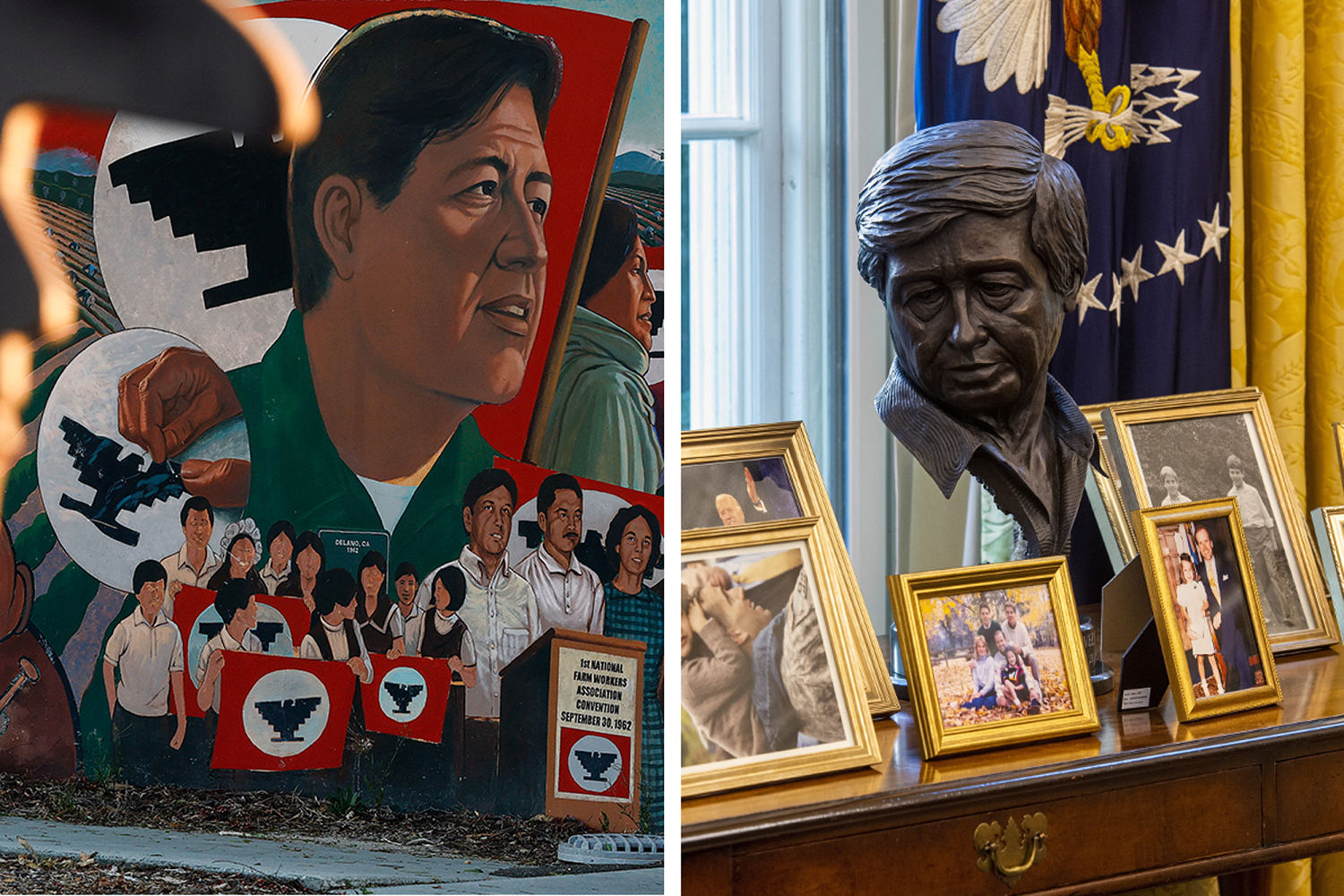
Officials across the U.S. push to remove Cesar Chavez’s name from streets, parks and holidays
#Cesar Chavez #name removal #public spaces #historical figures #U.S. officials
📌 Key Takeaways
- Officials in multiple U.S. locations are advocating for the removal of Cesar Chavez's name from public spaces and holidays.
- This movement reflects a reevaluation of historical figures and their legacies in public commemoration.
- The push indicates shifting public and political attitudes toward how communities honor historical figures.
- The debate centers on balancing historical recognition with contemporary values and perspectives.
📖 Full Retelling
🏷️ Themes
Historical Reevaluation, Public Commemoration
📚 Related People & Topics

Cesar Chavez
American civil rights activist (1927–1993)
Cesario Estrada Chavez (; Spanish: [ˈtʃaβes]; March 31, 1927 – April 23, 1993) was an American labor leader and civil rights activist. Along with Dolores Huerta and lesser known Gilbert Padilla, he co-founded the National Farm Workers Association (NFWA), which later merged with the Agricultural Work...
Entity Intersection Graph
Connections for Cesar Chavez:
Mentioned Entities
Deep Analysis
Why It Matters
This movement to remove Cesar Chavez's name from public spaces and holidays represents a significant reevaluation of historical figures and their legacies in American society. It directly affects Latino communities who view Chavez as a civil rights icon, as well as municipalities grappling with how to honor historical figures whose records may contain complexities. The debate reflects broader national conversations about which historical figures deserve public commemoration and how societies should reckon with imperfect heroes. Educational institutions and public history organizations will also be impacted as they navigate changing narratives about labor and civil rights history.
Context & Background
- Cesar Chavez (1927-1993) was a Mexican-American labor leader and civil rights activist who co-founded the United Farm Workers union with Dolores Huerta
- Chavez led the Delano grape strike (1965-1970) and organized the historic grape boycott that brought national attention to farm workers' rights
- He has been honored with a federal holiday in several states, numerous streets, schools, and parks named after him, and received the Presidential Medal of Freedom posthumously in 1994
- Recent historical examination has revealed controversies in Chavez's legacy including his opposition to undocumented immigrant workers during the 'Illegals Campaign' and authoritarian tendencies within the UFW
- This movement parallels similar reevaluations of historical figures like Christopher Columbus, Confederate leaders, and other once-celebrated figures whose legacies have been reconsidered
What Happens Next
Local governments will likely face increasing pressure to review naming policies and establish formal criteria for honoring historical figures. Expect public hearings and community debates in cities with Chavez-named landmarks throughout 2024-2025. State legislatures in California, Texas, and Arizona may consider bills regarding the Chavez state holiday. Historical organizations will probably release more comprehensive assessments of Chavez's legacy, and educational curricula may be revised to present more nuanced portrayals of his activism.
Frequently Asked Questions
This movement reflects both increased historical research revealing previously overlooked aspects of Chavez's legacy and broader societal shifts in how we evaluate historical figures. Recent scholarship has highlighted his controversial 'Illegals Campaign' against undocumented workers and internal union practices that some consider authoritarian.
Key controversies include his opposition to undocumented immigrant workers during the 1970s 'Illegals Campaign,' reports of authoritarian leadership within the United Farm Workers union, and allegations of anti-immigrant rhetoric that some argue contradicts his broader civil rights advocacy.
California, Texas, and Arizona are particularly affected as states with official Cesar Chavez holidays. Cities with significant Latino populations and numerous Chavez-named landmarks like Los Angeles, San Francisco, Phoenix, and Austin are likely to see the most intense debates about renaming.
Responses are divided within Latino communities, with some viewing Chavez as an essential civil rights icon whose achievements outweigh his flaws, while others believe public spaces should honor figures with less complicated legacies or focus on contemporary leaders.
Cities will likely consider factors including the historical figure's overall impact, the nature and severity of controversies in their record, community sentiment through public hearings, costs of renaming, and whether alternative figures might better represent community values.