

Prices investors will pay for tariff refund claims surge after Supreme Court decision
#tariff refunds #Supreme Court decision #Trump tariffs #special situations trades #importers #investment opportunities #legal battles #fentanyl tariffs
📌 Key Takeaways
- Supreme Court ruled Trump's emergency tariffs illegal but didn't order refunds
- Prices for tariff refund claims surged to 40-50% range after the decision
- Companies have been selling rights to potential refunds to investors through 'special situations' trades
- Trump administration has indicated they will fight refund claims, creating market uncertainty
📖 Full Retelling
Importers and investors in the United States have seen prices for tariff refund claims surge following the U.S. Supreme Court's February 2026 ruling that declared President Donald Trump's emergency tariffs illegal, prompting many businesses to prepare for complex legal battles to seek refunds of the approximately $175 billion collected since the tariffs were implemented. The high court did not mandate immediate refunds of the tariffs imposed last February, but its decision has created significant market activity as companies and investors position themselves for potential payouts. Many businesses have recently sold rights to their potential tariff refunds to outside investors for a fraction of the face value, with these 'special situations' trades becoming increasingly attractive as the assets are uncorrelated to broader market movements. The market has seen prices jump dramatically since the ruling, with investors now willing to pay 40-50% of potential refund values, compared to previous ranges of 16-28% depending on the tariff type. Two categories of emergency tariffs were involved in the case: those targeting fentanyl imports and broader 'reciprocal' tariffs, which previously traded at different valuations but have converged since the court decision. Despite the price surge, uncertainty remains as the Trump administration has indicated it plans to fight refund claims, leaving companies like Bissell Inc weighing whether to accept current offers or hold out for potential full refunds.
🏷️ Themes
Tariff Policy, Investment Markets, Legal Battles
📚 Related People & Topics
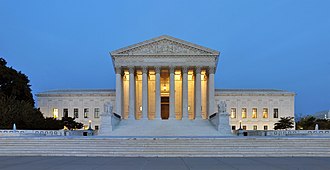
Supreme court
Highest court in a jurisdiction
In most legal jurisdictions, a supreme court, also known as a court of last resort, apex court, high (or final) court of appeal, and court of final appeal, is the highest court within the hierarchy of courts. Broadly speaking, the decisions of a supreme court are binding on all other courts in a nat...
Tariffs in the Trump administration
Topics referred to by the same term
Tariffs in the Trump administration could refer to:
Entity Intersection Graph
Connections for Supreme court:
🌐
Tariffs in the Trump administration
25 shared
👤
Donald Trump
19 shared
🌐
Tariff
16 shared
🌐
Commercial policy
12 shared
Mentioned Entities
Original Source
try{ var _=i o; . if(!_||_&&typeof _==="object"&&_.expiry Bitcoin slips, wipes out 50% from October record high at session low AMD stock surges 14% on Meta AI partnership deal Wall Street ends higher on tech rebound ahead of State of the Union address Software stocks rebound as Anthropic partnerships ease AI disruption fears (South Africa Philippines Nigeria) Prices investors will pay for tariff refund claims surge after Supreme Court decision By Reuters Stock Markets Published 02/24/2026, 06:40 PM Updated 02/24/2026, 06:42 PM Prices investors will pay for tariff refund claims surge after Supreme Court decision 0 By Timothy Aeppel and Laura Matthews Feb 24 - The prices importers can get from selling rights to potential government refunds have surged in the wake of the U.S. Supreme Court’s ruling that President Donald Trump’s emergency tariffs are illegal. The high court did not order refunds of the estimated $175 billion the government has taken in since last February, but many businesses are now gearing up for what are likely to be complex legal battles to make such claims. Many companies have hedged their bets in recent months by selling rights to some or all of their potential refunds to outside investors for a fraction of their face value. Since the court ruled that the taxes are illegal, the companies keep those advance payments, and the outside investors stand to collect anything that is eventually returned. Known as “special situations” trades, these deals are attractive to investors because the assets are uncorrelated to broader markets, according to legal sources who are working with buyers and sellers in the market. Amy Pasacreta, a lawyer on Orrick’s restructuring team, said they have seen interest jump in this opaque market since the decision came down, while prices have surged toward the 40-50% range after earlier trading at much lower levels. Orrick started seeing demand for refund claims soon after tariffs were implemented in April. The court case inv...
Read full article at source