
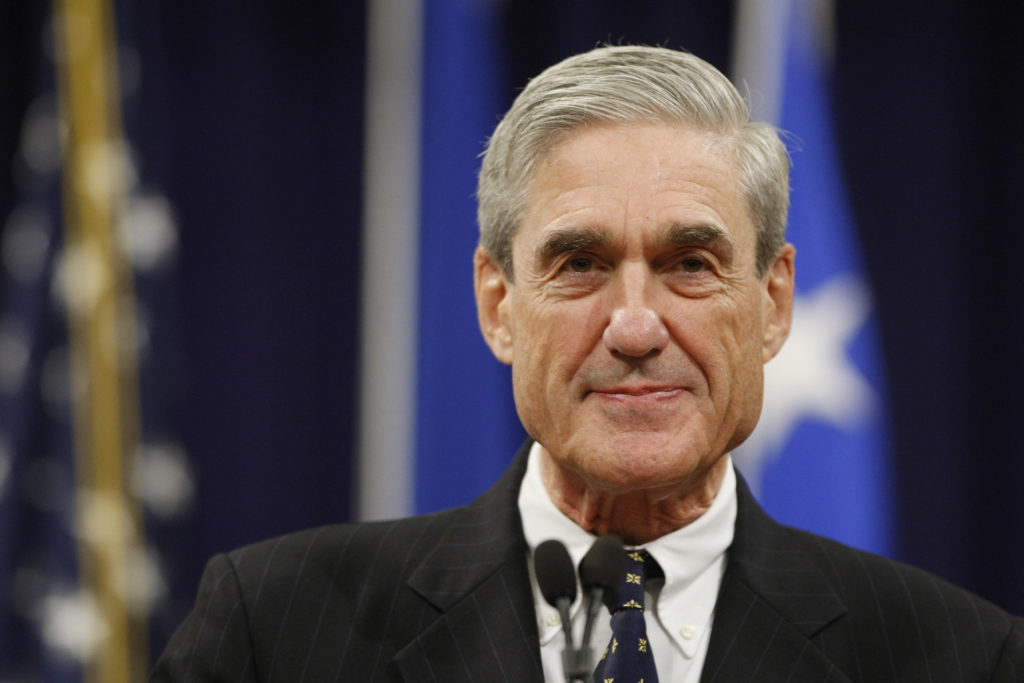
Robert Mueller, former FBI Director who investigated Russia-Trump campaign ties, dies at 81
#Robert Mueller #FBI Director #Russia investigation #Trump campaign #2016 election
📌 Key Takeaways
- Robert Mueller, former FBI Director, has died at age 81.
- He led the investigation into Russian interference in the 2016 U.S. election.
- The probe examined potential ties between the Trump campaign and Russia.
- Mueller served as FBI Director from 2001 to 2013 under two presidents.
📖 Full Retelling
🏷️ Themes
Politics, Law enforcement
📚 Related People & Topics
Donald Trump presidential campaign
Index of articles associated with the same name
There have been four presidential campaigns waged by U.S. president Donald Trump. He ran for president once for the Reform Party (2000), and three times as a Republican (2016, 2020, 2024). He additionally mused about running on several other occasions such as for the 1988 and 2012 elections.

Mueller special counsel investigation
U.S. investigation into Russian interference in U.S. elections
The Robert Mueller special counsel investigation was a criminal investigation into associates of 45th U.S. president Donald Trump and Russian president Vladimir Putin regarding Russian interference in the 2016 United States elections and was conducted by special prosecutor Robert Mueller from May 20...

Robert Mueller
American attorney (1944–2026)
Robert Swan Mueller III (; August 7, 1944 – March 20, 2026) was an American lawyer who served as the sixth director of the Federal Bureau of Investigation (FBI) from 2001 to 2013. A graduate of Princeton University and New York University, Mueller served as a Marine Corps officer during the Vietnam ...

Director of the Federal Bureau of Investigation
Head of the Federal Bureau of Investigation
The director of the Federal Bureau of Investigation is the head of the Federal Bureau of Investigation (FBI), a United States federal law enforcement agency, and is responsible for its day-to-day operations. The FBI director is appointed for a single 10-year term by the president of the United State...
Entity Intersection Graph
Connections for Donald Trump presidential campaign:
Mentioned Entities
Deep Analysis
Why It Matters
Robert Mueller's death is significant because he was a central figure in one of the most politically charged investigations in modern U.S. history, affecting public trust in institutions and electoral integrity. It impacts political discourse, as his work continues to shape debates about foreign interference, presidential accountability, and the rule of law. His legacy influences ongoing legal and congressional actions related to the 2016 election and its aftermath, resonating with policymakers, historians, and the general public.
Context & Background
- Robert Mueller served as FBI Director from 2001 to 2013, appointed by President George W. Bush and retained by President Barack Obama, overseeing counterterrorism efforts post-9/11.
- In 2017, he was appointed as Special Counsel to investigate Russian interference in the 2016 U.S. presidential election and potential links between the Trump campaign and Russia, concluding in 2019.
- The Mueller Report did not establish a criminal conspiracy between the Trump campaign and Russia but outlined instances of potential obstruction of justice, leading to congressional hearings and impeachment proceedings.
- Mueller's career included roles as a Marine Corps officer, U.S. Attorney, and Department of Justice official, earning bipartisan respect for his integrity and nonpartisan approach.
What Happens Next
In the short term, expect tributes and retrospectives from political figures and media, highlighting his impact on U.S. law enforcement and politics. Long-term, his death may reignite debates over the findings of the Mueller Report, potentially influencing future investigations into election interference or presidential conduct. Historical assessments of his legacy will likely evolve, with scholars analyzing his role in shaping modern FBI protocols and special counsel procedures.
Frequently Asked Questions
The Mueller Report found no evidence of a criminal conspiracy between the Trump campaign and Russia to influence the 2016 election. However, it detailed multiple instances where President Trump potentially obstructed justice, leaving it to Congress to decide on further action.
Mueller was praised for his apolitical demeanor and long career serving under both Republican and Democratic administrations. His reputation for integrity and adherence to protocol helped maintain public confidence during the highly polarized investigation.
The investigation deepened political divisions, leading to congressional inquiries, impeachment discussions, and ongoing debates about foreign election interference. It also spurred legislative efforts to bolster election security and oversight of presidential powers.
Controversies included disputes over the scope of the investigation, allegations of bias among FBI staff, and Trump's repeated criticisms of it as a 'witch hunt.' These issues fueled partisan tensions and legal challenges throughout the process.
Mueller will likely be remembered as a dedicated public servant who upheld the rule of law during a turbulent period. His work set precedents for handling high-profile investigations, though its political ramifications continue to be debated.