

Russia may test Trump's Cuba's blockade with oil tankers crossing Atlantic
#Russia #Cuba #oil tankers #blockade #Trump #embargo #Atlantic #sanctions
📌 Key Takeaways
- Russia may challenge the U.S. blockade of Cuba by sending oil tankers across the Atlantic.
- This move could test the Trump administration's enforcement of the long-standing Cuba embargo.
- The action highlights geopolitical tensions between Russia and the United States.
- It underscores Cuba's reliance on external support amid U.S. sanctions.
📖 Full Retelling
🏷️ Themes
Geopolitics, Energy, Sanctions
📚 Related People & Topics

Russia
Country in Eastern Europe and North Asia
Russia, or the Russian Federation, is a country in Eastern Europe and North Asia. It is the largest country in the world, spanning eleven time zones and sharing land borders with fourteen countries. With a population of over 140 million, Russia is the most populous country in Europe and the ninth-mo...

Cuba
Country in the Caribbean
Cuba, officially the Republic of Cuba, is an island country in the Caribbean. It comprises the eponymous main island as well as 4,195 islands, islets, and cays. Situated at the convergence of the Caribbean Sea, Gulf of Mexico, and Atlantic Ocean, Cuba is located east of the Yucatán Peninsula, south ...

Donald Trump
President of the United States (2017–2021; since 2025)
Donald John Trump (born June 14, 1946) is an American politician, media personality, and businessman who is the 47th president of the United States. A member of the Republican Party, he served as the 45th president from 2017 to 2021. Born into a wealthy New York City family, Trump graduated from the...
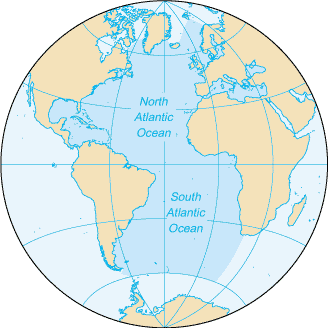
Atlantic Ocean
Oceanic division
The Atlantic Ocean is the second largest of the world's five oceanic divisions, with an area of about 85,133,000 km2 (32,870,000 sq mi). It covers approximately 17% of Earth's surface and about 24% of its water surface area. During the Age of Discovery, it was known for separating the New World of t...
Entity Intersection Graph
Connections for Russia:
Mentioned Entities
Deep Analysis
Why It Matters
This development matters because it tests U.S. foreign policy enforcement and could escalate tensions between nuclear powers. It affects global energy markets, Caribbean nations dependent on Venezuelan oil, and U.S.-Russia relations. The situation could undermine U.S. sanctions effectiveness and create dangerous maritime confrontations in the Western Hemisphere.
Context & Background
- The U.S. has maintained an economic embargo against Cuba since 1962, though specific restrictions have varied by administration.
- Russia has strengthened ties with Cuba and Venezuela in recent years as part of its strategy to counter U.S. influence in Latin America.
- Venezuela has been a key oil supplier to Cuba through the Petrocaribe program, but production declines and U.S. sanctions have disrupted this arrangement.
- The Trump administration significantly tightened Cuba sanctions in 2019-2020, including restricting oil shipments from Venezuela to Cuba.
- Russia has previously sent military aircraft and warships to Cuba and Venezuela, testing U.S. red lines in the region.
What Happens Next
U.S. Navy and Coast Guard will likely increase monitoring of Caribbean shipping lanes in coming weeks. The State Department may issue diplomatic warnings to Russia about violating sanctions. If tankers approach, the U.S. faces a decision between intercepting vessels (risking escalation) or allowing passage (weakening sanctions credibility). International reactions from European and Latin American governments will influence next steps.
Frequently Asked Questions
Russia aims to demonstrate its global reach and challenge U.S. sanctions while supporting an ally. This move tests the Biden administration's enforcement of Trump-era policies and shows support for anti-U.S. governments in Latin America.
The U.S. cites the Trading With the Enemy Act and various executive orders sanctioning Cuba and Venezuela. However, intercepting Russian vessels in international waters would be legally contentious and could violate freedom of navigation principles.
Successful delivery would temporarily alleviate Cuba's severe fuel shortages caused by reduced Venezuelan shipments and U.S. sanctions. However, dependence on distant Russian supplies would be economically unsustainable long-term.
While direct conflict is unlikely, naval standoffs or warning shots are possible if U.S. forces attempt to intercept Russian tankers. Both nations would likely prefer symbolic posturing over actual violence, but miscalculation risks remain.
European allies may criticize Russia's provocation but also question U.S. Cuba policy. Latin American governments will split between those supporting Cuba's sovereignty and those aligned with U.S. positions. China may quietly support Russia's challenge to U.S. hemispheric dominance.