

Sotomayor criticizes Kavanaugh over ICE stops ruling
#Sonia Sotomayor #Brett Kavanaugh #Supreme Court #ICE #immigration enforcement #judicial criticism #working-class Americans
📌 Key Takeaways
- Justice Sotomayor publicly criticized Justice Kavanaugh's concurring opinion in an ICE enforcement case.
- Sotomayor argued Kavanaugh's background left him unable to understand the real-world impact of brief detentions on working-class Americans.
- The criticism highlights a deep ideological divide on the Supreme Court regarding immigration and enforcement.
- Sotomayor framed the disagreement around judicial empathy and the practical human consequences of legal rulings.
📖 Full Retelling
🏷️ Themes
Judicial Politics, Immigration Enforcement, Supreme Court Dynamics
📚 Related People & Topics
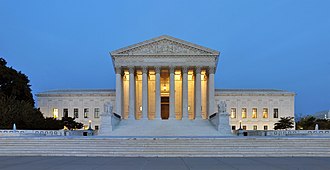
Supreme court
Highest court in a jurisdiction
In most legal jurisdictions, a supreme court, also known as a court of last resort, apex court, high (or final) court of appeal, and court of final appeal, is the highest court within the hierarchy of courts. Broadly speaking, the decisions of a supreme court are binding on all other courts in a nat...

Sonia Sotomayor
US Supreme Court justice since 2009
Sonia Maria Sotomayor ( , Spanish: [ˈsonja sotomaˈʝoɾ]; born June 25, 1954) is an American lawyer and jurist who serves as an associate justice of the Supreme Court of the United States. She was nominated by President Barack Obama on May 26, 2009, and has served since August 8, 2009. She is the firs...

Brett Kavanaugh
US Supreme Court justice since 2018
Brett Michael Kavanaugh (; born February 12, 1965) is an American lawyer and jurist serving as an associate justice of the Supreme Court of the United States. He was nominated by President Donald Trump on July 9, 2018, and has served since October 6, 2018. He was previously a U.S. circuit judge of t...

United States Immigration and Customs Enforcement
US federal law enforcement agency
The United States Immigration and Customs Enforcement (ICE) is a federal law enforcement agency under the United States Department of Homeland Security. Its stated mission is to conduct criminal investigations, enforce immigration laws, preserve national security, and protect public safety. ICE was ...
Entity Intersection Graph
Connections for Supreme court:
Mentioned Entities
Deep Analysis
Why It Matters
This news is significant because it exposes the escalating personal and ideological tensions within the Supreme Court, moving beyond standard legal disagreement into critiques of lived experience. It affects the public's perception of the Court's impartiality and suggests that judicial decisions are increasingly viewed through the lens of the justices' personal biographies. Furthermore, the underlying ruling has direct consequences for immigrant communities and the limits of federal enforcement power. The escalation in rhetoric signals a potentially more volatile era for the Court's internal dynamics and public image.
Context & Background
- The Supreme Court currently holds a 6-3 conservative majority, following Justice Kavanaugh's confirmation in 2018.
- ICE (Immigration and Customs Enforcement) is the federal agency responsible for enforcing immigration laws, including detention and deportation.
- Justice Sotomayor, the Court's senior liberal justice, is known for emphasizing the real-world human consequences of legal rulings in her opinions.
- Justice Kavanaugh generally adheres to a conservative textualist philosophy and previously served in the executive branch under President George W. Bush.
- The Court has historically valued collegiality, making direct public criticism of a colleague's background a notable deviation from tradition.
- Recent years have seen several high-profile cases regarding the scope of executive power in immigration enforcement reach the high court.
What Happens Next
Legal challenges regarding the scope of ICE authority are expected to continue in lower courts, potentially leading to further Supreme Court review. The public rift may intensify calls for ethics reforms or term limits for Supreme Court justices. Advocacy groups will likely use the justices' contrasting statements to mobilize voters around immigration policy in upcoming elections.
Frequently Asked Questions
The disagreement arose from a ruling concerning the legal boundaries of ICE enforcement actions, specifically the government's authority to detain individuals during short-term stops.
Sotomayor suggested that Kavanaugh's personal and professional experiences prevented him from understanding the fear and disruption that ICE enforcement causes in working-class communities.
Yes, Justice Kavanaugh wrote a concurring opinion that agreed with the majority's decision to support the government's position on ICE enforcement.
While justices frequently dissent and disagree in written opinions, direct public criticism targeting a colleague's background and empathy is considered a rare and notable escalation in rhetoric.