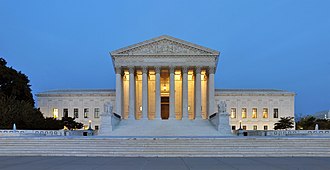
Justice Sotomayor called the Trump administration's use of emergency appeals "unprecedented in the court's history."
The emergency docket allows for swift Supreme Court intervention in ongoing lower court cases, often without full briefing.
This trend involves major policy areas like immigration, pandemic rules, and elections, raising concerns about rushed decisions.
Sotomayor's critique highlights debates about judicial politicization and the Supreme Court's procedural integrity.
📖 Full Retelling
U.S. Supreme Court Justice Sonia Sotomayor, speaking at the University of Alabama School of Law on Thursday, criticized the Trump administration for its "unprecedented" reliance on the Court's emergency docket, a mechanism for seeking swift intervention in ongoing lower court cases. She framed this trend as a significant departure from historical norms, raising concerns about the judicial process and the Court's role.
Justice Sotomayor's remarks highlighted a procedural shift where the executive branch increasingly bypasses the standard appellate ladder. The emergency docket, or "shadow docket," allows parties to request urgent rulings, often without full briefing or oral arguments. Sotomayor argued that the Trump administration's frequent use of this tool for major policy disputes—such as immigration enforcement, pandemic restrictions, and election-related cases—places extraordinary pressure on the Court and risks decisions made without thorough deliberation.
This critique touches on a deeper debate about the Supreme Court's institutional integrity and the politicization of the judiciary. Legal scholars have noted a rise in emergency applications in recent years, with the conservative-leaning Court granting several high-profile requests from the Trump administration. Sotomayor, a liberal justice, has previously dissented in such cases, warning of hasty rulings that alter legal landscapes. Her public commentary underscores tensions within the Court itself regarding its procedures and the perceived erosion of traditional judicial caution.
The speech serves as a pointed commentary on the intersection of law, politics, and court administration. It reflects ongoing concerns about the stability of legal norms and the Supreme Court's ability to maintain its role as a deliberative body above the political fray. Sotomayor's labeling of the trend as "unprecedented" is a direct challenge to current practices, inviting scrutiny of how emergency powers are wielded and their long-term impact on American jurisprudence.
In most legal jurisdictions, a supreme court, also known as a court of last resort, apex court, high (or final) court of appeal, and court of final appeal, is the highest court within the hierarchy of courts. Broadly speaking, the decisions of a supreme court are binding on all other courts in a nat...
Sonia Maria Sotomayor ( , Spanish: [ˈsonja sotomaˈʝoɾ]; born June 25, 1954) is an American lawyer and jurist who serves as an associate justice of the Supreme Court of the United States. She was nominated by President Barack Obama on May 26, 2009, and has served since August 8, 2009. She is the firs...
Justice Sonia Sotomayor in a Thursday speech at the the University of Alabama School of Law said the Trump administration’s increase in emergency appeals is “unprecedented in the court’s history.” The emergency docket is made up of appeals that seek quick intervention from justices in cases that are still in the lower courts. The administration...