
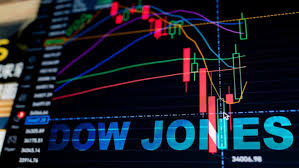
Stocks resume slide, as Dow drops nearly 700 points in early trading
#Dow Jones #stock market #early trading #market decline #investor sentiment #economic volatility #bearish trend
📌 Key Takeaways
- Dow Jones Industrial Average fell nearly 700 points in early trading, continuing a downward trend.
- The stock market decline reflects ongoing investor concerns about economic conditions.
- Early trading losses indicate heightened volatility and potential for further market instability.
- The drop follows previous sessions of declines, suggesting a sustained bearish sentiment.
📖 Full Retelling
🏷️ Themes
Stock Market, Economic Concerns
📚 Related People & Topics
Dow Jones
List of mass media-related articles with the same name
# Dow Jones **Dow Jones** is a prominent financial information and publishing brand, named after its founding business partners, **Charles Dow** and **Edward Jones**. Historically, the name is synonymous with the development of modern financial journalism and market analysis. ### Etymology and Ori...
Entity Intersection Graph
Connections for Dow Jones:
Mentioned Entities
Deep Analysis
Why It Matters
This sharp stock market decline matters because it erodes investor wealth, potentially reduces consumer confidence and spending, and signals broader economic concerns that could affect retirement accounts, corporate investment decisions, and overall economic stability. The drop impacts individual investors, retirees with stock-based retirement funds, companies planning to raise capital through equity markets, and financial institutions managing investment portfolios. Such volatility often precedes or accompanies economic slowdowns, making this development significant for both Main Street and Wall Street participants.
Context & Background
- The Dow Jones Industrial Average is a price-weighted index tracking 30 large publicly traded U.S. companies, serving as a key barometer of stock market health
- Stock markets have experienced increased volatility since 2022 due to inflation concerns, interest rate hikes by the Federal Reserve, and geopolitical tensions
- Previous major market declines include the 2020 COVID-19 crash (Dow dropped ~37% in one month) and the 2008 financial crisis (Dow fell ~54% peak-to-trough)
- Early trading sessions often set the tone for market sentiment throughout the trading day and can trigger automated trading responses
- The Dow's 700-point decline represents one of the larger single-day drops in recent years, though percentage-wise it varies based on current index levels
What Happens Next
Market analysts will monitor whether the decline accelerates or stabilizes throughout the trading day, with particular attention to closing levels. Financial news outlets will seek commentary from Federal Reserve officials about potential policy responses. Investors may rebalance portfolios toward defensive sectors, while companies could postpone planned stock offerings. If volatility persists, we may see increased trading volume, potential circuit breaker triggers, and emergency meetings among financial regulators in coming days.
Frequently Asked Questions
Such significant declines usually result from multiple factors converging, including negative economic data releases, geopolitical tensions, corporate earnings disappointments, or concerns about central bank policies. Often it reflects a shift in investor sentiment from optimism to risk aversion, sometimes triggered by specific events or cumulative worries about economic growth prospects.
Most people with retirement accounts (401(k), IRAs) or mutual funds will see their portfolio values decrease immediately. Those nearing retirement may need to reconsider withdrawal timing, while long-term investors might view this as a potential buying opportunity if they believe markets will eventually recover.
Financial advisors generally caution against panic selling during market downturns, as this locks in losses and misses potential recoveries. Instead, they recommend reviewing portfolio allocations, ensuring diversification, and considering whether to rebalance according to long-term investment plans rather than short-term market movements.
Key indicators include trading volume throughout the day, sector performance patterns, bond market movements, volatility index (VIX) levels, and any statements from Federal Reserve officials. International market reactions overnight and economic data releases in coming days will also provide important signals about whether this is an isolated event or part of a broader trend.
While 700 points sounds dramatic, the percentage decline matters more for historical comparison. At current Dow levels around 35,000, a 700-point drop represents about 2%, which is significant but not unprecedented. During the 2020 pandemic crash, the Dow experienced multiple days with 5-10% declines, while the 1987 Black Monday crash saw a 22.6% single-day drop.