

Supreme Court Allows Street Preacher’s Lawsuit
#Supreme Court #street preacher #lawsuit #First Amendment #free speech #public preaching #legal precedent
📌 Key Takeaways
- The Supreme Court ruled in favor of a street preacher, allowing their lawsuit to proceed.
- The decision addresses potential First Amendment violations related to free speech.
- The case involves restrictions on public preaching and interactions with law enforcement.
- The ruling may set a precedent for similar free speech cases in public spaces.
📖 Full Retelling
🏷️ Themes
Free Speech, Legal Precedent
📚 Related People & Topics
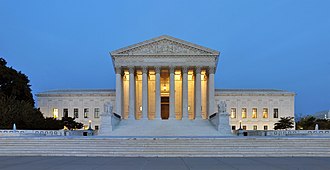
Supreme court
Highest court in a jurisdiction
In most legal jurisdictions, a supreme court, also known as a court of last resort, apex court, high (or final) court of appeal, and court of final appeal, is the highest court within the hierarchy of courts. Broadly speaking, the decisions of a supreme court are binding on all other courts in a nat...

First Amendment to the United States Constitution
1791 amendment limiting government restriction of civil liberties
The First Amendment (Amendment I) to the United States Constitution prevents Congress from making laws respecting an establishment of religion; prohibiting the free exercise of religion; or abridging the freedom of speech, the freedom of the press, the freedom of assembly, or the right to petition t...
Entity Intersection Graph
Connections for Supreme court:
Mentioned Entities
Deep Analysis
Why It Matters
This Supreme Court decision matters because it potentially expands First Amendment protections for religious expression in public spaces, affecting street preachers, religious activists, and municipalities nationwide. It signals the Court's continued interest in religious liberty cases and could influence how local governments regulate public speech. The ruling may lead to more legal challenges against speech restrictions in public forums, impacting both religious speakers and those who oppose their messages.
Context & Background
- The First Amendment protects freedom of speech and religious expression, but courts have allowed reasonable time, place, and manner restrictions in public spaces.
- Street preaching has a long history in the U.S., with legal conflicts often arising over noise ordinances, permit requirements, and harassment claims.
- Recent Supreme Court decisions like Kennedy v. Bremerton School District (2022) have shown a trend toward expanding religious expression rights.
- Lower courts have struggled to balance free speech rights with public order concerns, particularly regarding aggressive or disruptive preaching methods.
What Happens Next
The case will return to lower courts for further proceedings, where the plaintiff must prove their constitutional rights were violated. Municipalities may review their public speech regulations to ensure they comply with the Supreme Court's guidance. Additional similar lawsuits are likely to be filed by religious speakers challenging local restrictions, with this decision serving as precedent.
Frequently Asked Questions
The Supreme Court allowed the street preacher's lawsuit to proceed by declining to dismiss it, meaning lower courts must hear the case on its merits. This doesn't constitute a final ruling on the constitutional issues but indicates the Court believes the claims deserve judicial review.
Local governments may need to reassess how they enforce public speech regulations, particularly regarding religious expression. Police departments might receive updated training on handling street preaching incidents to avoid potential constitutional violations.
No, reasonable time, place, and manner restrictions still apply. The decision suggests courts should carefully scrutinize such restrictions when they impact religious speech, but threats, harassment, or genuinely disruptive behavior remain subject to regulation.
Restrictions narrowly tailored to serve significant government interests—like preventing traffic obstruction, excessive noise during nighttime hours, or genuine public safety threats—would likely remain constitutional if applied neutrally to all speakers.
This continues a pattern of Supreme Court decisions favoring religious expression, following cases like Masterpiece Cakeshop (2018) and Kennedy (2022). It reflects the current Court's emphasis on protecting religious practices from government interference.