

Supreme Court backs officer seeking immunity from Vermont House protester's excessive force claims
#Supreme Court #qualified immunity #excessive force #protester #Vermont House #police officer #legal ruling
📌 Key Takeaways
- The Supreme Court ruled in favor of a police officer seeking immunity from excessive force claims.
- The case involved a protester at the Vermont House of Representatives.
- The decision reinforces qualified immunity protections for law enforcement.
- It may impact future lawsuits against officers for alleged misconduct during protests.
📖 Full Retelling
🏷️ Themes
Legal Immunity, Police Conduct
📚 Related People & Topics
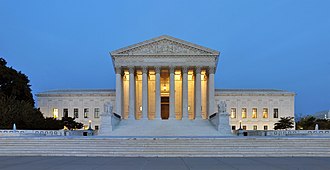
Supreme court
Highest court in a jurisdiction
In most legal jurisdictions, a supreme court, also known as a court of last resort, apex court, high (or final) court of appeal, and court of final appeal, is the highest court within the hierarchy of courts. Broadly speaking, the decisions of a supreme court are binding on all other courts in a nat...
Entity Intersection Graph
Connections for Supreme court:
Mentioned Entities
Deep Analysis
Why It Matters
This Supreme Court decision matters because it strengthens qualified immunity protections for law enforcement officers, making it harder for citizens to sue them for alleged constitutional violations. It affects police officers nationwide by providing broader legal protection, while potentially limiting accountability mechanisms for individuals claiming excessive force. The ruling could influence how lower courts handle similar cases and may impact police practices during protests and civil disturbances.
Context & Background
- Qualified immunity is a legal doctrine that protects government officials from personal liability unless they violate 'clearly established' constitutional rights
- The case originated from a 2018 incident where a Vermont state trooper arrested a protester at the Vermont State House during a demonstration
- The protester claimed the officer used excessive force by twisting his arm and slamming him against a marble wall during the arrest
- Lower courts had been divided on whether the officer's actions violated clearly established law
- The Supreme Court has been gradually expanding qualified immunity protections in recent years through multiple rulings
What Happens Next
The case will return to lower courts with the Supreme Court's guidance, likely resulting in dismissal of the excessive force claims against the officer. Other pending cases involving qualified immunity and police conduct may be affected by this precedent. Law enforcement agencies may adjust training based on this expanded protection, while civil rights groups may push for legislative changes to qualified immunity standards.
Frequently Asked Questions
Qualified immunity is a legal doctrine that protects government officials from being sued for constitutional violations unless they violate 'clearly established' law that a reasonable person would know. It's designed to balance accountability with protecting officials from frivolous lawsuits.
This ruling makes it more difficult to hold police officers accountable through civil lawsuits, as it raises the threshold for what constitutes 'clearly established' rights. Critics argue this reduces incentives for proper conduct, while supporters say it protects officers from unfair litigation.
Yes, Congress could pass legislation modifying or eliminating qualified immunity protections, as several bills have proposed in recent years. However, such changes face significant political hurdles and would need to balance police protection with civil rights concerns.
The case involved a 2018 protest at the Vermont State House where a state trooper arrested a demonstrator. The protester claimed the officer used excessive force during the arrest by twisting his arm and slamming him against a marble wall.
This ruling primarily affects cases where qualified immunity is invoked, particularly those involving claims of excessive force during arrests. It sets a precedent that may influence how lower courts evaluate whether rights were 'clearly established' in similar situations.