
Supreme Court considers a historic case about who is — and isn't — born a citizen
#Supreme Court #birthright citizenship #14th Amendment #President Trump #constitutional challenge #immigration #citizenship rights
📌 Key Takeaways
- The Supreme Court is reviewing a case challenging birthright citizenship under the 14th Amendment.
- President Trump is contesting the long-standing interpretation that guarantees citizenship to all U.S.-born children.
- The case could redefine who qualifies as a citizen by birth in the United States.
- The outcome may have historic implications for constitutional law and immigration policy.
📖 Full Retelling
🏷️ Themes
Citizenship, Constitutional Law
📚 Related People & Topics
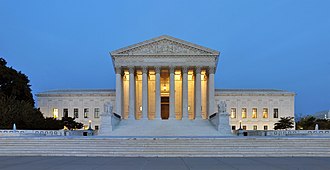
Supreme court
Highest court in a jurisdiction
In most legal jurisdictions, a supreme court, also known as a court of last resort, apex court, high (or final) court of appeal, and court of final appeal, is the highest court within the hierarchy of courts. Broadly speaking, the decisions of a supreme court are binding on all other courts in a nat...

Donald Trump
President of the United States (2017–2021; since 2025)
Donald John Trump (born June 14, 1946) is an American politician, media personality, and businessman who is the 47th president of the United States. A member of the Republican Party, he served as the 45th president from 2017 to 2021. Born into a wealthy New York City family, Trump graduated from the...
Entity Intersection Graph
Connections for Supreme court:
Mentioned Entities
Deep Analysis
Why It Matters
This case challenges the long-standing interpretation of the 14th Amendment's Citizenship Clause, which could redefine who qualifies as a U.S. citizen from birth. It directly affects millions of children born in the U.S. to undocumented immigrants, potentially creating a new class of stateless individuals. The outcome could reshape immigration policy, family rights, and constitutional interpretation for generations, with significant implications for both legal status and national identity.
Context & Background
- The 14th Amendment's Citizenship Clause states 'All persons born or naturalized in the United States, and subject to the jurisdiction thereof, are citizens of the United States and of the State wherein they reside.'
- Birthright citizenship has been interpreted since the 1898 Supreme Court case United States v. Wong Kim Ark to apply to nearly all children born on U.S. soil.
- The current challenge represents the most significant legal test of birthright citizenship in over a century, coming amid heightened political debates about immigration.
What Happens Next
The Supreme Court will hear oral arguments, likely in the coming months, with a decision expected by June 2025. If the Court rules to restrict birthright citizenship, Congress may need to pass legislation addressing the status of affected individuals. State governments would also need to adjust birth certificate issuance and other documentation processes accordingly.
Frequently Asked Questions
Trump is challenging the interpretation that the 14th Amendment automatically grants citizenship to children born in the U.S. regardless of their parents' immigration status. His position argues that children of undocumented immigrants are not 'subject to the jurisdiction' of the United States as required by the amendment.
Approximately 300,000-400,000 children are born annually to undocumented immigrants in the U.S. A ruling restricting birthright citizenship could affect millions of individuals born over recent decades, potentially creating complex legal status issues.
United States v. Wong Kim Ark (1898) established that children born in the U.S. to non-citizen parents are U.S. citizens. This precedent has guided birthright citizenship interpretation for 125 years and forms the foundation of current legal understanding that the Supreme Court is now reconsidering.
Most legal scholars believe changing birthright citizenship would require a constitutional amendment, not just legislation. However, some argue Congress could define 'subject to the jurisdiction thereof' through statute, though this would likely face immediate legal challenges.