
Supreme Court hears challenge to birthright citizenship as Trump attends arguments
#Supreme Court #birthright citizenship #14th Amendment #undocumented immigrants #Trump administration #oral arguments #Solicitor General
📌 Key Takeaways
- Supreme Court justices expressed skepticism towards the Trump administration's challenge to birthright citizenship for children of undocumented immigrants.
- The case questions whether the 14th Amendment's citizenship clause applies to those born to parents in the U.S. illegally.
- Former President Trump attended the oral arguments, highlighting the political significance of the issue.
- The Solicitor General faced intense questioning while defending the administration's position.
📖 Full Retelling
🏷️ Themes
Immigration Law, Constitutional Rights
📚 Related People & Topics
Solicitor general
Legal position in common law countries
A solicitor general is a government official who serves as the chief representative of the government in courtroom proceedings. In systems based on the English common law that have an attorney general or equivalent position, the solicitor general is often the second-ranked law officer of the state a...
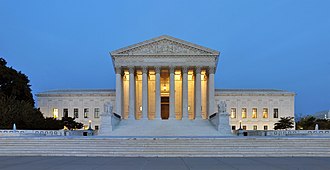
Supreme court
Highest court in a jurisdiction
In most legal jurisdictions, a supreme court, also known as a court of last resort, apex court, high (or final) court of appeal, and court of final appeal, is the highest court within the hierarchy of courts. Broadly speaking, the decisions of a supreme court are binding on all other courts in a nat...
Presidency of Donald Trump
Index of articles associated with the same name
Presidency of Donald Trump may refer to:
Entity Intersection Graph
No entity connections available yet for this article.
Mentioned Entities
Deep Analysis
Why It Matters
This case challenges the 14th Amendment's guarantee that anyone born on U.S. soil is automatically a citizen, a principle established after the Civil War to ensure equal rights. If overturned, it could affect millions of children born to undocumented immigrants, potentially creating a permanent underclass without citizenship rights. The outcome could reshape immigration policy, family stability, and national identity for generations to come.
Context & Background
- The 14th Amendment's Citizenship Clause was ratified in 1868 to guarantee citizenship to formerly enslaved people and their descendants.
- Birthright citizenship has been upheld for over 150 years, including in the 1898 Supreme Court case United States v. Wong Kim Ark.
- Previous attempts to challenge birthright citizenship have failed, including during the Trump administration's first term.
- Approximately 300,000-400,000 children are born to undocumented immigrants in the U.S. annually, according to Pew Research Center estimates.
- Only about 30 countries worldwide practice birthright citizenship, with most being in the Americas.
What Happens Next
The Supreme Court will likely issue its ruling by June 2025. If it upholds birthright citizenship, the status quo remains. If it restricts it, Congress may need to pass legislation defining citizenship criteria, potentially triggering legal challenges and administrative changes to birth certificate issuance. The decision could become a major issue in the 2024 presidential election.
Frequently Asked Questions
Birthright citizenship, also called jus soli, is the legal principle that any person born within a country's territory automatically gains citizenship, regardless of their parents' immigration status. In the U.S., this stems from the 14th Amendment's statement that 'all persons born or naturalized in the United States... are citizens.'
As a former president who repeatedly promised to end birthright citizenship through executive order, Trump's presence signals this issue remains central to his political agenda. His attendance also puts public pressure on the Court and energizes his base ahead of the 2024 election.
Children born to undocumented parents could become 'stateless' if their parents' home countries don't grant them citizenship. Families could face separation if citizen siblings have different legal statuses, and parents might avoid registering births or accessing public services.
Yes, Congress could pass legislation amending immigration laws to redefine citizenship criteria, but such bills would face constitutional challenges. The 14th Amendment would likely require a constitutional amendment to change fundamentally, which requires two-thirds of both houses of Congress and three-fourths of state legislatures.
Most European, Asian, and African countries use jus sanguinis (right of blood), where citizenship depends on parents' status. Canada and most Latin American countries maintain birthright citizenship, though some like Australia and the UK have restricted it in recent decades.