

Supreme Court rules the Postal Service can't be sued, even when mail is intentionally not delivered
#Supreme Court #USPS #lawsuit immunity #Clarence Thomas #intentional nondelivery #Federal Tort Claims Act #Lebene Konan
📌 Key Takeaways
- The Supreme Court ruled 5-4 that the USPS is immune from lawsuits regarding the intentional nondelivery of mail.
- Justice Clarence Thomas wrote the majority opinion, finding the postal exemption covers intentional acts.
- The case involved a Texas landlord who alleged racial discrimination led to her mail being withheld for two years.
- Justice Sonia Sotomayor dissented, arguing that the immunity should not cover malicious behavior.
- The Trump administration warned that allowing such suits would financially overwhelm the Postal Service.
📖 Full Retelling
🏷️ Themes
Supreme Court, Postal Service, Legal Liability, Civil Rights
📚 Related People & Topics
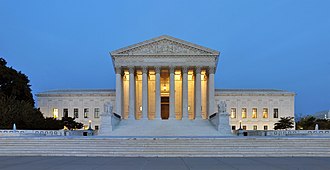
Supreme court
Highest court in a jurisdiction
In most legal jurisdictions, a supreme court, also known as a court of last resort, apex court, high (or final) court of appeal, and court of final appeal, is the highest court within the hierarchy of courts. Broadly speaking, the decisions of a supreme court are binding on all other courts in a nat...

Federal Tort Claims Act
United States law
The Federal Tort Claims Act (August 2, 1946, ch. 646, Title IV, 60 Stat. 812, 28 U.S.C. Part VI, Chapter 171 and 28 U.S.C. § 1346) ("FTCA") is a 1946 federal statute that permits private parties to sue the United States in a federal court for most torts committed by persons acting on behalf of the U...

Clarence Thomas
US Supreme Court justice since 1991
Clarence Thomas (born June 23, 1948) is an American lawyer and jurist who has served since 1991 as an associate justice of the Supreme Court of the United States. President George H. W. Bush nominated him to succeed Thurgood Marshall. After Marshall, Thomas is the second African American to serve on...

United States Postal Service
Independent agency of the U.S. federal government
The United States Postal Service (USPS; also known as the Post Office, U.S. Mail, or simply the Postal Service) is an independent agency of the executive branch of the United States federal government responsible for providing postal service in the United States, its insular areas and associated sta...
Entity Intersection Graph
Connections for Supreme court:
Mentioned Entities
Deep Analysis
Why It Matters
This ruling significantly limits the legal recourse available to citizens who suffer financial or personal harm due to negligence or intentional misconduct by postal workers. It reinforces the broad immunity often granted to federal agencies under the Federal Tort Claims Act, specifically regarding operational decisions. This decision affects millions of Americans who rely on the USPS for critical deliveries like medication, legal documents, and ballots, leaving them with few options for compensation when service fails. Ultimately, it places the burden of postal failures on the consumer rather than the agency, potentially eroding accountability.
Context & Background
- The ruling centers on the Federal Tort Claims Act (FTCA), which allows private parties to sue the United States in federal court for torts committed by federal agents.
- The FTCA contains a 'discretionary function' exception that shields the government from liability for acts that are discretionary in nature, even if they are abusive or illegal.
- The Supreme Court has historically interpreted this exception broadly to prevent judicial 'second-guessing' of administrative and governmental decisions.
- This specific case likely involved a dispute over whether the decision to deliver or not deliver mail is a discretionary policy choice or a mandatory operational duty.
- The U.S. Postal Service is an independent agency of the executive branch and is often granted unique legal protections to ensure the efficient flow of mail.
What Happens Next
Individuals affected by mail delivery failures will likely be forced to seek administrative remedies through the USPS claims process rather than pursuing litigation in court. Consumer advocacy groups may pressure Congress to amend the Federal Tort Claims Act or pass specific legislation clarifying the Postal Service's liability for intentional misconduct. We can expect increased scrutiny of the USPS's internal disciplinary procedures as external legal checks on their behavior have been diminished.
Frequently Asked Questions
No, individual postal employees can still face disciplinary action or termination from their jobs for misconduct. The ruling only prevents citizens from filing civil lawsuits against the federal agency itself for damages.
It is a part of the Federal Tort Claims Act that prevents the government from being sued for decisions that involve judgment or choice. The Court ruled that mail delivery decisions fall under this protected category.
Yes, but you must use the USPS internal claims process to seek reimbursement for insured items. You generally cannot sue for damages beyond the insured value or for non-financial losses like emotional distress.
No, this ruling applies specifically to the United States Postal Service as a government entity. Private carriers are subject to state laws and can be sued for negligence or breach of contract.
The dissenting justices likely believed that refusing to deliver mail is an operational failure rather than a policy choice, and therefore should not be shielded by immunity. They often argue that such immunity removes a necessary check on agency power.