
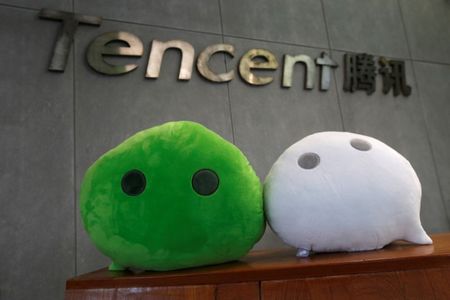
Tencent shares slide as AI spending plans overshadow strong Q4 earnings
#Tencent #AI spending #Share buybacks #Q4 earnings #Hong Kong market #Chinese tech #AI integration #Margin concerns
📌 Key Takeaways
- Tencent shares fell 6.4% after announcing reduced share buybacks for AI investments
- Tencent reported strong Q4 earnings with 13% revenue growth and 17% profit increase
- Tencent plans to double its AI investment in 2026 after spending $2.6 billion on AI in 2025
- Investors are concerned about future margins due to increased AI spending
- Tencent has released AI assistants and platforms to capitalize on AI popularity
📖 Full Retelling
🏷️ Themes
Artificial Intelligence Investment, Corporate Financial Performance, Market Reaction to Strategic Shifts
📚 Related People & Topics

Tencent
Chinese conglomerate holding company
Tencent (Chinese: 腾讯; pinyin: Téngxùn) is a Chinese multinational technology conglomerate and holding company headquartered in Shenzhen. It is one of the highest grossing multimedia companies in the world based on revenue. It is also the world's largest company in the video game industry based on it...
Share repurchase
Reacquisition by a company of its own shares
Share repurchase, also known as share buyback or stock buyback, is the reacquisition by a company of its own shares. It is an alternative way of returning money to shareholders than dividends. After a repurchase event, the company's stock price is now proportionally higher because of the smaller num...
Entity Intersection Graph
Connections for Tencent:
View full profileMentioned Entities
Deep Analysis
Why It Matters
This news is significant as it shows China's most valuable internet company prioritizing long-term AI investment over immediate shareholder returns, sending a signal to the market about the growing importance of AI in tech strategy. The 6.4% share drop despite strong earnings indicates investor concern about potential margin compression and the trade-off between current profitability and future growth. This decision could influence other major tech companies globally as they balance shareholder returns with strategic investments in emerging technologies.
Context & Background
- Tencent has been gradually increasing AI investments over the past few years, focusing on integration with its core businesses including gaming, social media, and fintech
- The Chinese tech sector has faced increased regulatory scrutiny in recent years, which may have influenced current investment strategies
- AI has become a key competitive battleground for major tech companies globally, with significant capital being allocated to this sector
- Share buybacks have been a common method for Chinese tech companies to return value to shareholders amid market uncertainty
- The global chip shortage has particularly affected companies requiring advanced processing chips for AI development
- Tencent's WeChat platform has over 1 billion monthly active users, making it a crucial channel for AI service deployment
What Happens Next
Tencent is likely to face continued investor scrutiny regarding the balance between AI investments and shareholder returns. The company may provide more details about its AI strategy during upcoming earnings calls. We can expect increased competition in China's AI space as other tech companies respond to Tencent's expanded investment. Additionally, Tencent may face challenges in acquiring advanced processing chips, which could impact the timeline and scale of its AI rollout. The market will be watching closely to see if these AI investments translate into sustained revenue growth and margin improvement.
Frequently Asked Questions
The shares dropped because investors were concerned about future margins as the company plans to reduce share buybacks to fund increased AI investments. The market reacted negatively to the potential trade-off between immediate shareholder returns and long-term AI investment.
Tencent plans to effectively double its AI investment from 2025, when it spent about 18 billion yuan ($2.6 billion) on AI technology. This means the company will invest approximately 36 billion yuan on AI in 2026.
CFO John Lo confirmed that the company will 'likely buy back lower value of our shares versus 2025 to fund investment in AI while increasing our dividends.' This suggests a strategy of maintaining dividend payments while reducing share buybacks.
Tencent has released an AI assistant integrated with its WeChat platform and a platform called Workbuddy, similar to the open source OpenClaw. The company is also integrating AI into its videogames, social media apps, and fintech platforms.
According to President Martin Lau, Tencent's AI spending plans in 2025 were constrained by difficulties in acquiring advanced processing chips, which may continue to be a challenge in 2026 as the company doubles its investment.