NASA researchers identified optimal infrared wavelengths for detecting biosignatures on Earth-like exoplanets
The Habitable Worlds Observatory aims to avoid complex cryogenic cooling systems that plagued previous telescopes like JWST
Carbon dioxide absence and methane presence are critical indicators of potential biological activity
The optimal wavelength for the telescope is determined to be 1.52um with a 20% bandwidth window
📖 Full Retelling
Researchers at NASA Goddard Space Flight Center published a new paper on February 20, 2026, detailing the optical engineering requirements for the upcoming Habitable Worlds Observatory (HWO), a next-generation telescope designed to photograph Earth-like exoplanets and search for potential biosignatures. As the HWO transitions from theoretical concepts to physical implementation, NASA scientists are addressing critical challenges in distinguishing between carbon dioxide and methane/water spectral signatures to determine optimal wavelengths for the telescope's design. The research represents another layer of analysis in the ongoing development of what will become the world's next major exoplanet observatory, following previous papers published by the same team. Infrared imaging remains the holy grail of exoplanet observation since many key biosignatures reveal themselves through distinct spectrographic signatures at infrared wavelengths, making them particularly valuable from an astrobiological perspective. However, capturing these signatures presents significant engineering challenges, as the telescope must either employ complex cryogenic cooling systems to eliminate instrument-generated heat or contend with spectral overlap issues that can mask crucial biosignatures.
An exoplanet or extrasolar planet is a planet outside of the Solar System. The first confirmed detection of an exoplanet was in 1992 around a pulsar, and the first detection around a main-sequence star was in 1995. A different planet, first detected in 1988, was confirmed in 2003.
Substance providing scientific evidence of past or present life
A biosignature is a phenomenon that can be explained by biological processes where all possible abiotic causes of this phenomenon have been eliminated. This term is mainly used in the field of astrobiology in the search for past or present extraterrestrial life, from planets and moons in the Solar S...
Planned NASA space telescope to directly image and spectroscopically analyse exoplanets
The Habitable Worlds Observatory (HWO) is a future flagship space telescope for NASA Astrophysics that will build on the achievements of the Hubble, Webb, and Roman Space Observatories. Designed to
search for signs of life on nearby Earth-like planets, HWO will combine cutting-edge ultraviolet, opti...
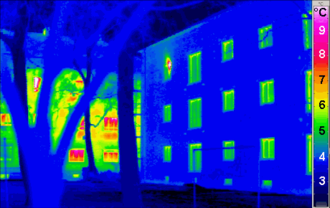
Infrared thermography (IRT), also known as thermal imaging, is a measurement and imaging technique in which a thermal camera detects infrared radiation originating from the surface of objects. This radiation has two main components: thermal emission from the object's surface, which depends on its te...
Carbon dioxide is a chemical compound with the chemical formula CO2. It is made up of molecules that each have one carbon atom covalently double bonded to two oxygen atoms. It is found in a gas state at room temperature and at normally-encountered concentrations it is odorless.
The Optical Engineering Required to Photograph an Earth Twin By Andy Tomaswick - February 20, 2026 03:17 PM UTC | Exoplanets More and more papers are coming out about the upcoming Habitable Worlds Observatory . As the telescope moves from theory to practice (and physical manifestation), various working groups are discovering, defining, and designing their way to the world’s next major exoplanet observatory. A new paper from researchers at NASA Goddard Space Flight Center adds another layer of analysis - we even just reported on its immediate predecessor two weeks ago. In this one, the researchers compared the ability of the telescope to distinguish between carbon dioxide and methane/water, to come up with a specific wavelength the engineers should design for. Infrared imaging is the holy grail of exoplanet observation. Many of the most interesting potential biosignatures are very distinct spectrographic signatures at those wavelengths, making them the most interesting from an astrobiological perspective. However, they come with a trade-off - to capture a wide band of infrared wavelengths, the system capturing must be cooled to extreme temperatures in order to eliminate any noise introduced by the heat the instrument itself produces. The James Webb Space Telescope , another famous infrared observatory, solves this problem with a complex and expensive cryogenic cooling system. However, that system is part of the reason JWST was so delayed and over budget. HWO’s designers are hoping to avoid that fate, and therefore avoid the complex cryogenic cooling system entirely. Academic presentation on the BARBIE framework used in the paper. Credit - Exoplanet Seminar Series YouTube Channel That choice brings with it other problems, however, such as spectral overlap. Two of the most interesting biosignatures are methane and carbon dioxide - and perhaps more importantly a combination of the two. Carbon dioxide is actually more interesting in its absence - it’s abundant on dead wo...