
The 'striking silence' that convinced police a captain was at fault for the North Sea tanker crash
#North Sea tanker crash #Vladimir Motin #Gross negligence manslaughter #Humberside Police #Maritime safety
📌 Key Takeaways
- The 'striking silence' from Vladimir Motin's bridge post-collision convinced police of his gross negligence.
- Motin was sentenced to six years in prison for gross negligence manslaughter following the North Sea tanker crash.
- The investigation revealed Motin's failure to use available safety systems and his inconsistent accounts of the events.
- The presumed death of crewman Mark Pernia was a crucial element in securing the conviction against Motin.
- The case highlights the importance of accountability and vigilance in the shipping industry to prevent such tragedies.
📖 Full Retelling
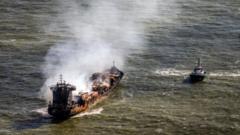
On March 10, 2025, a catastrophic collision occurred in the North Sea between the cargo ship Solong, captained by Vladimir Motin, and the anchored tanker Stena Immaculate, located 14 nautical miles off the Humber estuary. The impact resulted in a massive fireball and subsequent blazes on both vessels, leading to the presumed death of Mark Pernia, a crewman on the Solong. Detective Chief Superintendent Craig Nicholson, the lead investigator from Humberside Police, highlighted the stark contrast in responses from both ships' crews, particularly noting the 'striking silence' from Motin's bridge in the aftermath of the collision. This inaction, coupled with Motin's evolving accounts and failure to utilize available safety systems, convinced police of his gross negligence. Motin was subsequently sentenced to six years in prison for gross negligence manslaughter, a verdict that Nicholson believes provides closure to Pernia's family.
The investigation revealed that Motin's silence lasted for 63 seconds post-collision, a period characterized by a lack of communication or action, unlike the immediate and chaotic response from the Stena Immaculate's crew. Audio recordings from the Solong's bridge showed only muffled noises and footsteps, while the Stena Immaculate's crew swiftly activated fire pumps and alarms. Nicholson emphasized that Motin's failure to use radar, electronic systems, and crew notification tools, all of which could have prevented the collision, was a critical factor in the case. Despite Motin's defense arguing human error and faulty automatic controls, the prosecution dismissed these claims as implausible, asserting that Motin's inaction and delayed response were key factors in the tragedy.
The trial also highlighted Motin's inconsistent accounts of the events leading up to the collision. Initially vague, his statements evolved over time, with Nicholson describing them as 'constructed to suit the evidence' but ultimately untruthful. The detective underscored that Motin's failure to alter the Solong's course or speed, despite knowing the Stena Immaculate was on a collision course, was a clear indication of negligence. Nicholson further noted that Motin could have prevented Pernia's death by sounding an alarm, a crucial oversight that underscored the severity of his negligence.
The conviction of Vladimir Motin marks a significant moment in maritime safety, emphasizing the importance of vigilance and prompt action in preventing such tragedies. The case serves as a stark reminder of the consequences of negligence in the shipping industry, where the lives of crew members and the safety of vessels are paramount. The closure provided to Pernia's family underscores the importance of accountability in ensuring justice for those affected by such incidents.
🏷️ Themes
Maritime Safety, Criminal Investigation, Accountability, Human Error
Entity Intersection Graph
No entity connections available yet for this article.
Original Source
The top detective investigating the tanker collision says there were early signs of gross negligence from Vladimir Motin
Read full article at source