
The Trump administration says it can’t process tariff refunds because of computer problems
#tariffs #refunds #Customs and Border Protection #Supreme Court #importers #computer system #International Trade Court
📌 Key Takeaways
- US Customs and Border Protection (CBP) states it cannot process billions in tariff refunds due to computer system limitations.
- The Supreme Court recently struck down tariffs imposed by President Trump under the International Emergency Economic Powers Act.
- The International Trade Court ruled that impacted importers are entitled to refunds for these tariffs.
- CBP's digital import processing system is described as 'not well suited' for handling refunds on this scale.
📖 Full Retelling
🏷️ Themes
Tariff Policy, Government Technology
📚 Related People & Topics
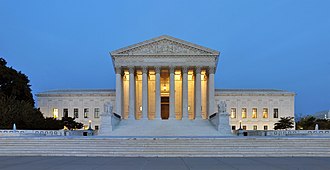
Supreme court
Highest court in a jurisdiction
In most legal jurisdictions, a supreme court, also known as a court of last resort, apex court, high (or final) court of appeal, and court of final appeal, is the highest court within the hierarchy of courts. Broadly speaking, the decisions of a supreme court are binding on all other courts in a nat...
Customs and Border Protection
Topics referred to by the same term
Customs and Border Protection may refer to:

Donald Trump
President of the United States (2017–2021; since 2025)
Donald John Trump (born June 14, 1946) is an American politician, media personality, and businessman who is the 47th president of the United States. A member of the Republican Party, he served as the 45th president from 2017 to 2021. Born into a wealthy New York City family, Trump graduated from the...
Entity Intersection Graph
Connections for Supreme court:
Mentioned Entities
Deep Analysis
Why It Matters
This news is important because it affects thousands of U.S. importers who are owed billions in tariff refunds, potentially straining their finances and operations. It highlights systemic issues in government technology infrastructure, raising concerns about the efficiency and accountability of federal agencies in implementing court orders. The situation could also impact trade relations and legal precedents regarding presidential tariff powers, influencing future economic policies.
Context & Background
- In 2018, President Trump imposed tariffs on various imports, including steel and aluminum, citing national security under the International Emergency Economic Powers Act (IEEPA).
- The Supreme Court ruled last month that these tariffs were unconstitutional under IEEPA, leading to a legal requirement for refunds to affected importers.
- U.S. Customs and Border Protection (CBP) manages tariff collections and refunds through its Automated Commercial Environment (ACE) digital system, which has faced criticism for outdated technology.
What Happens Next
Importers may file lawsuits to compel CBP to expedite refunds, potentially leading to court-imposed deadlines or penalties. Congress could hold hearings to investigate CBP's technological shortcomings and allocate funding for system upgrades. CBP is likely to develop a phased plan for processing refunds, with initial payments possibly starting within months, but full resolution could take years due to the scale and complexity.
Frequently Asked Questions
The refunds stem from tariffs imposed by President Trump under the International Emergency Economic Powers Act, primarily on imports like steel and aluminum, which the Supreme Court recently ruled unconstitutional.
CBP claims its digital import processing system is outdated and not equipped to handle the large-scale task of refunding billions of dollars, citing technical limitations and resource constraints.
Importers who paid the unconstitutional tariffs under Trump's orders are entitled to refunds, as ruled by the International Trade Court, affecting businesses across various industries.
Refunds could take months to years to process fully, depending on CBP's ability to upgrade its systems or implement workarounds, with potential legal and congressional interventions speeding up the timeline.
This highlights vulnerabilities in government IT infrastructure, may influence future tariff policies and legal challenges, and could erode trust in federal agencies' ability to enforce court rulings efficiently.