
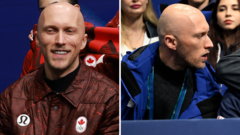
The Winter Olympics coach with 16 athletes from 13 countries
#Roman Haguenauer #Beijing 2022 #Ice Academy of Montreal #figure skating coach #national team uniforms #Olympic protocol #ice dance
📌 Key Takeaways
- Roman Haguenauer coached athletes from 13 different countries simultaneously during the Beijing Winter Olympics.
- Coaches at the Olympic Games must wear the national team gear of the athlete they are currently representing on the ice.
- The Ice Academy of Montreal serves as a centralized training hub for international skaters, leading to these multi-national coaching roles.
- The wardrobe changes are a logistical necessity driven by Olympic protocol and broadcast identification requirements.
📖 Full Retelling
Professional figure skating coach Roman Haguenauer made headlines during the 2022 Winter Olympics in Beijing when he was spotted wearing jackets from two different national teams while standing at the rinkside. This unusual occurrence sparked an investigation by BBC Sport’s 'Ask Me Anything' team, who explored the complex logistics of high-level ice dance coaching during global competitions. Haguenauer, a renowned French coach based in Montreal, was managing 16 elite athletes representing 13 different nations, necessitating frequent wardrobe changes to respect the official team uniforms of his various pupils during their respective performances.
The phenomenon highlights a unique aspect of figure skating, where the world’s top athletes often congregate at prestigious private academies rather than training solely within their national borders. Haguenauer is a lead coach at the Ice Academy of Montreal (I.AM), a facility that has become a global hub for the sport's elite. Because the Olympic Charter and broadcast protocols require coaches to be identifiable with the athlete currently on the ice, multi-national coaching teams must possess a collection of official apparel for every country they represent at the games.
During the Beijing Games, Haguenauer’s roster was so diverse that it included the gold medal-winning French pair Gabriella Papadakis and Guillaume Cizeron, as well as teams from the United States, Great Britain, Spain, and Armenia, among others. This logistical challenge meant that as soon as one couple finished their routine and left the 'Kiss and Cry' area, the coach would often have to sprint to a changing room to swap his tracksuit or parka before the next pair took to the ice. This practice is common among the sport’s most successful coaches, who function more as private contractors for international athletes rather than employees of a single national federation.
Ultimately, the sight of a coach in multiple uniforms serves as a testament to the globalization of figure skating. While the Olympics are marketed as a competition between nations, the underlying reality is a tightly-knit professional community where international borders matter less than technical expertise. For coaches like Haguenauer, the Olympic experience is a marathon of wardrobe transitions that mirrors the intense competitive schedule of the world’s best skaters.
🏷️ Themes
Sports Logistics, Winter Olympics, Figure Skating
Entity Intersection Graph
No entity connections available yet for this article.
Original Source
BBC Sport's Ask Me Anything team look at why one figure skating coach was seen wearing two different national team jackets.
Read full article at source