

Trump administration's volume of emergency docket appeals 'unprecedented,' Sotomayor says
#Supreme Court #emergency docket #Sonia Sotomayor #shadow docket #Trump administration #judicial philosophy #conservative justices
📌 Key Takeaways
- Justice Sotomayor stated the Trump administration secured an unprecedented string of emergency docket wins.
- She attributed this to conservative justices viewing injunctions against executive policies as causing irreparable harm.
- The high volume of emergency appeals represents a significant shift in Supreme Court procedure.
- Sotomayor's critique highlights concerns about the 'shadow docket' and perceptions of judicial partisanship.
📖 Full Retelling
🏷️ Themes
Judiciary, Executive Power, Legal Procedure
📚 Related People & Topics
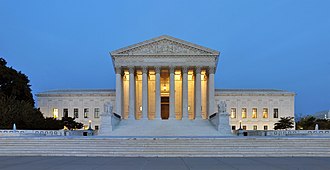
Supreme court
Highest court in a jurisdiction
In most legal jurisdictions, a supreme court, also known as a court of last resort, apex court, high (or final) court of appeal, and court of final appeal, is the highest court within the hierarchy of courts. Broadly speaking, the decisions of a supreme court are binding on all other courts in a nat...

Sonia Sotomayor
US Supreme Court justice since 2009
Sonia Maria Sotomayor ( , Spanish: [ˈsonja sotomaˈʝoɾ]; born June 25, 1954) is an American lawyer and jurist who serves as an associate justice of the Supreme Court of the United States. She was nominated by President Barack Obama on May 26, 2009, and has served since August 8, 2009. She is the firs...
Presidency of Donald Trump
Index of articles associated with the same name
Presidency of Donald Trump may refer to:
Entity Intersection Graph
Connections for Supreme court:
Mentioned Entities
Deep Analysis
Why It Matters
This analysis matters because it highlights a significant shift in the balance of power, allowing the executive branch to implement policies without immediate judicial oversight. It affects the public by permitting controversial laws and regulations to take effect immediately, potentially altering rights and regulations before final legal determinations are made. Furthermore, the critique from a sitting justice underscores growing concerns regarding the Supreme Court's legitimacy and transparency during a period of intense political polarization.
Context & Background
- The 'shadow docket' refers to the Supreme Court's orders on emergency applications, which are issued without full oral arguments or detailed written opinions.
- The Supreme Court currently holds a 6-3 conservative majority following the appointments of Justices Gorsuch, Kavanaugh, and Barrett during the Trump presidency.
- Emergency applications (stays) are historically intended for rare circumstances where a party faces immediate and irreparable harm.
- Justice Sonia Sotomayor was appointed by President Barack Obama in 2009 and is the senior member of the Court's liberal wing.
- The use of the shadow docket has expanded significantly in recent years, becoming a primary battleground for immigration and election policy disputes.
What Happens Next
Legal scholars and political analysts will likely continue to scrutinize the Supreme Court's emergency docket statistics and reasoning. Future administrations, regardless of party, are expected to increasingly utilize emergency appeals to bypass lower court injunctions. The Court may face external pressure to reform its shadow docket procedures to increase transparency and restore public trust.
Frequently Asked Questions
The shadow docket is a term used to describe the Supreme Court's process for handling emergency orders and routine matters without full oral arguments. These decisions are often made quickly and with little explanation compared to formal rulings.
The conservative justices generally believe that lower court injunctions against presidential policies cause irreparable harm to executive authority. They view allowing the government to act as the default position unless a law is clearly unconstitutional.
It allows controversial policies to remain in effect while legal challenges proceed slowly through the lower courts. This means the status quo can be maintained for years before the Supreme Court issues a final merits decision.
Sotomayor is concerned that the high volume of emergency rulings for one administration creates a perception of partisanship. She fears this trend undermines public confidence in the judiciary's impartiality.