
Trump plans to attend Wednesday's Supreme Court hearing on birthright citizenship
#Trump #Supreme Court #birthright citizenship #oral arguments #14th Amendment #presidential attendance #constitutional hearing
📌 Key Takeaways
- President Trump plans to attend the Supreme Court hearing on birthright citizenship.
- This marks the first time a sitting president will attend oral arguments at the Supreme Court.
- The hearing is scheduled for Wednesday.
- The case centers on the legal interpretation of birthright citizenship under the 14th Amendment.
📖 Full Retelling
🏷️ Themes
Presidential Action, Constitutional Law
📚 Related People & Topics
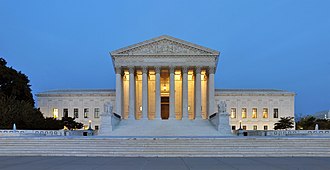
Supreme court
Highest court in a jurisdiction
In most legal jurisdictions, a supreme court, also known as a court of last resort, apex court, high (or final) court of appeal, and court of final appeal, is the highest court within the hierarchy of courts. Broadly speaking, the decisions of a supreme court are binding on all other courts in a nat...

Donald Trump
President of the United States (2017–2021; since 2025)
Donald John Trump (born June 14, 1946) is an American politician, media personality, and businessman who is the 47th president of the United States. A member of the Republican Party, he served as the 45th president from 2017 to 2021. Born into a wealthy New York City family, Trump graduated from the...
Entity Intersection Graph
Connections for Supreme court:
Mentioned Entities
Deep Analysis
Why It Matters
This event is significant because it represents an unprecedented presidential involvement in Supreme Court proceedings, potentially signaling political pressure on the judicial branch. It directly affects immigration policy debates, as birthright citizenship determines automatic citizenship for children born in the U.S. regardless of parents' immigration status. The president's attendance could influence public perception of the case's importance and may signal his administration's priorities regarding constitutional interpretation and immigration reform.
Context & Background
- Birthright citizenship is established by the 14th Amendment's Citizenship Clause, ratified in 1868 to guarantee citizenship to formerly enslaved people.
- President Trump has repeatedly questioned birthright citizenship, suggesting he could end it by executive order despite constitutional scholars disagreeing.
- The Supreme Court last substantively addressed birthright citizenship in United States v. Wong Kim Ark (1898), which affirmed the principle for children of legal immigrants.
- Presidential attendance at Supreme Court arguments is extremely rare, with only a handful of presidents having done so, typically for ceremonial or historic cases.
- The current case likely involves interpretation of the 14th Amendment's 'subject to the jurisdiction thereof' language regarding children of undocumented immigrants.
What Happens Next
Following Wednesday's hearing, the Supreme Court will deliberate and likely issue a ruling by June 2024. The decision could either reaffirm broad birthright citizenship or create new limitations, potentially triggering legislative responses from Congress. Regardless of outcome, the ruling will immediately affect thousands of annual births and could inspire further legal challenges or constitutional amendment proposals.
Frequently Asked Questions
Birthright citizenship automatically grants U.S. citizenship to anyone born on American soil, regardless of parents' immigration status. It's controversial because some argue it encourages 'birth tourism' and unauthorized immigration, while others view it as a fundamental constitutional right that promotes equality.
Most constitutional scholars believe only a constitutional amendment or Supreme Court reversal could change birthright citizenship, not presidential action. The 14th Amendment's language has been consistently interpreted by courts to support automatic citizenship for those born in the U.S., with limited exceptions for diplomatic families.
Trump's attendance signals his personal investment in immigration policy and may be intended to demonstrate his commitment to challenging established interpretations of the Constitution. It also brings heightened media attention to a case aligned with his political agenda regarding immigration restrictions.
The decision could potentially affect millions of Americans if it reinterprets the 14th Amendment, though any changes would likely apply prospectively. A restrictive ruling might create uncertainty about citizenship status for some individuals and could inspire challenges to other constitutional protections.
Yes, but very rarely. President William Howard Taft attended arguments after becoming Chief Justice. President Barack Obama attended memorial proceedings. Sitting presidents attending substantive arguments on politically charged cases is virtually unprecedented in modern times.