
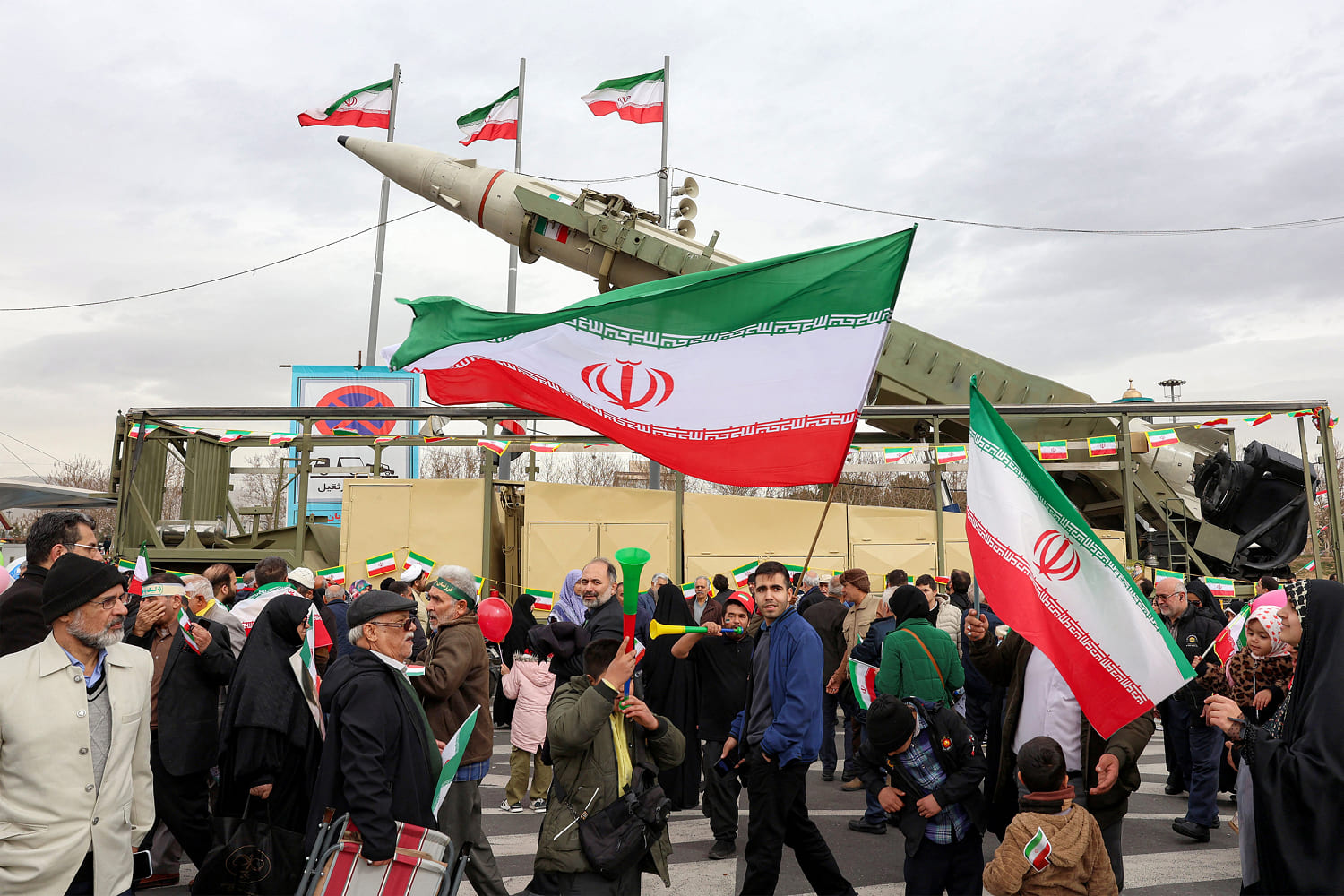
Trump said Iran will 'soon' have missiles able to hit the U.S. A 2025 intel report said it will take 10 years.
#Iran missiles #Trump State of the Union #ICBM capability #US intelligence assessment #Iran-US tensions #Military threat #Defense Intelligence Agency
📌 Key Takeaways
- Trump claimed Iran is developing missiles that could 'soon' strike the U.S., a first for a U.S. official
- This claim contradicts U.S. intelligence assessments suggesting Iran would need until 2035 to develop ICBM capability
- Iran has denied having an ICBM program, dismissing Trump's comments as lies
- Experts are divided on Iran's actual capabilities and timeline for developing intercontinental missiles
📖 Full Retelling
During his State of the Union address on Tuesday, February 25, 2026, President Donald Trump claimed that Iran is working to build missiles that could 'soon' strike the United States, marking the first time a U.S. official has portrayed Iran as poised to develop an intercontinental ballistic missile, a statement that contrasts with U.S. intelligence reports suggesting Iran would need a decade to achieve such capability. 'They've already developed missiles that can threaten Europe and our bases overseas, and they're working to build missiles that will soon reach the United States of America,' Trump declared, offering what appeared to be another rationale for possible military action against Iran. The Trump administration's stance represents a significant shift from previous assessments by U.S. intelligence agencies.
A Defense Intelligence Agency report released in 2025 stated that Iran 'has space launch vehicles it could use to develop a militarily-viable ICBM by 2035 should Tehran decide to pursue the capability.' When asked about the timeline, Secretary of State Marco Rubio acknowledged Iran's efforts but declined to specify how close they were to developing ICBM capability, noting only that 'they are certainly trying to achieve' intercontinental ballistic missiles. White House spokesperson Anna Kelly defended Trump's comments, stating the president was 'absolutely right to highlight the grave concern posed by Iran.' Iran has vehemently denied having an ICBM program, with Foreign Affairs Ministry spokesman Esmaeil Baghaei dismissing Trump's speech as full of 'big lies.'
Iran currently possesses medium-range ballistic missiles capable of traveling 1,000 to 3,000 kilometers, allowing it to strike targets across the Middle East and parts of Europe. Experts remain divided on the timeline, with Daryl Kimball of the Arms Control Association calling Trump's comments 'an exaggeration,' while Behnam Ben Taleblu of the Foundation for Defense of Democracies noted that Iran has redoubled its efforts to expand its missile program. Israeli Prime Minister Benjamin Netanyahu has also warned that Iran is developing long-range missiles that could place U.S. cities in danger. The discrepancy between Trump's assessment and intelligence reports has raised questions about whether the administration has determined new intelligence indicating accelerated progress or if the president is deliberately overstating the threat to build support for a more confrontational policy toward Iran.
🏷️ Themes
Iran-US Relations, Military Intelligence, Missile Proliferation
📚 Related People & Topics
Military threat
A military threat, sometimes expressed as danger of military action, a military challenge, or a military risk, is a concept in military intelligence that identifies an imminent capability for use of military force in resolving diplomatic or economic disputes. It is the ultimate escalation in interna...
Entity Intersection Graph
Connections for Military threat:
🌐
Iran
2 shared
👤
Donald Trump
2 shared
🌐
United States
1 shared
🏢
Diplomacy
1 shared
🌐
Power station
1 shared
Mentioned Entities
Original Source
Trump said Iran will 'soon' have missiles able to hit the U.S. A 2025 intel report said it will take 10 years. It was the first time the president or any other U.S. official has portrayed Iran as poised to develop an intercontinental ballistic missile. A rally marking the 47th anniversary of the 1979 Islamic revolution near a ballistic missile launch vehicle in Tehran, Iran, on Feb. 11. AFP via Getty Images file Share Add NBC News to Google Feb. 25, 2026, 10:33 PM EST By Dan De Luce and Courtney Kube Listen to this article with a free account 00:00 00:00 In his State of the Union address Tuesday, President Donald Trump seemed to offer another rationale for possible military action against Iran , saying it was working to develop missiles that could "soon" be able to strike the U.S. “They’ve already developed missiles that can threaten Europe and our bases overseas, and they’re working to build missiles that will soon reach the United States of America,” he said. It was the first time the president or any other U.S. official has portrayed Iran as poised to develop an intercontinental ballistic missile, or ICBM. Until now, U.S. intelligence agencies and European governments have said Iran could eventually build an ICBM under the cover of its military space program if it chose to. But U.S. intelligence and military commanders have not publicly warned of an imminent threat due to a possible ICBM program. A Defense Intelligence Agency report released last year said Iran “has space launch vehicles it could use to develop a militarily-viable ICBM by 2035 should Tehran decide to pursue the capability.” A U.S. official told NBC News that Iran has been building toward an ICBM for years and making advances but that there was no indication of dramatic new progress. It was not clear whether Trump’s comments Tuesday reflected the U.S. government’s having determined that Iran had, in fact, decided to pursue an ICBM or whether Tehran could now achieve that capability more quickly th...
Read full article at source