
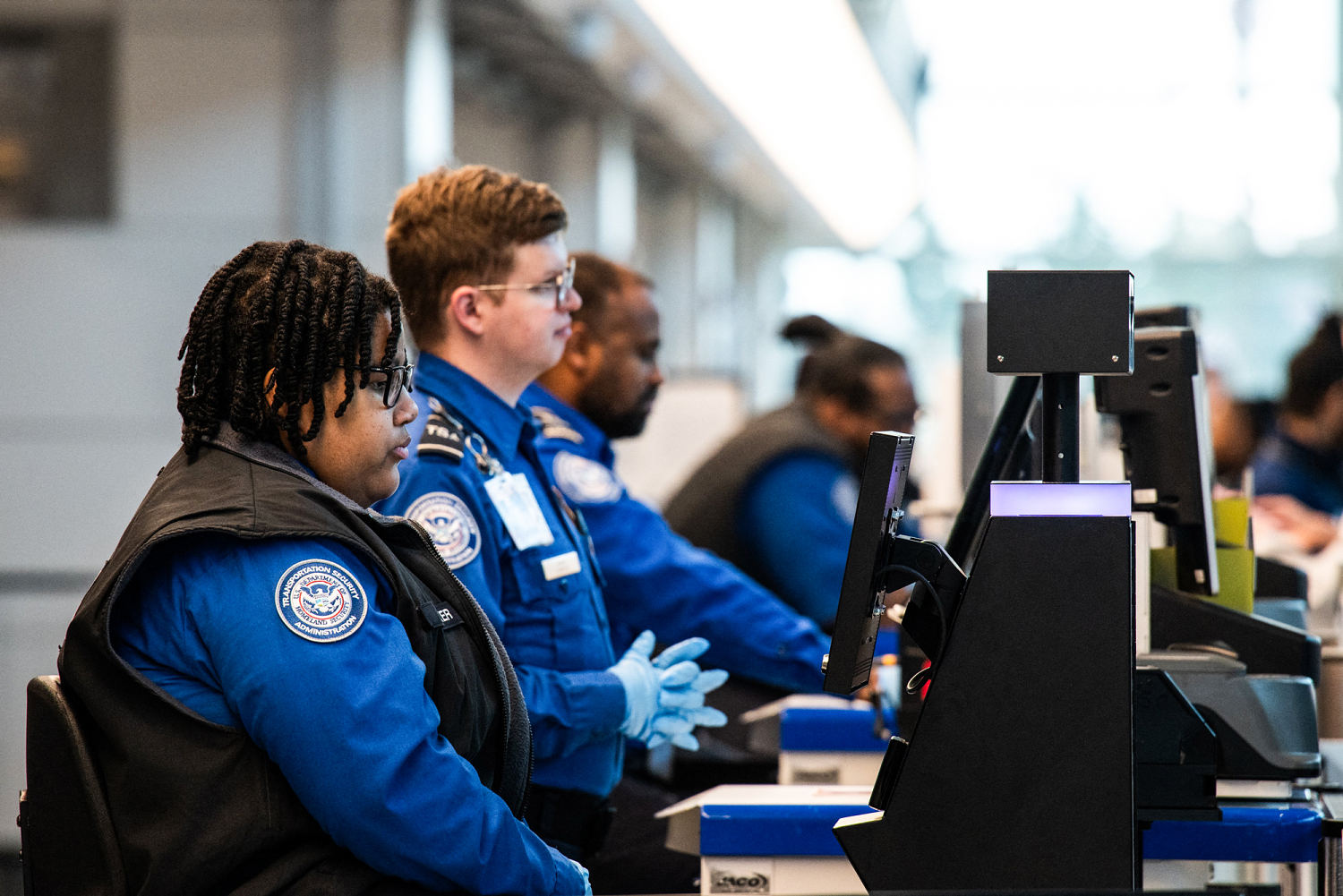
Trump says he will order DHS to 'immediately' pay TSA officers as partial shutdown persists
#Trump #DHS #TSA #government shutdown #federal workers #pay #partial shutdown
📌 Key Takeaways
- President Trump directs DHS to pay TSA officers during the partial government shutdown.
- The order aims to address financial strain on TSA employees amid the ongoing shutdown.
- The shutdown continues to affect federal workers and operations.
- The move highlights efforts to mitigate shutdown impacts on essential personnel.
📖 Full Retelling
🏷️ Themes
Government Shutdown, Federal Pay
📚 Related People & Topics

United States Department of Homeland Security
United States federal executive department
The United States Department of Homeland Security (DHS) is the U.S. federal executive department responsible for public security, roughly comparable to the interior, home, or public security ministries in other countries. Its missions involve anti-terrorism, civil defense, immigration and customs, b...

Transportation Security Administration
United States federal government agency
The Transportation Security Administration (TSA) is an agency of the United States Department of Homeland Security (DHS) that has authority over the security of transportation systems within and connecting to the United States. It was created as a response to the September 11 attacks to improve airp...

Donald Trump
President of the United States (2017–2021; since 2025)
Donald John Trump (born June 14, 1946) is an American politician, media personality, and businessman who is the 47th president of the United States. A member of the Republican Party, he served as the 45th president from 2017 to 2021. Born into a wealthy New York City family, Trump graduated from the...
Entity Intersection Graph
Connections for United States Department of Homeland Security:
Mentioned Entities
Deep Analysis
Why It Matters
This announcement matters because it directly affects approximately 51,000 TSA officers who have been working without pay during the longest government shutdown in U.S. history, potentially preventing a breakdown in airport security operations that could impact millions of travelers. It highlights the administration's attempt to mitigate the human and operational consequences of the political impasse over border wall funding. The move affects federal workers' financial stability, airport safety, and demonstrates executive action to address shutdown fallout without congressional resolution.
Context & Background
- The partial government shutdown began on December 22, 2018, over President Trump's demand for $5.7 billion in border wall funding that congressional Democrats refused to approve.
- Approximately 800,000 federal workers were affected by the shutdown, with 420,000 deemed 'essential' and required to work without pay, including TSA officers at airport security checkpoints.
- This was the longest government shutdown in U.S. history, lasting 35 days, surpassing the previous record of 21 days during the Clinton administration in 1995-1996.
- TSA officers had been reporting increased absences and some were resigning due to financial hardship, raising concerns about airport security effectiveness.
- Federal law generally prohibits agencies from paying employees during appropriations lapses unless specifically authorized by Congress or through other legal mechanisms.
What Happens Next
The administration will need to identify specific funding mechanisms or legal authorities to make these payments possible during the appropriations lapse. Congressional Democrats will likely scrutinize the legal basis for this executive action while continuing negotiations over broader government funding. If successful, this could set a precedent for addressing pay for other 'essential' federal workers during future shutdowns while the fundamental budget impasse remains unresolved.
Frequently Asked Questions
The legal authority is complex - while the President cannot directly appropriate funds, the administration can explore mechanisms like the Homeland Security Secretary's authority to declare certain payments 'necessary' for national security. Previous administrations have used similar justifications for limited payments during past shutdowns.
TSA officers were deemed 'essential' employees required to work without pay to maintain critical airport security operations. Unlike 'non-essential' workers who were furloughed, essential workers must report to work during shutdowns but only receive back pay after funding is restored.
This move may reduce immediate pressure on the administration by addressing the most visible workforce impacts, but doesn't resolve the underlying border wall funding dispute. It could potentially prolong negotiations by mitigating the shutdown's most dramatic consequences while the political standoff continues.
There were growing concerns about increased officer absences, potential resignations, and decreased morale that could compromise security screening effectiveness. Some airports had already reported longer wait times and temporary checkpoint closures due to staffing shortages.
It's unclear if this approach will extend to other agencies. The administration cited TSA's national security role as justification, which may not apply to all essential workers. Each agency's payment authority during shutdowns depends on specific statutory provisions and available funding mechanisms.