
Trump says he will raise global tariffs to 15% after Supreme Court decision
#Trump tariffs #Supreme Court #Trade Act 1974 #Global tariffs #IEEPA #Economic policy #Import taxes #Balance of payments
📌 Key Takeaways
- Trump raised global tariffs to 15% after Supreme Court struck down previous tariffs
- New tariffs are based on Section 122 of Trade Act of 1974, allowing up to 15% for 150 days
- Previous tariffs under IEEPA were invalidated by the Supreme Court
- Tariffs may face additional legal challenges despite current legal authorization
📖 Full Retelling
🏷️ Themes
Trade Policy, Legal Challenges, Economic Nationalism
📚 Related People & Topics
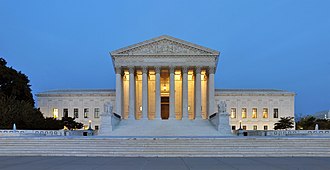
Supreme court
Highest court in a jurisdiction
In most legal jurisdictions, a supreme court, also known as a court of last resort, apex court, high (or final) court of appeal, and court of final appeal, is the highest court within the hierarchy of courts. Broadly speaking, the decisions of a supreme court are binding on all other courts in a nat...

International Emergency Economic Powers Act
United States federal law
The International Emergency Economic Powers Act (IEEPA), Title II of Pub. L. 95–223, 91 Stat. 1626, enacted December 28, 1977, is a United States federal law authorizing the president to regulate international commerce after declaring a national emergency in response to any unusual and extraordinary...
Economic policy
Actions that governments take in the economic field
The economy of governments covers the systems for setting levels of taxation, government budgets, the money supply and interest rates as well as the labour market, national ownership, and many other areas of government interventions into the economy. Most factors of economic policy can be divided in...
Tariffs in the Trump administration
Topics referred to by the same term
Tariffs in the Trump administration could refer to:
Entity Intersection Graph
Connections for Supreme court:
Deep Analysis
Why It Matters
Trump's decision to raise global tariffs to 15% after a Supreme Court ruling signals a shift in U.S. trade policy and could affect international relations and domestic industries.
Context & Background
- Supreme Court struck down tariffs imposed under IEEPA
- Trump used Trade Act of 1974 to impose 10% tariffs
- Tariffs target imports from many countries
What Happens Next
The new 15% tariffs will be applied immediately but may face legal challenges. Congress could intervene or the courts could review the legality. Trade partners may adjust supply chains.
Frequently Asked Questions
They were based on the IEEPA, which the Court said cannot be used for tariffs.
Under Section 122 of the Trade Act of 1974, he can for up to 150 days.
Steel, aluminum, and auto imports are already under tariffs, and the new ones may hit other sectors.