
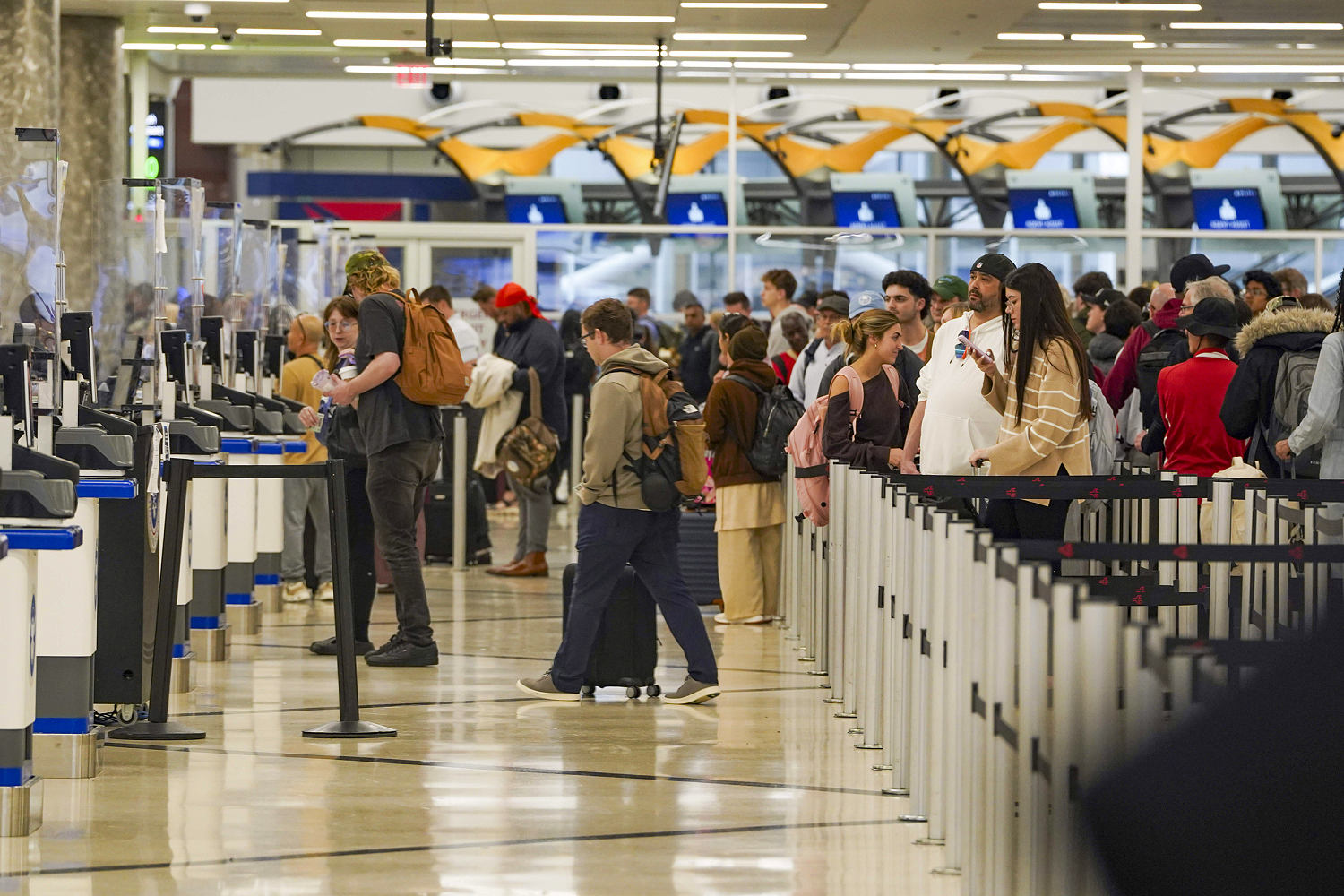
TSA callout rate surged over the weekend as partial shutdown continues
#TSA #callout rate #partial shutdown #government shutdown #airport security #federal employees #travel disruption
📌 Key Takeaways
- TSA callout rates increased significantly over the weekend
- The rise is linked to the ongoing partial government shutdown
- The shutdown is affecting federal employees and operations
- The situation may impact airport security and travel efficiency
📖 Full Retelling
🏷️ Themes
Government Shutdown, Transportation Security
📚 Related People & Topics

Transportation Security Administration
United States federal government agency
The Transportation Security Administration (TSA) is an agency of the United States Department of Homeland Security (DHS) that has authority over the security of transportation systems within and connecting to the United States. It was created as a response to the September 11 attacks to improve airp...
Entity Intersection Graph
Connections for Transportation Security Administration:
View full profileMentioned Entities
Deep Analysis
Why It Matters
This news matters because it reveals how the ongoing partial government shutdown is directly impacting essential security operations at airports nationwide. The surge in TSA callouts affects millions of travelers who may experience longer security lines and potential safety concerns. Federal employees, particularly TSA agents who work without pay during shutdowns, face financial hardship that compromises their ability to report to work. This situation highlights the cascading effects of political gridlock on critical government functions and public safety.
Context & Background
- The partial government shutdown began on December 22, 2018, affecting about 25% of federal agencies including the Department of Homeland Security
- TSA agents are considered 'essential' employees who must work during shutdowns but do not receive pay until funding is restored
- Previous government shutdowns have shown that callout rates typically increase as shutdowns prolong, with employees seeking alternative income sources
What Happens Next
If the shutdown continues, TSA callout rates are likely to increase further, potentially leading to airport security lane closures and significant travel disruptions. Congress may face increased pressure to reach a funding agreement as travel impacts become more visible to the public. The White House and congressional leaders are expected to continue negotiations this week, with possible emergency measures if security operations deteriorate significantly.
Frequently Asked Questions
TSA agents are working without pay during the shutdown, creating financial hardship that makes it difficult for some to afford commuting costs or childcare. Some agents are seeking temporary employment elsewhere to cover living expenses, while others may be protesting the lack of pay.
Higher callout rates mean fewer TSA agents available to screen passengers, potentially leading to longer wait times and reduced security coverage. While TSA maintains that security standards won't be compromised, fewer agents could mean less thorough screening or increased vulnerability to security breaches.
Historically, Congress has approved back pay for federal employees who worked during shutdowns, though this isn't guaranteed. TSA agents will likely receive their missed paychecks once funding is restored, but the timing depends on congressional action and administrative processing.
No, impacts vary by airport based on local workforce characteristics, alternative employment opportunities, and union strength. Major hub airports with higher living costs may see more significant callout rates, while smaller regional airports might be less affected initially.